Soft and Fluffy Focaccia Bread With a Golden Crust

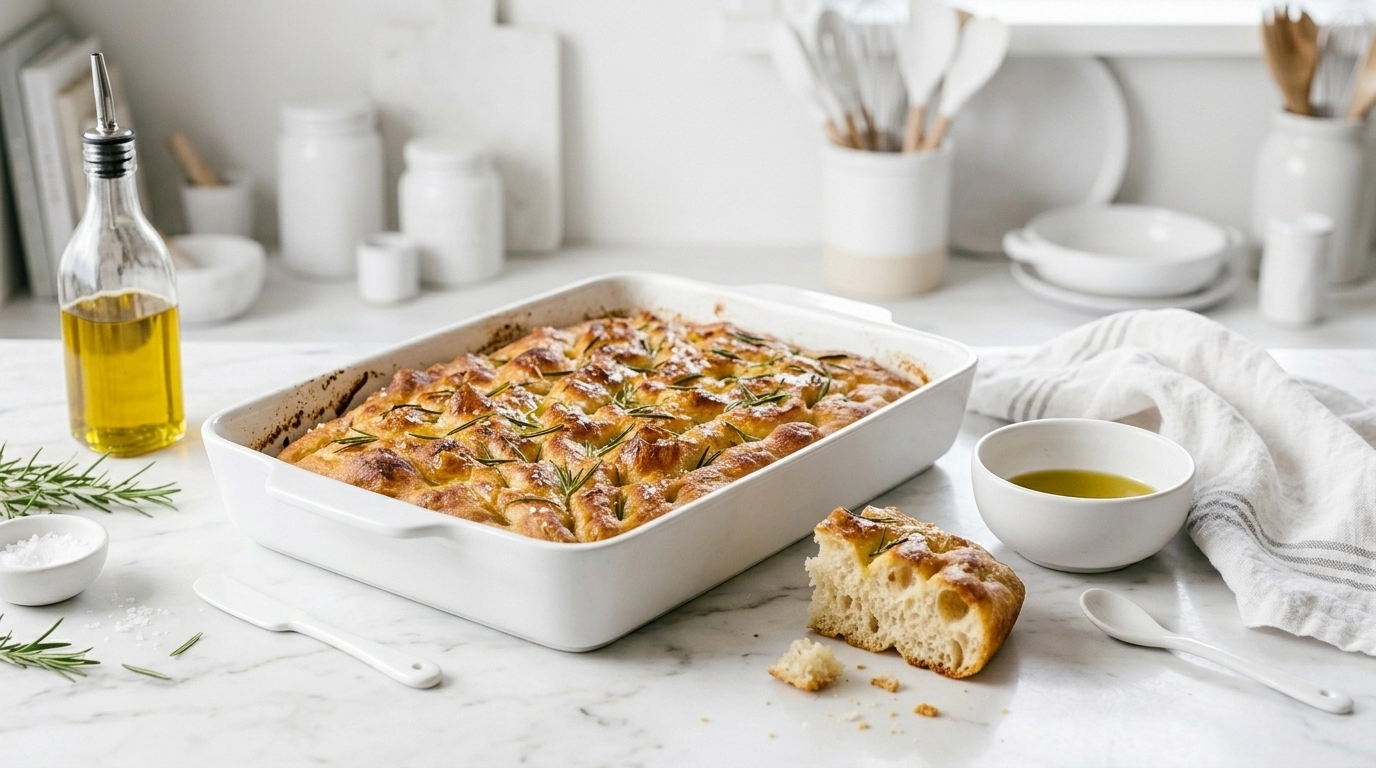
Focaccia bread is the warm, olive oil rich loaf I bake when I want the whole kitchen to smell like dinner is almost ready. The top is dimpled and glossy, the edges crackle, and the inside stays soft and open. My first focaccia came out of the oven dense and pale, more like a flat cracker than the bakery bread I was craving. Once I learned to trust a wet, sticky dough, everything changed.
What makes this version different is the slow folding method and the generous pool of oil in the pan. Instead of kneading for ten minutes, you stretch and fold the dough three times over an hour, which builds structure without any heavy work. I tested this recipe five times with three different oven temperatures before landing on 425°F (220°C), which gives a crisp bottom and a deep golden top. My daughter now asks for the “dimple bread” every Sunday, and she checks the pan before dinner to see if I’ve started the dough.
Table of Contents
Why You’ll Love This Focaccia Bread Recipe
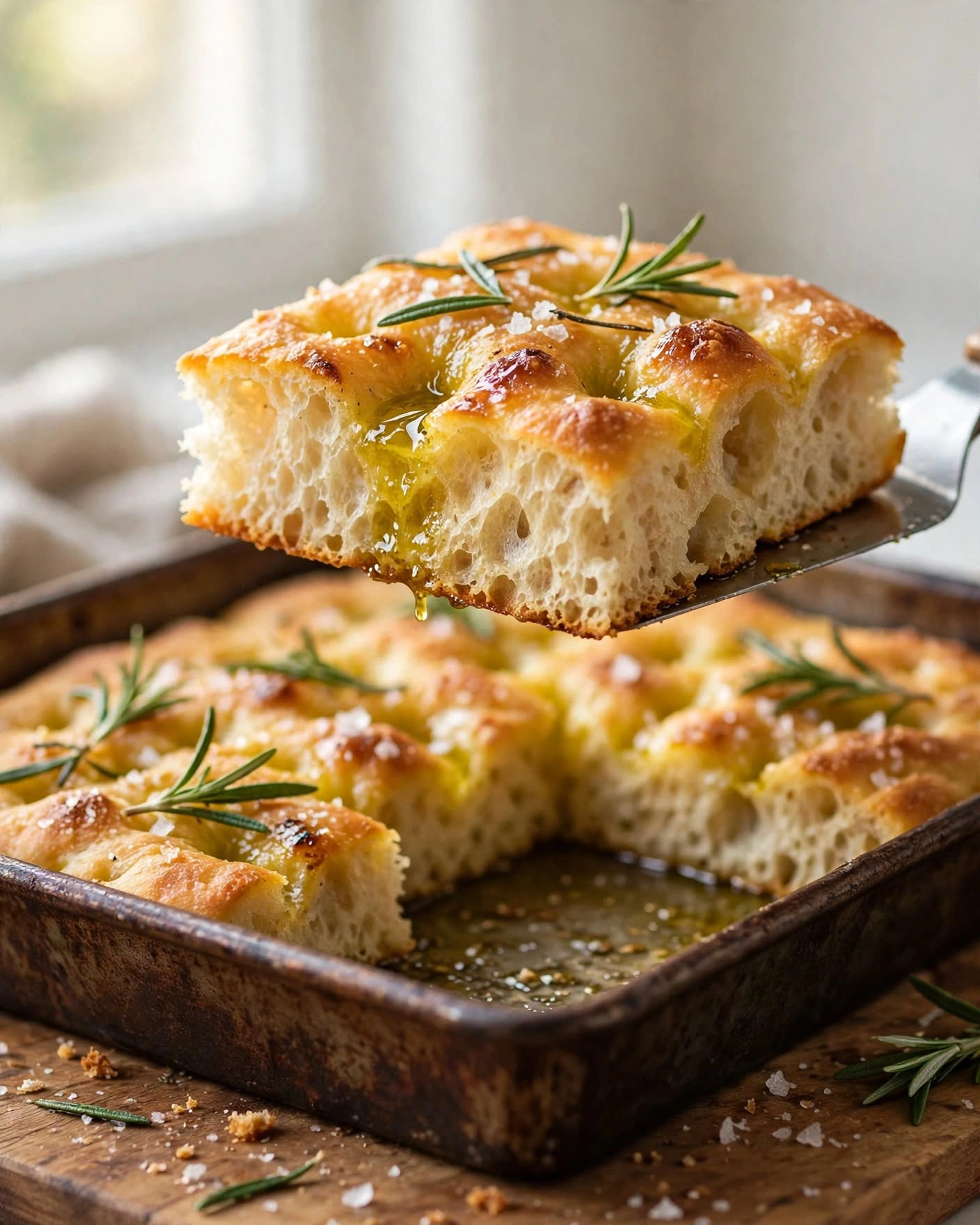
- Crisp outside, airy inside: The high water content creates big, irregular holes in the crumb, while the oiled pan fries the bottom into a crackly crust.
- No kneading required: Three quick stretch and folds replace the workout, so you can do other things while the dough rests.
- Bakery quality at home: A simple sprinkle of flaky salt and a drizzle of good olive oil turn a basic dough into something that tastes like it came from a café.
- Feeds a crowd: One 9 by 13 inch pan yields 12 generous squares, which is enough for a family dinner or a small gathering.
- Flexible make ahead: You can refrigerate the dough overnight for a deeper flavor, then bake it the next evening with very little effort.
Quick Information
- Prep Time: 25 minutes
- Rise Time: 2 hours 30 minutes (including the final proof)
- Cook Time: 25 minutes
- Cool Time: 15 minutes
- Total Time: About 3 hours 15 minutes, mostly hands off
- Servings: 12 squares
- Difficulty: Easy
- Calories: 210 per serving
- Important Tool: A 9 by 13 inch metal baking pan and a digital kitchen scale
- Best For: Weeknight dinners, soup nights, sandwiches, and holiday tables
- Course: Bread
- Cuisine: Italian
- Category: Breads
Nutrition Information
- Calories: 210
- Protein: 5g
- Carbohydrates: 28g
- Fat: 9g
- Fiber: 1g
- Sugar: 1g
- Sodium: 340mg
- Serving Size: One 3 by 3 inch square (1/12 of the pan)
- Servings Per Recipe: 12
Most of the fat in this focaccia comes from the olive oil, which adds flavor and helps create the crisp base. The bread is a good source of carbohydrates for energy, and the flour adds a modest amount of protein. Pairing a square with a bowl of vegetable soup adds fiber and balances the meal.
Nutrition information is an estimate calculated from standard ingredient values and will vary based on specific brands and portion sizes used.
Ingredients
For the Dough
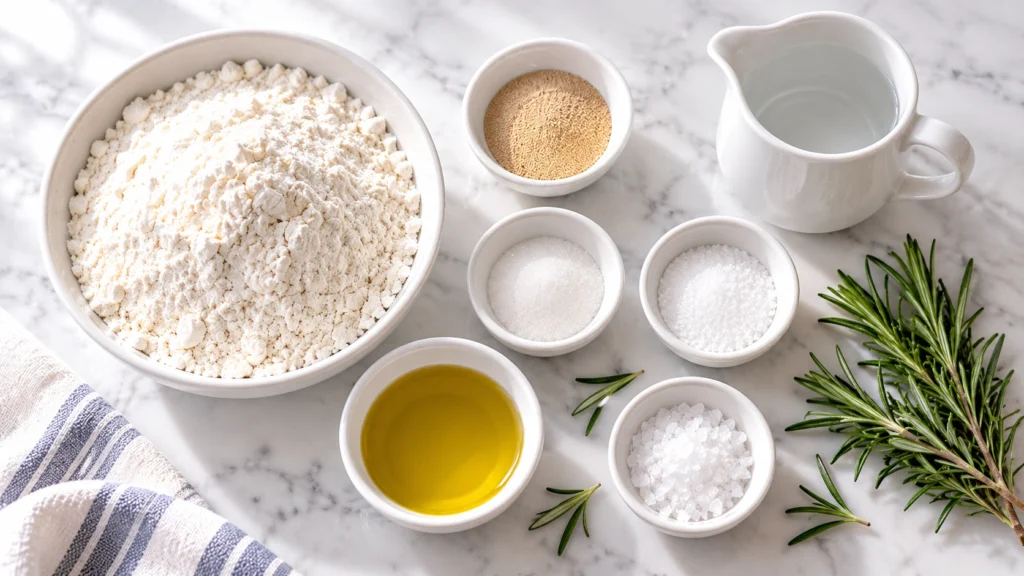
- 4 cups (500g) bread flour
- 1 1/2 cups (375ml) warm water, about 100°F (38°C)
- 2 1/4 teaspoons (7g) instant yeast
- 2 teaspoons (10g) fine sea salt
- 1 teaspoon (4g) granulated sugar
- 3 tablespoons (45ml) extra virgin olive oil
For the Topping and Pan
- 1/4 cup (60ml) extra virgin olive oil, for the pan and top
- 1 teaspoon (4g) flaky sea salt, such as Maldon
- 1 teaspoon (1g) fresh rosemary leaves, chopped (optional)
Ingredient Notes: Bread flour has more protein than all purpose flour, which gives the dough the strength to hold big bubbles. If you only have all purpose flour, use the same weight, but the crumb will be a little softer. Warm water helps the yeast wake up quickly, and the sugar gives it a small snack to speed the rise. Choose a fruity, mild extra virgin olive oil for the top, since it is the main flavor you taste in every bite.
Tip: Weigh your flour instead of scooping it. A cup of flour can vary by 30 grams or more, and that extra flour makes the dough tight and dense.
Equipment Needed
- Digital kitchen scale: Measures flour and water exactly, which keeps the hydration consistent every time.
- Bench scraper: Lifts sticky dough off the counter and helps you fold it without tearing.
- 9 by 13 inch metal pan: Conducts heat well, so the bottom of the focaccia gets crisp and golden.
- Instant read thermometer: Confirms that the loaf is fully baked, with an internal temperature of 200°F to 205°F (93°C to 96°C).
- Pastry brush: Spreads the olive oil evenly over the pan and the dough surface.
Practical Tip: Use a digital scale for the flour and water. Dough that is even a little too dry will not puff up, and it will taste like plain bread instead of focaccia.
Preparation
Start by warming your water to about 100°F (38°C), which feels like a warm bath on your wrist. Measure the flour, yeast, salt, and sugar into a large bowl, then whisk them together so the salt is evenly spread out. Keep the olive oil nearby, along with your bench scraper, pastry brush, and the pan.
Pour 2 tablespoons of the olive oil into the 9 by 13 inch pan and tilt it to coat the bottom and sides. There is no preheating step yet, but you will preheat the oven to 425°F (220°C) once the dough has finished its first rise. Have the flaky salt and rosemary measured in a small dish so they are ready to go when the dough is shaped.
Step by Step Instructions
- Mix the dough. Pour the warm water and 3 tablespoons of olive oil into the flour mixture. Stir with a wooden spoon or a dough whisk until no dry flour remains, which takes about 2 minutes. The dough should look shaggy and sticky, and that is exactly what you want.
- Rest the dough. Cover the bowl with a damp towel or plastic wrap and let it sit for 30 minutes. This rest lets the flour fully absorb the water, which makes the next steps much easier.
- Fold the dough. Wet your hand, lift one side of the dough, and fold it over the center. Turn the bowl a quarter turn and repeat this three to four times, then cover and wait 30 minutes between each set of folds, for three sets total.
- First rise. Cover the bowl and let the dough rise at room temperature for 1 to 1 1/2 hours. It should double in size and look bubbly around the edges.
- Shape in the pan. Pour the remaining olive oil onto the dough and the pan, then gently transfer the dough into the oiled pan. Stretch it toward the corners with oiled fingertips, and let it rest for 15 minutes if it springs back.
- Dimple and proof. Press your fingertips straight down into the dough every inch or so, all the way to the bottom of the pan. Cover and let it rise for 45 minutes until puffy and airy, while the oven preheats to 425°F (220°C).
- Top and bake. Drizzle a little extra oil over the surface, sprinkle with flaky salt and rosemary, and bake on the middle rack for 22 to 25 minutes. The top should be deep golden, and the edges should look crisp and lightly bronzed.
- Check and cool. Lift the focaccia out of the pan and check that the internal temperature reads 200°F to 205°F (93°C to 96°C). Cool on a wire rack for 15 minutes before slicing into squares.
Pro tip: Oil your fingers before you dimple the dough, so the dough does not stick to them and deflate.
Expert Tips & Tricks
- Personal mistake: I once skipped the rest after the first fold and ended up with a dense loaf that tore when I stretched it. Now I always wait the full 30 minutes before folding.
- Make ahead: Shape the dough in the pan, cover it tightly, and refrigerate it for up to 24 hours. Bring it to room temperature for 30 minutes before dimpling and baking.
- Storage: Keep cooled focaccia in a paper bag or loosely wrapped in a tea towel for up to 2 days. Plastic wrap traps moisture and softens the crust.
- Texture: Use a generous layer of olive oil in the pan. The oil fries the bottom of the bread, which gives you that signature crisp, almost crackly base.
- Flavor: Press the flaky salt and rosemary into the dough rather than sprinkling them on top. They stick better, and you get salt in every bite.
- Time saving: Mix the dough the night before and let it rise in the fridge. You can then wake up, shape it, and bake it within 90 minutes.
Common Mistakes & Troubleshooting
Dense, flat bread: This usually happens when the dough is too dry, the yeast is old, or the dough did not rise long enough. Weigh your flour, check the date on your yeast, and let the dough double before shaping. If the loaf is already flat, bake it a few minutes longer for a crisper top and serve it as crackers with dips.
Pale, soft crust: A low oven or a light, thin pan can leave the bread looking washed out. Preheat the oven fully to 425°F (220°C), use a metal pan, and bake on the middle rack. If the top is still pale, switch the oven to broil for 30 seconds, watching it closely.
Dough tears when stretching: Dough that has not rested or has been over folded will feel tight and snap back. Give it the full 30 minute rest, and stretch gently with oiled fingers. If it keeps springing back, let it sit uncovered for 10 minutes and try again.
Greasy bottom: Too much oil in the pan can make the base feel heavy and oily instead of crisp. Use about 2 tablespoons for the pan, then spread the rest on top. Blot any pooled oil with a paper towel before serving.
Dimples that disappear: The dough may have over proofed, so the holes close up in the oven. Dimple the dough when it is puffy but still springs back slowly. Press firmly enough that you feel the bottom of the pan.
Storage Instructions
- Room Temperature: Store the focaccia at room temperature for up to 2 days in a paper bag or wrapped in a tea towel. Do not leave it out uncovered for more than 4 hours, since it dries out.
- Refrigerator: Refrigeration makes focaccia stale faster, so avoid it unless the bread has a filling or topping that needs to stay cold.
- Freezer: Cut cooled focaccia into squares, wrap each piece tightly in plastic wrap, then store in a freezer bag for up to 3 months.
- Reheating: Warm squares in a 350°F (175°C) oven for 5 to 7 minutes, or until the crust crisps again and the center feels warm.
- Make Ahead: Shape the dough in the oiled pan, cover it, and refrigerate for up to 24 hours. Bring it to room temperature for 30 minutes before dimpling and baking.
- My storage tip: I slice the focaccia into squares before freezing. Pulling out one or two pieces for lunch is much easier than thawing a whole pan.
Variations & Substitutions
- Spicy: Add 1/4 teaspoon of red pepper flakes to the olive oil before drizzling it over the top, and scatter thin slices of pickled jalapeño across the dough.
- Mild or kid friendly: Skip the rosemary and use a light sprinkle of grated Parmesan on top. Cut the bread into strips for easy dipping.
- Vegetarian: This recipe is already vegetarian. Top it with halved cherry tomatoes, sliced olives, or thinly sliced zucchini for extra color.
- Gluten free: Use a 1 to 1 gluten free flour blend that contains xanthan gum, and expect a softer, more cake like crumb. Bake for about 5 minutes longer and check the internal temperature.
- Other substitutions: Swap half the bread flour for whole wheat flour for a nuttier loaf, or replace the rosemary with fresh thyme or chopped sage. Dried oregano works well too when fresh herbs are not on hand.
Serving Suggestions
Focaccia works as a warm, soft companion to soups, salads, and grilled dishes, so it fits almost any dinner table.
- Drinks: Sparkling water with lemon, a crisp Italian white wine, or a warm cup of herbal tea
- Brunch spread or Sides: Serve warm squares next to Comforting Vegetable Soup for a cozy lunch, or pair them with Butternut Squash Soup for a fall dinner.
- Sauces or dips: Extra virgin olive oil with balsamic vinegar, a bowl of whipped ricotta, or a simple herb dip made with Greek yogurt
- Garnishes: Fresh rosemary sprigs, flaky sea salt, or a sprinkle of lemon zest over the warm bread
- Meal combinations: Turn leftover squares into sandwiches with grilled vegetables, or serve them alongside Ciabatta Bread Recipe for a bread basket that pleases everyone.
Meal Prep Tip: I bake a pan on Sunday, cut it into squares, and freeze them in a bag. A square toasted in the oven makes a quick lunch with a slice of cheese and some sliced tomatoes.
Frequently Asked Questions
Can I make focaccia bread the day before?
Yes, you can shape the dough the day before and keep it in the fridge overnight. Cover the pan tightly so the surface does not dry out. The cold rest actually deepens the flavor and gives you a more open crumb. Take the pan out about 30 minutes before baking so it can warm up, then dimple and top it as usual. The next day, bake it as directed and you will get a loaf that tastes like it took days to make.
Why did my focaccia come out flat and dense?
Flat focaccia usually means the dough was too dry, the yeast was no longer active, or the rise was too short. Weigh your flour and water so the hydration is right, and test your yeast by checking that it bubbles in warm water. Let the dough double before you move it to the pan. If the loaf still turns out dense, try a longer proof next time, about 45 minutes after dimpling, and bake it until the top is deep golden.
Can I use all purpose flour instead of bread flour?
You can, but the texture will change. All purpose flour has less protein, so the dough will be softer and the bubbles will be smaller. Use the same weight, 500 grams, and expect a slightly tender crumb. Since the dough is wetter, you may need to add a tablespoon of flour if it feels too sloppy to fold. The crust will still turn crisp and golden, so the bread will be delicious even though the texture is a little different.
How do I know when focaccia is fully baked?
Look for a deep golden top with browned edges and a crisp, firm base. Lift a corner with a spatula and check that the bottom looks golden rather than pale. For certainty, use an instant read thermometer and aim for an internal temperature of 200°F to 205°F (93°C to 96°C). If the center is still soft or the thermometer reads low, bake for another 2 to 3 minutes and check again.
Does focaccia bread get soggy when stored?
Focaccia can turn soft if it is wrapped in plastic or left in a sealed container. Store it in a paper bag or tea towel so the crust stays dry but the inside does not harden. If it does get soft, refresh it in a 350°F (175°C) oven for 5 minutes. This brings back the crisp crust and warms the center, so it tastes freshly baked again.
Conclusion
The best focaccia comes from patience, not muscle. Let the dough rest, fold it gently, and give it time to rise until it looks light and bubbly. Those small habits matter more than any special equipment you own.
I baked a pan for a neighborhood gathering last fall, and it was gone before the soup pot was empty. A friend who insists she does not like homemade bread asked me for the recipe and said the crispy edges were what won her over.
For more breads recipes like this one, browse more ideas on my Pinterest.

Soft and Fluffy focaccia bread with a Golden Crust
Ingredients
Equipment
Method
- Mix the flour, yeast, salt, sugar, water, and olive oil until shaggy.
- Rest the dough, covered, for 30 minutes.
- Stretch and fold the dough three times, resting 30 minutes between sets.
- Let the dough rise for 1 to 1 1/2 hours until doubled.
- Oil the pan, transfer the dough, and let it rest 15 minutes.
- Dimple the dough, cover, and proof for 45 minutes while preheating to 425°F (220°C).
- Drizzle with oil, add salt and rosemary, and bake 22 to 25 minutes until deep golden.
- Check for 200°F to 205°F (93°C to 96°C), then cool 15 minutes before slicing.
Notes
- Use warm water, not hot, so the yeast stays active.
- Keep the dough wet and sticky, since that moisture creates the open crumb.
- Use plenty of oil in the pan for a crisp, golden bottom.