Crispy Korean Fried Chicken in 5 Easy Steps

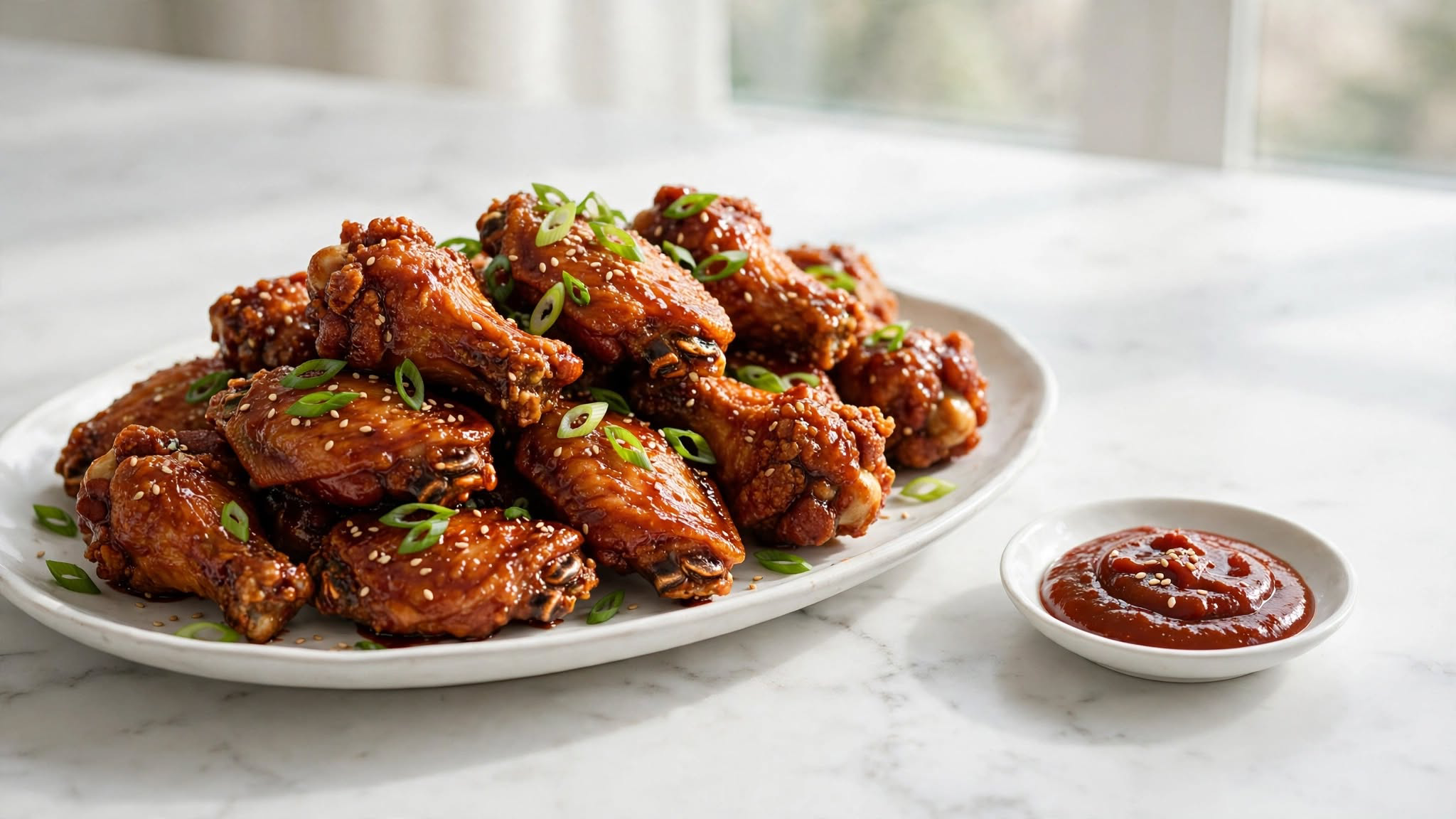
Picture a wing that crackles when you bite it, with a thin, glassy crust that stays crunchy even after it is coated in a sticky, spicy glaze. That is the magic of Korean fried chicken, and it is far easier to make at home than most people expect. The secret is frying the chicken twice, which drives out extra moisture and builds a crust that holds up to sauce.
My first attempt was a soggy disaster. I fried the wings once at a steady 350°F, tossed them in the glaze, and watched the coating turn soft within ten minutes. After testing four batches, I landed on a double fry, a potato starch batter, and a glaze made with gochujang and honey. My husband now asks for these wings every Friday, and he once ate an entire batch standing at the stove before I could plate them.
Table of Contents
Why You’ll Love This Korean Fried Chicken Recipe
- Shatter crisp texture: The double fry and potato starch batter create a crust that stays crunchy for about 30 minutes, even under the glaze.
- Sweet and spicy flavor: Gochujang, honey, and garlic balance heat with a rich, sticky sweetness that clings to every wing.
- Ready in about 90 minutes: Most of that time is hands off resting, so you spend roughly 35 minutes actually working.
- Great for game nights and sharing: One batch of 3 pounds of wings feeds four people, and the wings are easy to pick up with your fingers.
- Simple pantry staples: Potato starch, cornstarch, and flour cover the batter, and most of the glaze ingredients keep for months in the fridge.
Quick Information
- Prep Time: 20 minutes
- Rest Time: 30 minutes
- Cook Time: 25 minutes
- Cool Time: 10 minutes
- Total Time: 1 hour 25 minutes
- Servings: 4
- Difficulty: Medium
- Calories: 620 per serving
- Important Tool: Deep fry thermometer
- Best For: Game nights, weeknight dinners, and casual gatherings
- Course: Main Dish
- Cuisine: Korean
- Category: Main Dishes
Nutrition Information
- Calories: 620
- Protein: 38g
- Carbohydrates: 42g
- Fat: 30g
- Fiber: 2g
- Sugar: 14g
- Sodium: 980mg
- Serving Size: About 6 wings with glaze
- Servings Per Recipe: 4
Chicken wings provide a solid amount of protein, and the batter adds carbohydrates that help the coating crisp. Most of the fat comes from the frying oil, so draining the wings well on a wire rack makes a noticeable difference. The honey and brown sugar in the glaze contribute most of the sugar, so you can reduce them slightly if you prefer a less sweet finish.
Nutrition information is an estimate calculated from standard ingredient values and will vary based on specific brands, oil absorption, and portion sizes used.
Ingredients
For the Chicken
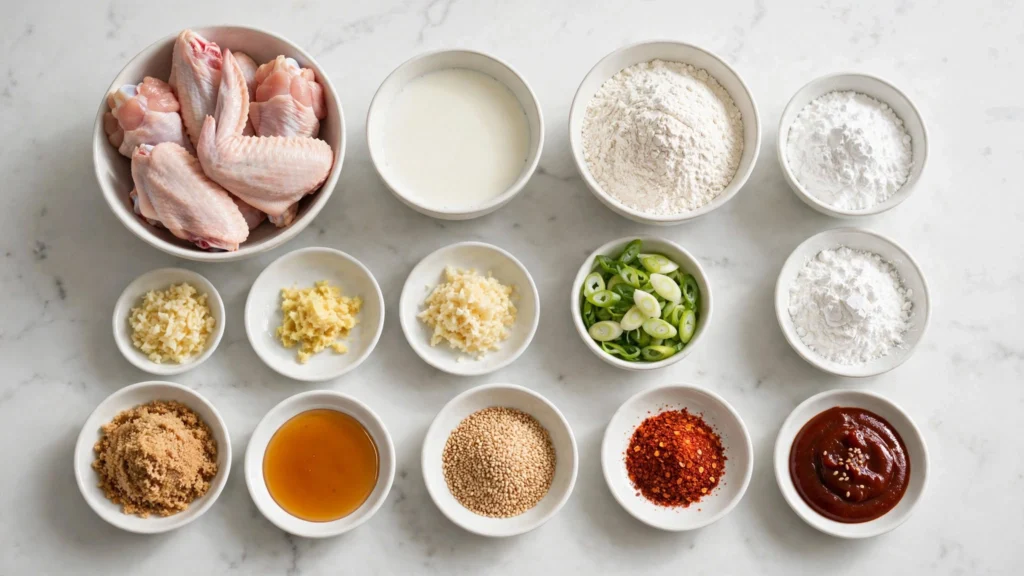
- 3 pounds chicken wings, split into flats and drumettes, tips removed
- 1 cup buttermilk
- 1 teaspoon kosher salt
- 1/2 teaspoon black pepper
For the Batter
- 1 cup all purpose flour
- 1/2 cup potato starch
- 1/4 cup cornstarch
- 1 teaspoon baking powder
- 1 teaspoon kosher salt
- 1/2 teaspoon garlic powder
- 1 cup ice cold water
- About 2 quarts neutral oil, such as canola or peanut, for frying
For the Gochujang Glaze
- 1/4 cup gochujang
- 1 tablespoon gochugaru (Korean red pepper flakes)
- 3 tablespoons honey
- 2 tablespoons brown sugar
- 2 tablespoons soy sauce
- 2 tablespoons rice vinegar
- 1 tablespoon toasted sesame oil
- 3 cloves garlic, minced
- 1 teaspoon grated fresh ginger
- 2 tablespoons water
For Garnish
- 2 green onions, thinly sliced
- 1 teaspoon toasted sesame seeds
Ingredient Notes: Gochujang is a fermented Korean chili paste that gives the glaze its deep, savory heat, while gochugaru adds a brighter, smokier spice. Potato starch is the key to a light, crackly crust, and you can swap it for more cornstarch if needed, though the coating will be a bit less crisp. Check the label on your gochujang and soy sauce, since some brands contain wheat, which matters if you are cooking for someone who avoids gluten.
Tip: Buy wings that are roughly the same size so they cook at the same rate, and pat them dry before coating. Excess moisture on the skin pushes the batter off during frying.
Equipment Needed
- Heavy Dutch oven: Holds steady heat and keeps the oil temperature from swinging wildly when the cold wings go in.
- Deep fry thermometer: Shows the exact oil temperature so the crust cooks without burning or turning greasy.
- Wire cooling rack: Keeps the fried wings crisp by letting air circulate underneath instead of trapping steam.
- Spider strainer: Lifts the wings out of hot oil quickly and lets excess oil drip back into the pot.
- Fine mesh strainer: Catches stray batter bits from the oil so they do not burn and taint the next batch.
Practical Tip: Clip the deep fry thermometer to the side of the Dutch oven so the probe sits in the oil but does not touch the bottom of the pot. A reading taken from the bottom can run 20 to 30 degrees hotter than the oil near the surface.
Preparation
Start by trimming the wing tips, then split each wing at the joint with a sharp knife. Toss the pieces with buttermilk, kosher salt, and black pepper in a large bowl, then cover and refrigerate for at least 30 minutes. While the chicken rests, whisk the batter ingredients in a separate bowl and stir the glaze components together in a small saucepan so they are ready to go.
Set a wire rack over a rimmed sheet pan and place it near your stove, since the wings need to rest between frying rounds. Fill a heavy Dutch oven with about 2 quarts of oil, clip on your thermometer, and set the mise en place within arm’s reach. Keep a clean plate or tray nearby for the coated wings so they do not sit on the counter and get soggy.
Step by Step Instructions
- Drain the buttermilk. Lift each wing out of the buttermilk and let the excess drip off, but do not rinse it. Pat the wings lightly with paper towels so the batter sticks.
- Coat the wings. Toss the wings in the dry batter ingredients, or whisk the wet batter and dip each wing in it. Shake off the excess and set the coated wings on a rack for 10 minutes so the coating can hydrate.
- Heat the oil. Heat the oil in the Dutch oven over medium high heat until it reaches 325°F. Keep the thermometer in the oil and adjust the burner as needed to hold that temperature steady.
- First fry. Fry the wings in batches of 6 to 8 pieces for 8 minutes, until they are pale golden and the coating looks set but not browned. Lift them out with a spider strainer and let them rest on the wire rack for 5 minutes. This is where the outer shell firms up and the inside finishes cooking.
- Second fry. Raise the oil temperature to 375°F, then fry the wings again in batches for 3 to 4 minutes, until they are deep golden, blistered, and crackling. Check that the thickest part registers 165°F on an instant read thermometer.
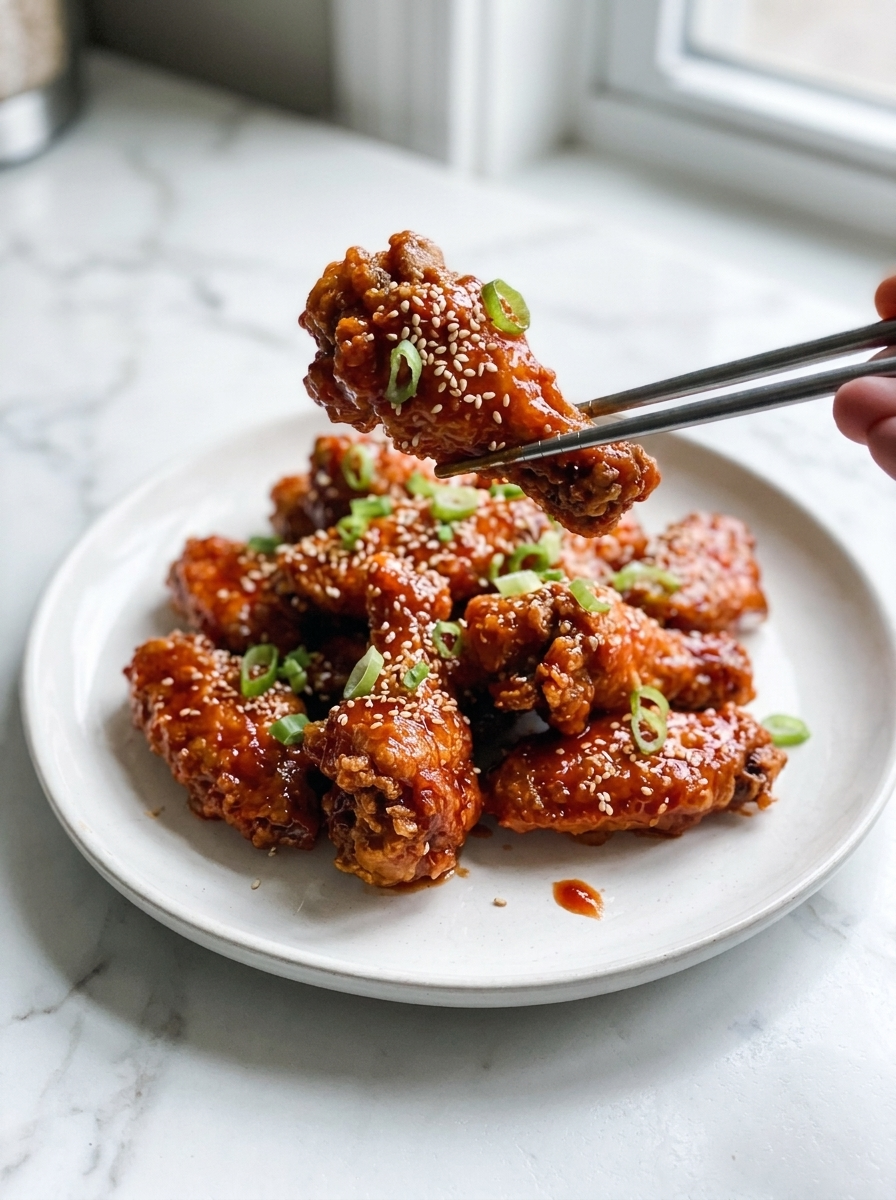
- Glaze the wings. Simmer the glaze over medium heat for 2 to 3 minutes, until it thickens to a syrupy consistency that coats the back of a spoon. Toss the hot wings in the glaze in a large bowl until every piece is evenly coated.
- Garnish and serve. Sprinkle the wings with green onions and sesame seeds, then serve right away while the crust is at its crunchiest.
Chef’s Note: Keep the oil between batches close to 375°F by letting it recover for a minute before adding more wings, since crowding the pot drops the temperature fast.
Pro Tip: Let the first fry rest on the rack instead of stacking the wings, so steam does not soften the coating.
Expert Tips & Tricks
- Personal mistake: I once tossed the wings in the glaze while they were still piping hot from the oil, and the sugar in the sauce burned on the surface within minutes. Now I let the glaze cool for 1 minute after simmering, which keeps it sticky without scorching.
- Make ahead: Complete the first fry up to 4 hours ahead and leave the wings on the rack at room temperature. Finish with the second fry just before serving, which takes about 5 minutes.
- Storage tip: Keep the glaze in a sealed jar in the refrigerator for up to 2 weeks, and reheat it gently before tossing the wings.
- Texture tip: Do not skip the potato starch. It creates a lighter, more brittle crust than flour alone, and that crispness is what makes these wings stand out.
- Time saving tip: Make the glaze while the wings rest after the first fry, so the whole recipe moves forward without idle time.
- Cooking technique tip: Fry in small batches and keep the oil between 325°F and 375°F for the best results, since temperature swings cause greasy or pale wings.
Common Mistakes & Troubleshooting
Soggy coating: This usually happens when the wings are fried only once, or when they are tossed in sauce and left sitting in a covered container. The moisture from the sauce softens the crust, and the batter never gets its second blast of heat. To prevent it, always complete the double fry and toss the wings just before serving. If the coating has already softened, return the wings to 375°F oil for 1 to 2 minutes to crisp them up again.
Oil that is too cool: Adding too many cold wings at once drops the oil temperature, so the batter soaks up oil instead of crisping. I made this mistake on my third batch, and the wings came out pale and greasy. Fry no more than 8 wings at a time and wait for the thermometer to return to the target temperature before adding the next batch. If the wings are already greasy, drain them on a rack and reheat them briefly in hot oil.
Burnt or bitter glaze: Gochujang and honey scorch quickly when the heat is too high. Simmer the glaze over medium heat and stir it constantly, and take it off the burner as soon as it coats a spoon. If it does start to darken and smell bitter, discard it and make a fresh batch, since burnt sugar cannot be fixed.
Batter sliding off: Wet wings or a batter that sits too long can cause the coating to slide off in the oil. Pat the wings dry before dredging, and fry them as soon as the batter has rested for 10 minutes. Press the coating gently onto the chicken before it goes into the oil.
Undercooked centers: Thick wing pieces can stay pink near the bone if the oil is too hot and the crust browns before the meat cooks through. Keep the oil at the right temperature and check each batch with a thermometer. Any wing that reads below 165°F should go back into the oil for another minute.
Storage Instructions
- Room Temperature: Do not leave fried chicken out longer than 2 hours, or 1 hour if the room is above 90°F.
- Refrigerator: Store the wings in an airtight container for up to 3 days. Keep the glaze separate if you can, since the wings stay crisper that way.
- Freezer: Freeze the fried, unglazed wings in a single layer on a sheet pan, then move them to a freezer bag for up to 2 months.
- Reheating: Reheat the wings on a wire rack set over a sheet pan at 400°F for 10 to 12 minutes, until hot and crisp. Toss them in warm glaze after reheating.
- Make Ahead: Fry the wings through the first fry up to 4 hours ahead, and keep them uncovered on a rack at room temperature. Finish with the second fry before serving.
- My storage tip: I store leftover glaze in a small glass jar with a tight lid, and I always reheat it on the stove before tossing it with fresh wings.
Variations & Substitutions
- Spicy: Add 1 tablespoon more gochugaru to the glaze and a pinch of cayenne to the batter for a fiery, lingering heat.
- Mild or kid friendly: Cut the gochugaru to 1/2 teaspoon and add an extra tablespoon of honey to the glaze for a gentler, sweeter wing.
- Vegetarian: Swap the chicken for extra firm tofu cut into 1 inch cubes, pressed for 20 minutes, and fried using the same double fry method. Use a vegetarian gochujang that lists no animal based ingredients.
- Gluten free: Replace the all purpose flour with 1 cup of white rice flour, and check that your soy sauce and gochujang are labeled gluten free. Tamari is a reliable substitute for soy sauce.
- Other substitutions: Use boneless chicken thighs cut into bite size pieces and reduce the second fry to 3 minutes. You can also swap the honey for maple syrup in the glaze, which adds a slightly deeper flavor.
Serving Suggestions
Korean fried chicken pairs well with bright, crunchy sides that cut through the richness of the glaze.
- Drinks: Serve cold sparkling water with lime, iced barley tea, or a crisp light lager.
- Brunch spread or Sides: Pair the wings with garlic roasted asparagus for a fresh green side that balances the heat.
- Sauces or dips: Offer a bowl of extra glaze on the side, or serve the wings with a cool cucumber dipping sauce.
- Garnishes: Add thinly sliced green onions, toasted sesame seeds, or a few pickled radish slices for crunch and color.
- Meal combinations: Serve the wings with air fryer sweet potato fries for a casual dinner, or build a bowl with honey BBQ chicken rice for a heartier meal.
Meal Prep Tip: I keep a jar of the glaze in the fridge on Sunday, and on busy weeknights I fry a fresh batch of wings and toss them in warm glaze in about 15 minutes. It is the fastest way I know to make a restaurant style dinner at home.
Frequently Asked Questions
Can I make Korean fried chicken ahead of time?
You can get most of the way there ahead of time. Complete the first fry up to 4 hours in advance and keep the wings uncovered on a wire rack at room temperature so the coating stays dry. When you are ready to eat, heat the oil to 375°F and fry the wings again for 3 to 4 minutes, then toss them in the glaze. Glazed wings left overnight in the fridge soften, so reserve the glaze step for serving time.
Why did my Korean fried chicken turn out soggy?
The most common cause is skipping the second fry or tossing the wings in sauce too early. Moisture from the glaze soaks into the crust and softens it within minutes. Make sure the oil reaches 375°F for the second fry, and toss the wings in glaze only right before serving. Draining the fried wings on a wire rack instead of paper towels also keeps the bottom from steaming.
Can I use flour instead of potato starch?
Yes, you can use all purpose flour alone, but the coating will be heavier and less crisp. Potato starch creates a light, brittle crust that stays crunchy longer. If you only have flour, use 1 1/2 cups of flour and 1/4 cup of cornstarch, and expect a slightly chewier texture. Mixing in a little cornstarch helps the crust crisp more than flour does on its own.
How do I know when the wings are fully cooked?
Use an instant read thermometer and check the thickest part of the wing, near the bone. The chicken is ready when it reads 165°F and the coating is deep golden and blistered. Look for bubbles that have mostly stopped rising, since that means the moisture has cooked out of the crust. If the wings are dark but the center is not at temperature, lower the heat slightly and fry them for another minute.
Is it safe to use the same oil for a second batch of fried chicken?
It is safe to reuse the oil if you strain it through a fine mesh strainer, cool it completely, and store it in a sealed container in a cool, dark place. Use it within 1 to 2 weeks and discard it if it smells rancid, turns dark, or foams heavily when heated. Frying chicken tends to darken oil faster than frying vegetables, so you may only get one or two more uses before it needs replacing. Reddit home cooks often recommend keeping a separate jar of oil just for batter frying.
Conclusion
Korean fried chicken rewards a little patience, and the double fry is the step that makes the biggest difference. When you give the wings time to rest between fries, the crust stays crackly and holds up to the sticky glaze. Keep your thermometer handy and make a little extra glaze, because people will ask for it. The first time I served these wings at a family dinner, my nephew asked whether he could take the leftover glaze home in a jar, and that is still one of my favorite compliments. For more Main Dishes recipes like this one, browse more ideas on my Pinterest.

Crispy Korean Fried Chicken in 5 Easy Steps
Ingredients
Equipment
Method
- Pat the buttermilk-soaked wings lightly dry.
- Coat the wings in the batter and rest them for 10 minutes.
- Heat the oil to 325°F.
- Fry the wings for 8 minutes, then rest them for 5 minutes.
- Raise the oil to 375°F and fry for 3 to 4 minutes until deep golden.
- Simmer the glaze for 2 to 3 minutes until syrupy.
- Toss the wings in the glaze and garnish with green onions and sesame seeds.
Notes
- Gochujang and soy sauce vary by brand, so check labels if gluten is a concern.
- Let the glaze cool for 1 minute before tossing to prevent scorching.
- Use wings of similar size so they cook evenly.