Sangria with Juicy Fruits and Refreshing Citrus Bliss

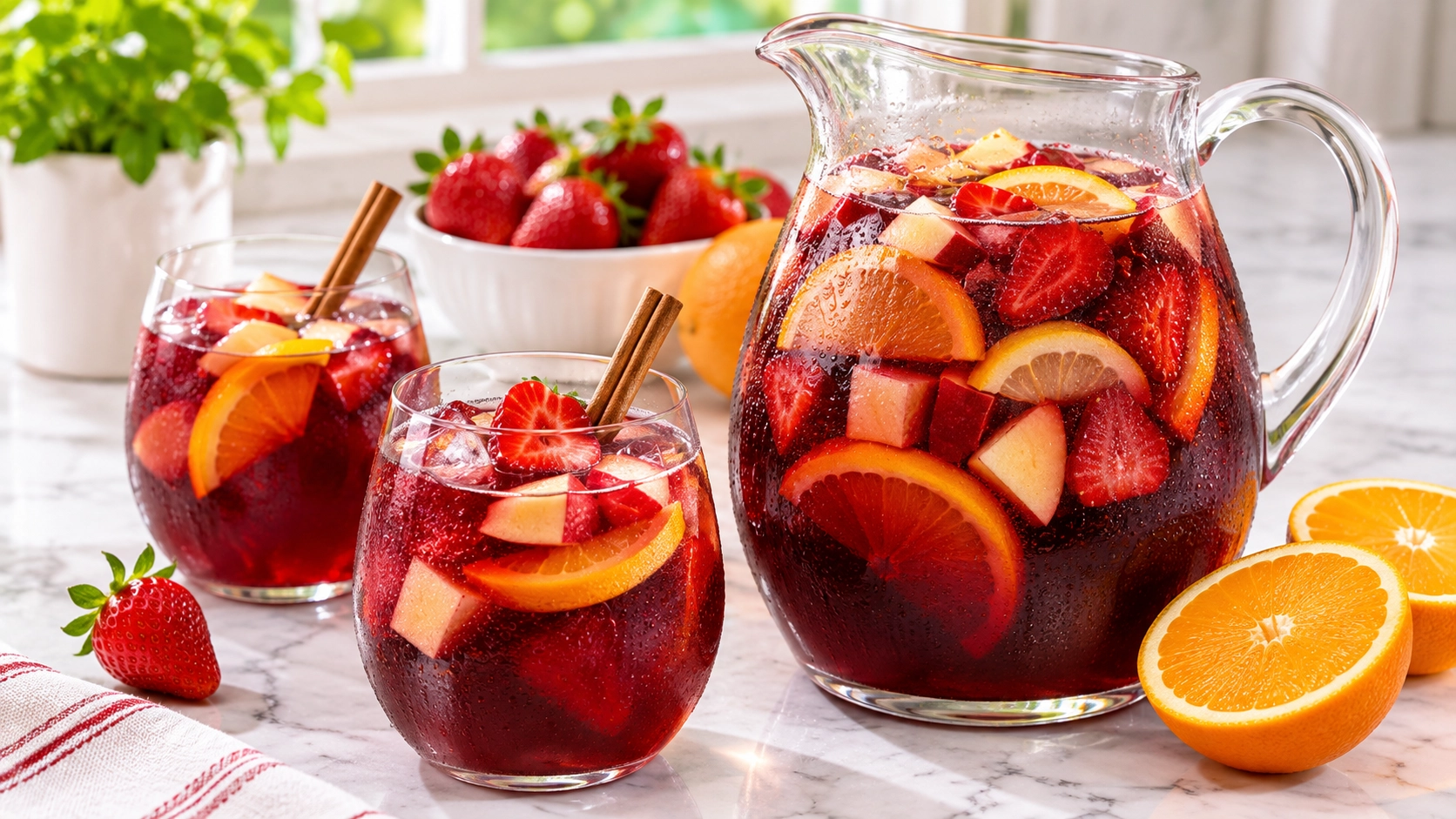
A big glass pitcher of sangria, jeweled with orange wheels, red apple, and berries floating in a deep ruby punch, is the centerpiece that makes any gathering feel like a celebration. This Sangria Recipe is fruity, tangy, and sparkling, with a warm touch of cinnamon, and it is made without any wine at all.
My first alcohol free attempts were disappointing. Plain grape juice tasted like a sugary lunchbox drink, the fruit turned mushy, and everything went flat before the guests arrived. After six test pitchers, three fixes made the difference: strong black tea for a wine like depth, fresh citrus to cut the sweetness, and sparkling water added only at the end.
What makes this version different is the tea. It adds the dry, tannic edge that grape juice alone lacks, so the drink tastes grown up instead of syrupy. It takes 15 minutes of work and one pitcher. My aunt, who has hosted the family summer party for twenty years, tasted a glass and asked if she could serve it every year.
Table of Contents
Why You’ll Love This Sangria Recipe
- Deep, grown up flavor from strong black tea, fresh citrus, and a cinnamon stick
- Ruby color and juicy fruit that make a pitcher look like a party centerpiece
- Ready in 15 minutes of work, with one pitcher and no special tools
- Make ahead friendly, since the base keeps 3 days and tastes better after a chill
- Easy to serve a crowd, with 8 glasses from one batch
- Easy to customize, with white, winter spiced, spicy, or kid friendly versions
Quick Information
- Prep Time: 15 minutes
- Cook Time: 5 minutes, for steeping the tea
- Cool Time: 20 minutes
- Chill Time: At least 2 hours
- Total Time: About 2 hours 40 minutes, mostly chilling
- Servings: 8 (about 1 cup of liquid plus fruit each)
- Difficulty: Easy
- Calories: 140 per serving
- Important Tool: A 4 quart glass pitcher
- Best For: Summer parties, barbecues, baby showers, holiday gatherings, or a cool weekend drink
- Course: Drink
- Cuisine: Spanish inspired
- Category: Drinks & Dips
Nutrition Information
- Calories: 140
- Protein: 1g
- Carbohydrates: 35g
- Fat: 0g
- Fiber: 2g
- Sugar: 30g
- Sodium: 15mg
- Serving Size: 1 glass (about 1 cup of liquid plus fruit), with fruit
- Servings Per Recipe: 8
Most of the calories in this sangria come from the grape juice and the honey. The fruit adds fiber and vitamin C, and skipping the honey trims about 16 calories per glass.
Nutrition information is an estimate calculated from standard ingredient values and will vary based on specific brands and portion sizes used.
Ingredients
For the Sangria Base
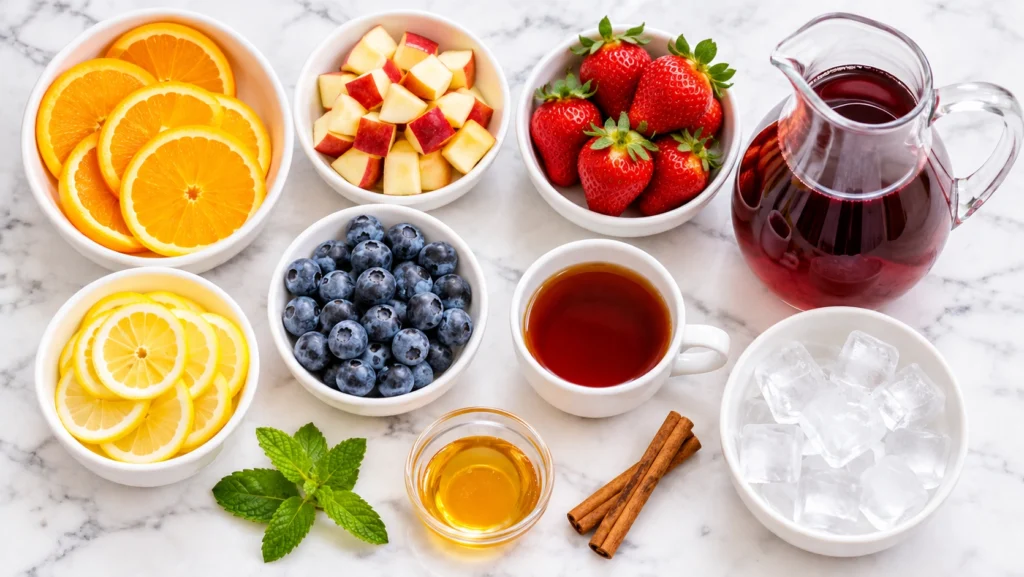
- 4 cups (960ml) 100 percent red grape juice, chilled
- 2 black tea bags, such as English Breakfast or Assam
- 1 1/2 cups (360ml) hot water, about 205°F
- 1 cup (240ml) fresh orange juice
- 1/4 cup (60ml) fresh lemon juice
- 2 tablespoons (42g) honey or maple syrup, optional
- 1 cinnamon stick
For the Fruit
- 2 medium oranges, sliced into thin rounds
- 1 lemon, sliced into thin rounds
- 1 large red apple, diced into 1/2 inch cubes
- 1 cup (about 150g) strawberries, hulled and halved
- 1/2 cup (about 75g) blueberries
For Serving
- 2 cups (480ml) very cold sparkling water
- Ice cubes or frozen red grapes
- Orange wheels and cinnamon sticks, for garnish
Ingredient Notes: Choose 100 percent juice, not a juice cocktail, and check the label for added sugar. I tested this with Welch’s 100 percent red grape juice and Twinings English Breakfast tea, and both gave a deep, balanced flavor. Fresh citrus tastes much brighter than bottled juice, so squeeze it right before you mix.
Tip: Chill the grape juice and the sparkling water for at least 3 hours. A cold start keeps the pitcher fizzy and stops the ice from watering it down.
Equipment Needed
- 4 quart glass pitcher: holds the batch and shows off the ruby color and floating fruit
- Citrus juicer: squeezes the oranges and lemon without crushing the bitter pith
- Sharp paring knife: cuts thin, even citrus rounds and apple cubes
- Long wooden spoon: stirs the base and gently presses the oranges
- Fine mesh strainer: catches tea leaves and seeds for a clear pour
- Stemmed glasses: show off the color and give the fruit room
Practical Tip: Use a glass or ceramic pitcher, or food-grade stainless steel. Avoid reactive aluminum or copper with acidic citrus.
Preparation
Chill the grape juice and the sparkling water ahead of time. Squeeze the oranges and the lemon, strain out any seeds, and measure the juices into a jug.
Slice the oranges and lemon into thin rounds, dice the apple, and toss the apple cubes with 1 tablespoon of the lemon juice so they stay pale. Hull and halve the strawberries, and keep them and the blueberries in the fridge until the last hour.
Step by Step Instructions
1. Brew the tea
Steep the tea bags in 1 1/2 cups of 205°F water for 5 minutes, then lift out the bags without squeezing them. Cool the tea for 20 minutes, until it is no longer warm.
Chef’s Note: Set a five-minute timer for the tea, then cool it completely before mixing.
2. Prep the fruit
Slice the oranges and lemon into thin rounds, dice the apple, and toss the apple with a spoonful of the lemon juice. The slices should look bright and even, with no seeds. Use 1 tablespoon from the measured 1/4 cup lemon juice, then reserve the remainder. Hull and halve the strawberries and refrigerate the berries until needed.
3. Mix the base
Pour the grape juice, cooled tea, orange juice, remaining lemon juice, and optional honey into the pitcher, and stir for 30 seconds until the honey dissolves. Add the cinnamon stick, and taste. The base should taste sweet, tart, and slightly dry.
Chef’s Note: Taste the juice mixture before adding the optional honey; sweetness varies by brand.
4. Add the fruit and chill
Add the oranges, lemon, and apple, press the oranges gently 3 times with the spoon to release their juice, then cover and refrigerate for 2 to 4 hours. Add the strawberries and blueberries for the last hour.
5. Top and serve
Stir in the sparkling water just before serving, fill glasses with ice, and ladle in the sangria with a generous scoop of fruit. Garnish with an orange wheel and a cinnamon stick.
Chef’s Note: Add sparkling water only when ready to serve, or top each glass separately to preserve the bubbles.
Expert Tips & Tricks
- Use 100 percent juice. Choose juice for its grape flavor and adjust the optional sweetener to taste; 100 percent juice still contains natural sugars.
- Learn from my mistake. My first pitcher used grape juice cocktail and no lemon, and it tasted like candy. Switching to 100 percent juice and fresh citrus fixed it.
- Chill everything. Cold juice and cold sparkling water keep the drink crisp, and they let you use less ice.
- Slice the citrus thin. Thin rounds release their oils quickly, and thick slices make the drink bitter from the pith.
- Make ahead. Mix the base up to 1 day ahead without the fruit or sparkling water, then add both on the day.
- Strain for storage. Keep leftovers in a clean jar and strain out the fruit, so the pith does not make the sangria bitter overnight.
- Save time. Brew the tea the night before and keep it in the fridge, so mixing takes about 5 minutes.
Common Mistakes & Troubleshooting
Too sweet or syrupy: Juice cocktails, extra honey, or very sweet grape juice make the drink cloying. Use 100 percent juice and skip the honey if your juice is sweet. Fix a sweet pitcher with 2 tablespoons of lemon juice and an extra cup of sparkling water.
Flat, bland flavor: Skipping the tea, the citrus, or the chill leaves the sangria tasting like plain juice. Brew the tea strong, add the full lemon juice, and chill for at least 2 hours. Fix a flat pitcher with a cinnamon stick, 1/4 cup more lemon juice, and an extra hour in the fridge.
Bitter taste: Over steeped tea, squeezed tea bags, or thick citrus slices cause bitterness. I steeped my tea for 15 minutes in an early batch, and the whole pitcher turned harsh. Steep for 5 minutes and slice the citrus thin. Soften a bitter batch with 1/2 cup of grape juice and 1 tablespoon of honey.
Fizz goes flat: Adding the sparkling water early or leaving the pitcher uncovered kills the bubbles. Pour the sparkling water in only at serving, or top each glass separately. Revive a flat pitcher with a fresh cup of cold sparkling water.
Cloudy sediment at the bottom: Tea tannins, fruit pulp, and natural grape sediment settle as the pitcher sits. Strain the juice and tea through a fine mesh sieve, and stir before pouring. Some sediment is expected in freshly prepared juice and tea; discard the drink if it develops mold, an off smell, or unexpected fermentation.
Storage Instructions
- Room Temperature: Do not leave the pitcher out longer than 2 hours, or 1 hour above 90°F.
- Refrigerator: Store the base, without sparkling water, in a sealed glass pitcher for up to 3 days; keep the fruit in the base for no more than 24 hours.
- Freezer: Freeze the base in ice cube trays for up to 3 months, and drop the cubes into glasses of sparkling water for a quick drink.
- Reheating: Not applicable, since this drink is served cold. Stir the pitcher well before pouring.
- Make Ahead: Make the base up to 1 day ahead, then add the fruit, berries, and sparkling water on the day.
- My storage tip: I freeze leftover sangria in ice cube trays, then use the cubes to chill the next batch without watering it down.
Variations & Substitutions
- Spicy version: Add 2 thin slices of fresh jalapeño and 1 inch of sliced fresh ginger to the pitcher for a warm, zippy kick.
- Mild, kid friendly version: Skip the tea, use half apple juice and half grape juice, and serve in cups with extra sparkling water.
- Vegetarian version: The recipe is already vegetarian, since it uses only juice, tea, fruit, and honey.
- Vegan version: Use maple syrup in place of the honey.
- Gluten free version: The drink is naturally gluten free.
- White sangria version: Use white grape juice, 1 sliced peach, green apple, and fresh mint, and replace the black tea with strong green tea.
- Winter spiced version: Use pomegranate juice, add 1 cup of fresh cranberries, 3 whole cloves, and 1 star anise, and serve warm.
- Other substitutions: Swap the berries for diced pears or pineapple, use blood oranges in winter, or replace the sparkling water with non-alcoholic ginger beer.
Serving Suggestions
Sangria is best served ice cold, in stemmed glasses, with plenty of juicy fruit.
- Garnishes: Orange wheels, cinnamon sticks, fresh mint, or frozen red grapes
- Main dishes: Grilled chicken skewers, tacos, rice bowls, or a barbecue spread
- Fresh sides: Serve beside a fresh and colorful fruit bowl for a bright summer table
- Dessert pairings: Finish with a glass of creamy mango sago or a slice of Oreo cheesecake for a sweet ending
- Party serving: Use a drink dispenser with a spigot, and set out small bowls of extra fruit
- Meal combinations: Explore more drink recipes for other refreshing afternoons
Meal Prep Tip: I brew the tea and mix the base the night before a party, then add the fruit and sparkling water that afternoon, so I can enjoy my own guests.
Frequently Asked Questions
How do I keep sangria cold at an outdoor party without watering it down?
Freeze red grape juice in ice cube trays and use those cubes in place of regular ice, so the drink stays cold and gets more flavorful as it melts. Keep the pitcher in a larger bowl of ice, shaded from the sun, and hold the sparkling water in the fridge until the last minute. For a big crowd, use a drink dispenser with a fruit infuser basket, and top up the sparkling water in small amounts to keep your sangria fizzy.
Why did my fruit turn brown or mushy in sangria?
Brown fruit comes from cut apples or pears meeting air, and mushy fruit comes from berries and peaches sitting in acidic juice too long. Toss diced apples with lemon juice right away, and add soft fruits like strawberries only 1 to 2 hours before serving. Firm citrus slices and apples can sit for up to 8 hours. If the fruit is already soft, strain it out and add a fresh handful, so your sangria still looks bright and tastes fresh.
Can I use pomegranate juice, cranberry juice, or white grape juice?
Yes, swap any 100 percent juice in the same amount. Pomegranate juice makes a deeper, more tart sangria, while cranberry juice tastes sharper, so start without honey and add it gradually to taste. White grape juice makes a pale sangria blanca, and pairs well with peaches, green apples, and mint. Avoid juice cocktails, which carry extra sugar and taste thin. Whichever juice you choose, keep the strong black tea, since it gives your sangria its dry, wine like backbone.
How do I know when sangria has chilled long enough?
Sangria is ready when the liquid has turned a deep ruby, the citrus slices look slightly soft at the edges, and a spoonful tastes cold and rounded, not sharply sweet. Plan on 2 hours at a minimum, and 4 hours for the best flavor, since the cinnamon, citrus, and tea need time to blend. Past 8 hours the fruit breaks down and turns bitter from the citrus pith, so strain out the slices if your sangria needs to wait overnight.
What makes sangria taste like sangria without the wine?
Three things: tannin, acid, and fruit. Strong black tea supplies the dry, slightly grippy tannin that wine has, citrus juice adds a tangy, bright acidity, and soaked fruit gives that fresh, jammy sweetness. A cinnamon stick adds warmth, and sparkling water adds the lively fizz. Balance these and your sangria tastes like the classic party punch, even with plain grape juice as the base. Skip the tea, and it tastes like a flat fruit drink.
Conclusion
The best sangria is the one that waits in the fridge while you get ready for the party. A few hours turn separate juices and fruit into one deep, fragrant punch, and the only job left is topping each glass with something sparkling. A pitcher costs less than a single restaurant round and feeds the whole table.
I made a double pitcher for my cousin’s graduation party last June, and the glasses went around three times before the cake appeared. A guest who usually skips drinks asked me what kind of tea went in, and I watched her write it down.
Make it once as written, then play with the season. Peaches in July or cranberries and star anise in December keep this sangria exciting all year.
For more easy drink recipes like this one, follow along on Pinterest at MyRecipesDiary.

Sangria with Juicy Fruits
Ingredients
Equipment
Method
- Steep the tea bags in 1 1/2 cups of 205°F water for 5 minutes, then lift out the bags without squeezing them. Cool the tea for 20 minutes, until it is no longer warm.
- Slice the oranges and lemon into thin rounds, dice the apple, and toss the apple with a spoonful of the lemon juice. The slices should look bright and even, with no seeds. Use 1 tablespoon from the measured 1/4 cup lemon juice, then reserve the remainder. Hull and halve the strawberries and refrigerate the berries until needed.
- Pour the grape juice, cooled tea, orange juice, remaining lemon juice, and optional honey into the pitcher, and stir for 30 seconds until the honey dissolves. Add the cinnamon stick, and taste. The base should taste sweet, tart, and slightly dry.
- Add the oranges, lemon, and apple, press the oranges gently 3 times with the spoon to release their juice, then cover and refrigerate for 2 to 4 hours. Add the strawberries and blueberries for the last hour.
- Stir in the sparkling water just before serving, fill glasses with ice, and ladle in the sangria with a generous scoop of fruit. Garnish with an orange wheel and a cinnamon stick.
Notes
- Use 100 percent juice, not a juice cocktail.
- Add soft berries only for the last hour.
- Strain out the fruit if the sangria sits overnight.