Avocado Mayonnaise

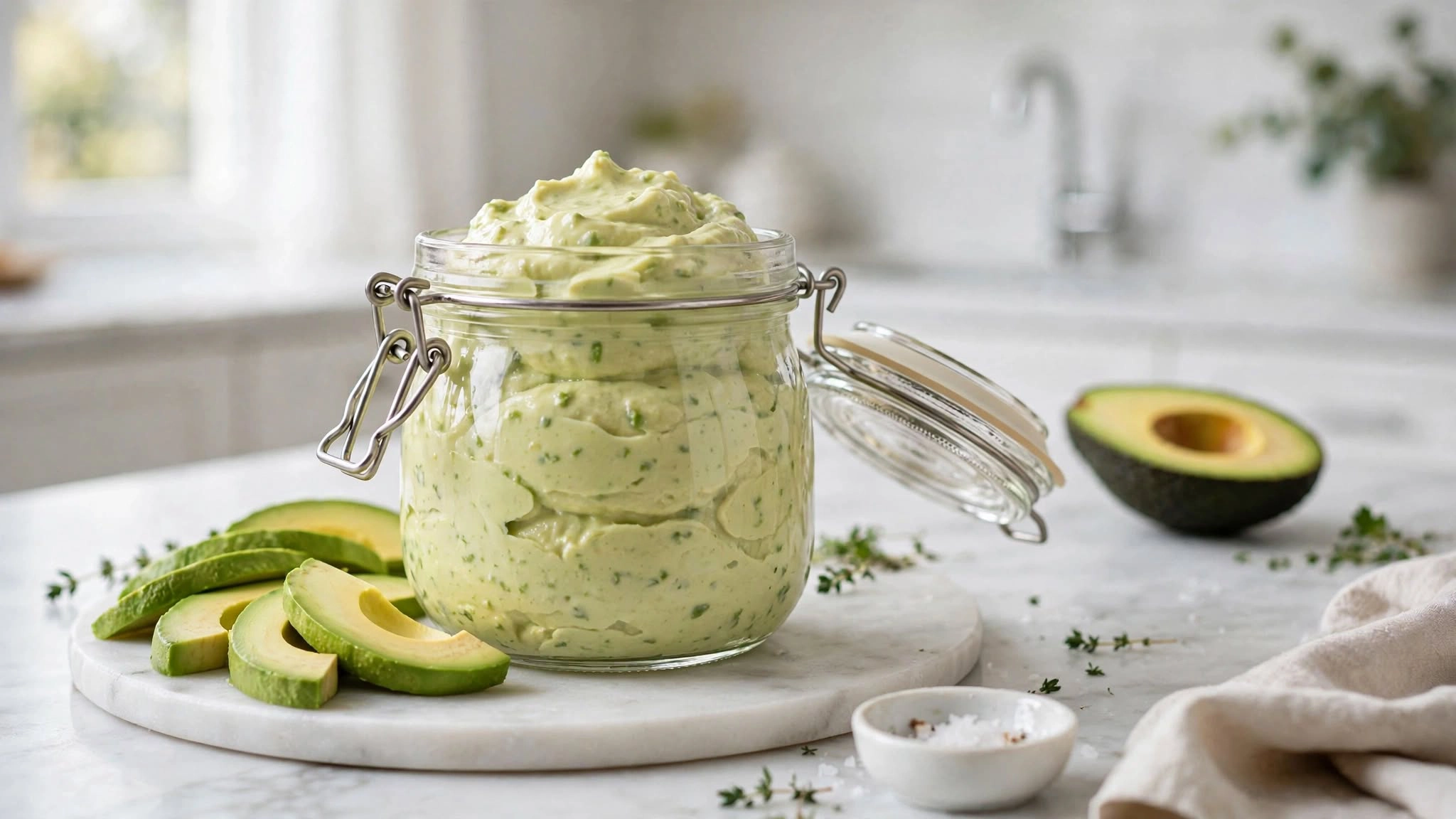
A jar of pale green, silky mayonnaise sitting in your fridge takes about as long to make as it does to find the store-bought version in the grocery aisle. Avocado Mayonnaise starts with a simple emulsion of egg, lemon, and avocado oil, then gets folded together with ripe avocado for a spread that is richer, fresher, and far more flavorful than anything sold in a squeeze bottle.
I began making my own after reading the label on a jar I had used for years and realizing how long the ingredient list had become. The homemade version needs only a handful of things, and once you see that thick, glossy emulsion form in the bottom of the jar in under half a minute, the process stops feeling intimidating. Now this avocado mayo is the base for my sandwiches, salads, and dipping sauces, and I honestly cannot imagine going back to the shelf-stable kind.
Table of Contents
Why You’ll Love This Recipe
- Ready in just 10 minutes, using one jar and an immersion blender
- Silky, creamy texture with a gentle avocado flavor and a bright lemon finish
- Only a few simple ingredients, with none of the additives found in store-bought jars
- Naturally gluten free, fitting a wide range of eating styles
- Endlessly versatile, working as a spread, a dip, or the base of a dressing
- Easy to flavor, from garlic and herbs to a smoky chipotle version
Quick Information
- Prep Time: 10 minutes
- Cook Time: 0 minutes
- Total Time: 10 minutes, plus an optional 30 minute chill
- Servings: 10 (makes about 1 1/4 cups)
- Difficulty: Easy
- Calories: 165 per serving
- Important Tool: An immersion blender and a tall, narrow jar
- Best For: Sandwiches, salads, dips, and healthier homemade sauces
- Course: Condiment
- Cuisine: American
- Category: Sauces & Condiments
Nutrition Information
- Calories: 165
- Protein: 1g
- Carbohydrates: 2g
- Fat: 18g
- Fiber: 1g
- Sugar: 0g
- Sodium: 135mg
- Serving Size: 2 tablespoons
- Servings Per Recipe: 10
Avocado oil and ripe avocado supply mostly unsaturated fats, which is part of why homemade avocado mayonnaise feels lighter on the palate than its calorie count might suggest. Like any mayonnaise, it is best used as a flavorful spread or dip rather than eaten in large portions.
Nutrition information is an estimate calculated from standard ingredient values and will vary based on specific brands and portion sizes used.
Ingredients
For the Avocado Mayonnaise
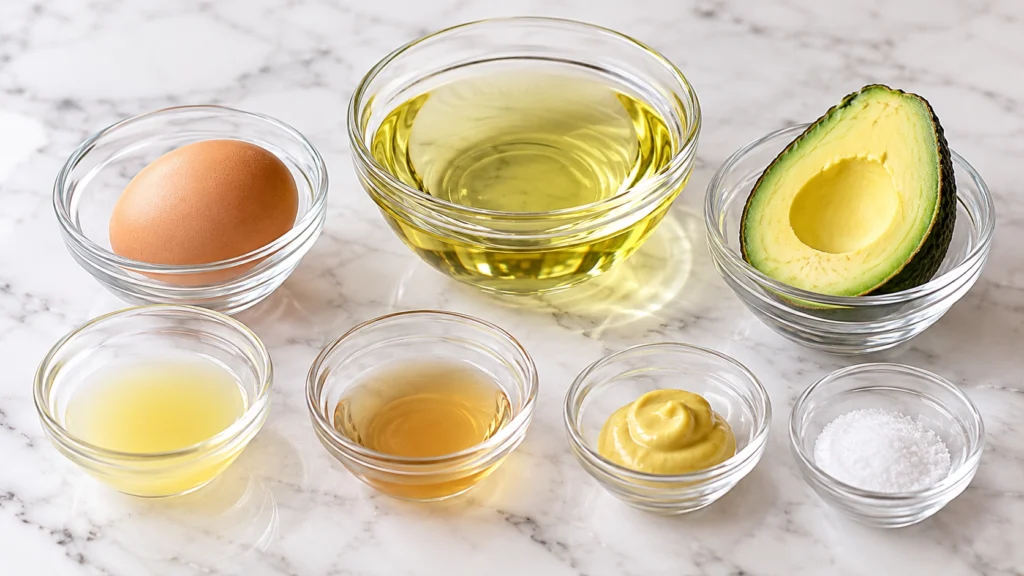
- 1 large egg, at room temperature (pasteurized if you prefer)
- 1 tablespoon fresh lemon juice
- 1 teaspoon apple cider vinegar
- 1 teaspoon prepared mustard
- 1/2 teaspoon fine salt
- 3/4 cup (180ml) light tasting avocado oil
- 1/2 ripe avocado, pitted and scooped
Ingredient Notes: A light tasting avocado oil is the key to a clean flavor here, since extra virgin oils can turn noticeably bitter once they are whipped at high speed. Bringing the egg to room temperature before you start helps the emulsion come together faster and more reliably than a cold egg straight from the fridge.
Ingredient Tip: Choose an avocado that yields gently to pressure but has no dark, stringy patches inside, since overripe fruit can make the finished avocado mayonnaise taste flat and turn brown faster in the fridge.
Equipment Needed
- Immersion blender – whips the oil into a thick, stable emulsion in seconds
- Tall, narrow jar – just wider than the blender head so the ingredients stay in contact with the blades
- Small spatula – scrapes every last bit of mayonnaise from the jar
- Airtight jar or container – stores the finished avocado mayo in the fridge
Practical Tip: A wide mouth mason jar that fits the blender head snugly works better than a wide bowl, since a narrow space forces the oil and egg to stay together long enough to emulsify.
Preparation
Before you start, set your egg on the counter for about 30 minutes so it loses its chill, and gather the lemon juice, vinegar, mustard, and salt within arm’s reach. Halve the avocado, remove the pit, and scoop out half of the flesh into a small bowl, then mash it lightly with a fork so it blends smoothly later.
Measure the avocado oil into a liquid measuring cup so you can pour it in one steady motion, and place your immersion blender next to the jar so nothing interrupts the process once it starts.
Step by Step Instructions
- Layer the ingredients. Add the egg, lemon juice, vinegar, mustard, and salt to a tall jar, then pour the avocado oil gently on top and let everything settle for 30 seconds.
- Start the emulsion. Lower the immersion blender until the head rests flat against the bottom of the jar, turn it on high, and hold it completely still for 15 to 20 seconds. Keep the blender pressed to the bottom during this stretch, since lifting too early breaks the emulsion before it has a chance to form; you will see a thick, creamy white mixture building up from the base.
- Blend upward. Once the bottom has turned thick and white, slowly tilt and lift the blender through the remaining oil, moving up and down for another 15 to 20 seconds, until the whole mixture looks pale, thick, and uniform.
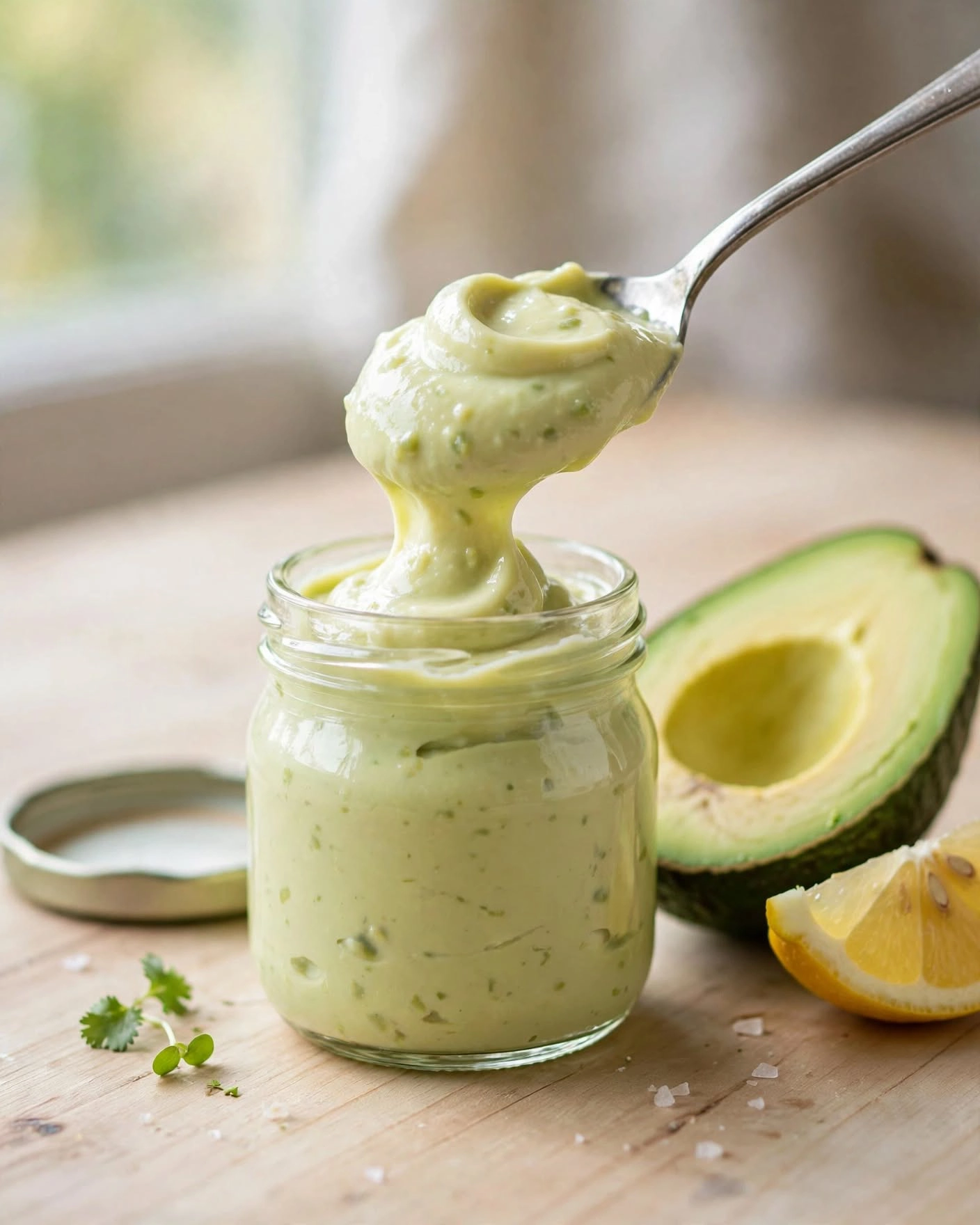
- Add the avocado. Add the mashed avocado to the jar and blend for 10 to 15 seconds, until completely smooth and pale green. The finished avocado mayonnaise should be thick enough that a spoon stands upright in the center without sinking right away, which is a better sign of readiness than time alone.
- Taste and adjust. Taste the mayonnaise and stir in a pinch more salt or a small squeeze of lemon juice if it needs brightening.
- Chill and store. Transfer to a clean jar and refrigerate for at least 30 minutes if you can wait. The avocado mayo firms up slightly as it cools, and pressing a thin layer of plastic wrap directly against the surface helps keep the color bright green instead of dulling at the edges.
Expert Tips & Tricks
- Use room temperature ingredients. The first time I made this straight from a cold fridge, the mixture stayed thin and refused to thicken, so now I always let the egg sit out first.
- Choose the right jar. A narrow jar that just fits the blender head is the single biggest factor in getting a fast, dependable emulsion.
- Add the avocado last. Blending the base emulsion first, before the avocado goes in, gives you a much more stable and predictable texture.
- Pick a light tasting oil. A mild avocado oil keeps the flavor clean, while a strong or bitter oil will dominate the finished spread.
- Rescue a broken batch. If the mixture splits, blend a fresh egg yolk with a teaspoon of lemon juice in a clean jar, then slowly drizzle the broken mixture in while blending.
- Add lemon at the end for brightness. A final squeeze right before serving keeps the flavor fresh and lively.
- Make small batches. Because homemade mayonnaise has no preservatives, a smaller jar you finish within a few days is always better than a large batch that sits.
Common Mistakes & Troubleshooting
Mayonnaise will not thicken: This usually happens when the ingredients were too cold or the blender was lifted before the emulsion began forming at the bottom. Keep the blender still against the base until you see thick white mixture climbing the sides, and make sure the egg started at room temperature.
Mixture splits or turns oily: Adding oil too quickly, or lifting the blender too soon, can cause the emulsion to break apart. Use the layered method described above, and if a batch does split, rescue it by slowly blending it into a fresh egg yolk.
Bitter aftertaste: Extra virgin oils can develop a sharp, bitter edge when blended at high speed. Use a light tasting avocado oil, and taste your oil on its own beforehand if you are unsure.
Color dulls or turns brown: Avocado oxidizes quickly when exposed to air, which dulls the color over time. A little extra lemon juice and a layer of plastic wrap pressed against the surface slow this down noticeably.
Too thick or too thin: Mayonnaise that feels overly thick can be loosened with a teaspoon of water or lemon juice, while a thin batch may just need more time to chill. I learned to rely on the spoon test after a few batches, since the mixture always looks slightly thinner right after blending than it does once it has cooled.
Storage Instructions
- Room Temperature: Do not leave avocado mayonnaise out longer than 1 hour, since it contains raw egg and fresh avocado.
- Refrigerator: Store in an airtight jar for up to 4 days, with plastic wrap pressed against the surface.
- Freezer: Freezing is not recommended, since the emulsion separates once thawed.
- Reheating: Not applicable, as this is served cold.
- Make Ahead: Blend the base emulsion up to 2 days in advance and stir in freshly mashed avocado when you are ready to use it.
- My storage tip: I keep my jar on a shelf at the back of the fridge rather than in the door, since the temperature stays steadier there and the mayonnaise lasts a little longer.
Variations & Substitutions
- Spicy version: Blend in 1 to 2 teaspoons of chipotle in adobo or a squeeze of sriracha for a smoky, spicy avocado mayo.
- Mild version: Reduce the mustard and vinegar slightly for a gentler, creamier flavor that suits younger palates.
- Egg free version: Replace the egg with 3 tablespoons of aquafaba, the liquid from a can of chickpeas, and blend the same way for a plant based avocado mayonnaise.
- Naturally gluten free: This recipe contains no gluten as written, though it is worth checking the label on your prepared mustard.
- Other substitutions: Stir in minced garlic and fresh herbs for a garlic herb version, or add lime juice and chopped cilantro for a bright, taco friendly spread.
Serving Suggestions
Homemade avocado mayonnaise works in far more places than the obvious sandwich.
- Sandwiches and burgers: Spread generously on toasted bread or buns for extra creaminess
- Dipping sauce: Serve alongside air fryer sweet potato fries for a rich, cooling dip
- Party platters: Pair with fried chicken wings as a creamy alternative to store-bought dressings
- Salads: Use as the base for chicken, egg, or potato salad
- Meal combinations: Explore more sauces and condiments recipes for other easy homemade staples
Meal Prep Tip: I mix a small batch every Sunday and portion it into two little jars, using one immediately and keeping the second sealed for midweek lunches.
Frequently Asked Questions
How long does homemade avocado mayonnaise last?
Homemade avocado mayonnaise keeps for up to 4 days in an airtight jar in the refrigerator, with a piece of plastic wrap pressed directly against the surface to slow browning. Because it contains raw egg and fresh avocado, it should not be treated like a store-bought jar with preservatives. If the color turns dark or the smell changes, it is best to discard it and make a fresh batch.
Why won’t my avocado mayonnaise thicken?
The most common reasons are cold ingredients or lifting the immersion blender too early, before the emulsion has begun forming at the base of the jar. Start with a room temperature egg, keep the blender pressed against the bottom until a thick white mixture appears, and then lift slowly. A jar that is too wide can also make it harder for the ingredients to stay together.
Can I make avocado mayonnaise without raw eggs?
Yes, you can replace the egg with 3 tablespoons of aquafaba, the liquid from canned chickpeas, and blend it exactly as you would the egg version. The result is slightly lighter in texture but still creamy, and it makes the spread completely plant based. Pasteurized eggs are another option if you prefer to keep the classic version without using raw eggs.
How do I know when the avocado mayonnaise is done blending?
Look for a thick, pale, uniform mixture with no visible streaks of oil, and test it by dipping in a spoon, which should stand upright without immediately falling over. After the avocado goes in, it should look smooth and evenly pale green. The whole process usually takes under a minute of total blending time.
Why does my homemade avocado mayonnaise taste bitter?
Bitterness usually comes from using an extra virgin oil, which can turn sharp when whipped at high speed. Choose a light tasting avocado oil instead, and taste the oil on its own beforehand if you are unsure. Overripe avocado can also add a flat, slightly off flavor, so use fruit that is ripe but still bright green inside.
Conclusion
Avocado Mayonnaise proves that some of the best pantry staples are worth making from scratch, especially when they take less than ten minutes and only a handful of ingredients. What I love most about this one is how adaptable it becomes, turning from a sandwich spread into a dip or salad base with a small tweak. Once you have made a jar of avocado mayonnaise yourself, that store-bought jar starts to feel like a compromise you no longer need to make.
For more easy homemade sauces and condiments like this one, follow along on Pinterest at MyRecipesDiary.

Avocado Mayonnaise
Ingredients
Equipment
Method
- Add egg, lemon juice, vinegar, mustard, and salt to a tall jar, then pour the oil on top.
- Rest the blender flat on the bottom and blend on high without moving for 15 to 20 seconds.
- Slowly lift the blender up through the mixture until thick and pale.
- Add the mashed avocado and blend 10 to 15 seconds until smooth.
- Taste and adjust with salt or lemon juice.
- Transfer to a clean jar and chill 30 minutes if desired.
Notes
- Start with a room temperature egg so the emulsion forms quickly.
- Use a light tasting avocado oil to avoid a bitter aftertaste.
- Press plastic wrap against the surface to keep the color bright green.
- A jar just wider than the blender head gives the best, most reliable emulsion.