Orange Olive Oil Cake Recipe in 7 Steps for Heavenly Flavor

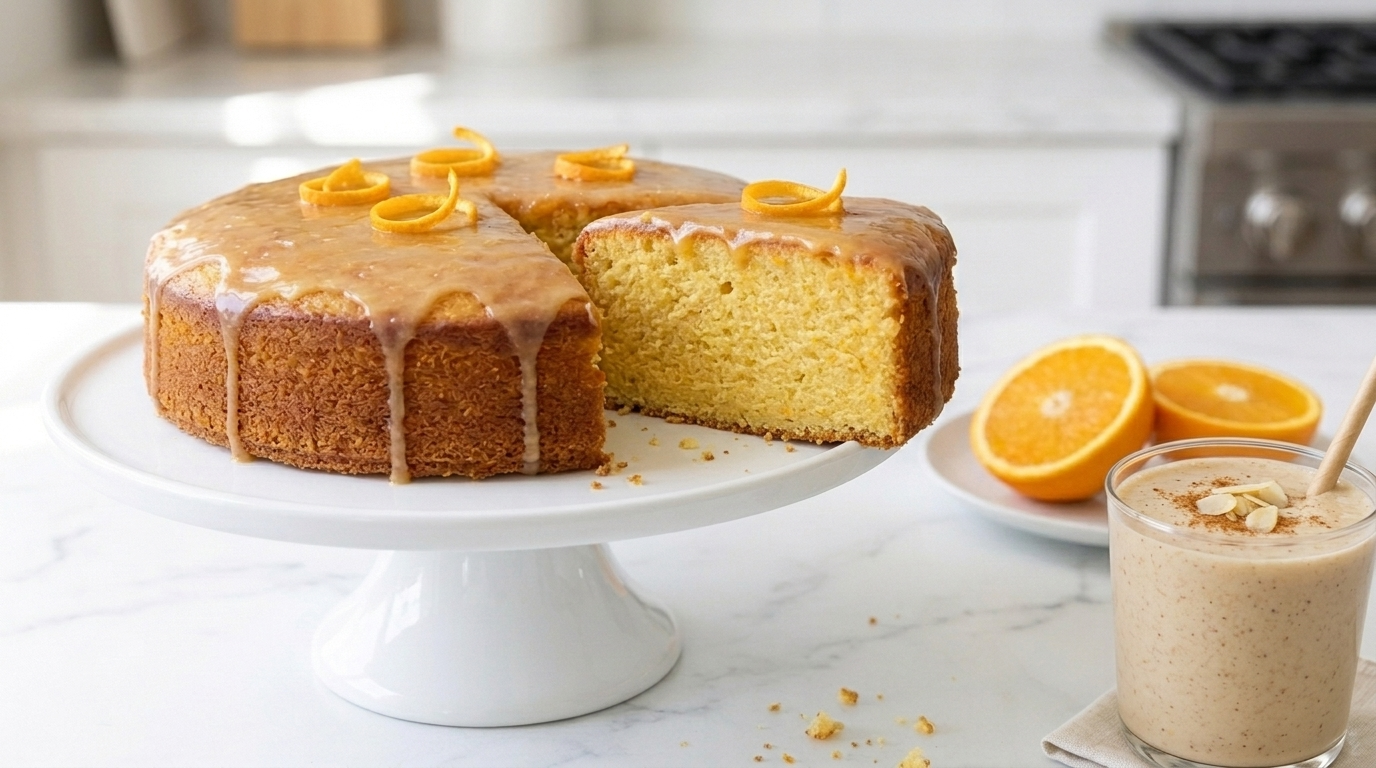
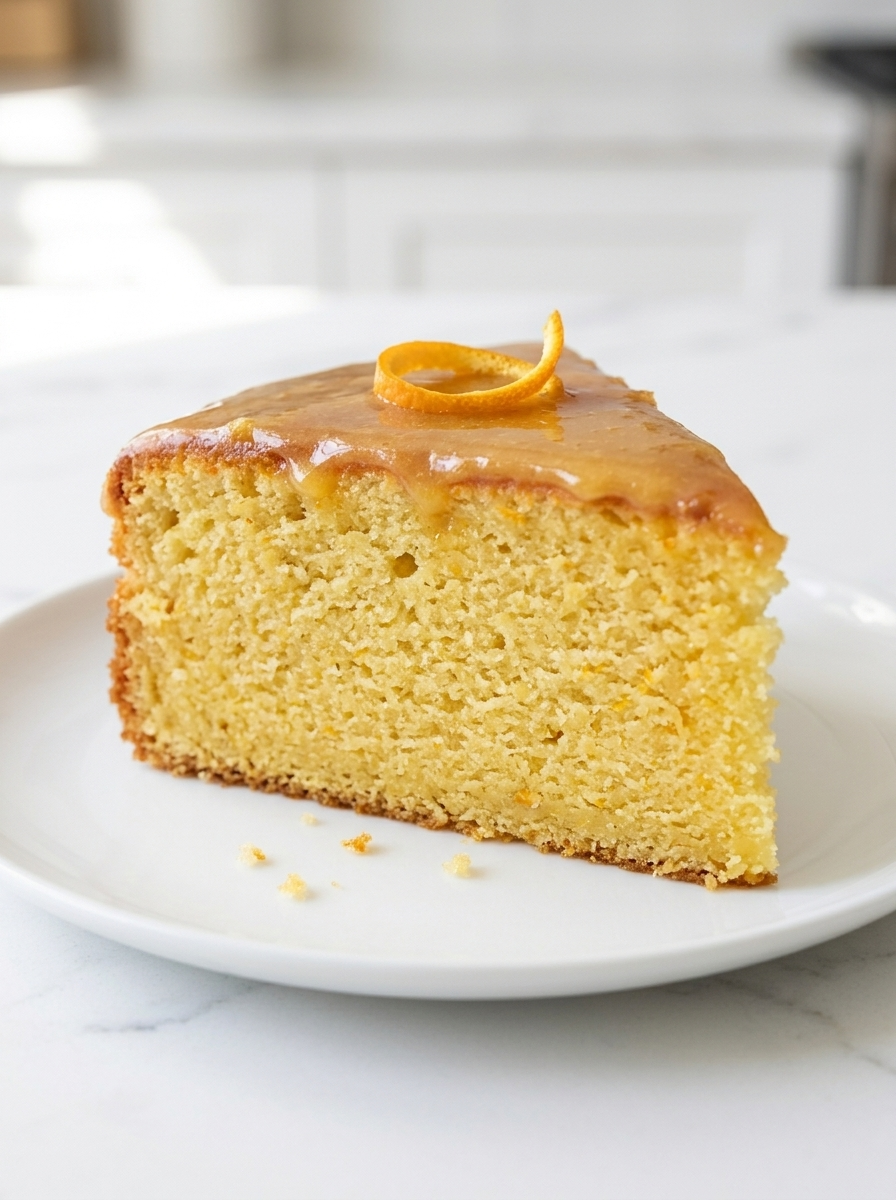
A slice of orange olive oil cake, with a golden, crackly top, a soft crumb that stays moist for days, and a fragrant glaze that tastes like sunshine, is the kind of cake that disappears from the plate before the tea cools. This orange olive oil cake is bright, tender, and lightly fruity, with none of the heaviness of a butter cake.
My first loaf was a disappointment. The cake tasted bitter, the crumb was dense, and the orange flavor came across as faint perfume. After six test bakes, I found three fixes: a mild extra virgin olive oil, orange zest rubbed into the sugar, and a gentle fold at the end.
What makes this version different is the orange. Zest rubbed into the sugar releases its oils, fresh juice goes into both the batter and the glaze, and a little yogurt keeps the crumb soft for four days. It needs one large bowl and a whisk, with no mixer. My aunt, who is wary of any cake without butter, ate two slices and asked where I bought it.
Table of Contents
Why You’ll Love This Orange Olive Oil Cake Recipe
- Tender, moist crumb from olive oil and yogurt, so slices stay soft for 4 days
- Bright, real orange flavor from zest rubbed into the sugar plus fresh juice in the batter and glaze
- One bowl and a whisk, with no mixer and no creaming
- Make ahead friendly, since the flavor deepens after a night in a covered pan
- Easy to serve a crowd, with 10 generous slices from one 9 inch cake
- Simple pantry staples, with no butter and no special tools
Quick Information
- Prep Time: 15 minutes
- Cook Time: 40 to 45 minutes
- Cool Time: 45 minutes
- Glaze Time: 10 minutes
- Total Time: About 1 hour 55 minutes, mostly hands off
- Servings: 10
- Difficulty: Easy
- Calories: 385 per serving
- Important Tool: A 9 inch round cake pan, 2 inches deep, and a microplane
- Best For: Afternoon tea, brunch, baby showers, potlucks, or an easy weekend bake
- Course: Dessert
- Cuisine: Mediterranean inspired
- Category: Desserts & Baking
Nutrition Information
- Calories: 385
- Protein: 5g
- Carbohydrates: 51g
- Fat: 18g
- Fiber: 1g
- Sugar: 34g
- Sodium: 220mg
- Serving Size: 1 slice (about 1/10 of the cake)
- Servings Per Recipe: 10
This orange olive oil cake is a sweet treat, with most of the calories coming from the olive oil and sugar. Olive oil adds heart friendly fats, and a thinner slice with fresh fruit makes a lighter portion. Skipping the glaze saves about 45 calories per slice.
Nutrition information is an estimate calculated from standard ingredient values and will vary based on specific brands and portion sizes used.
Ingredients
For the Orange Olive Oil Cake
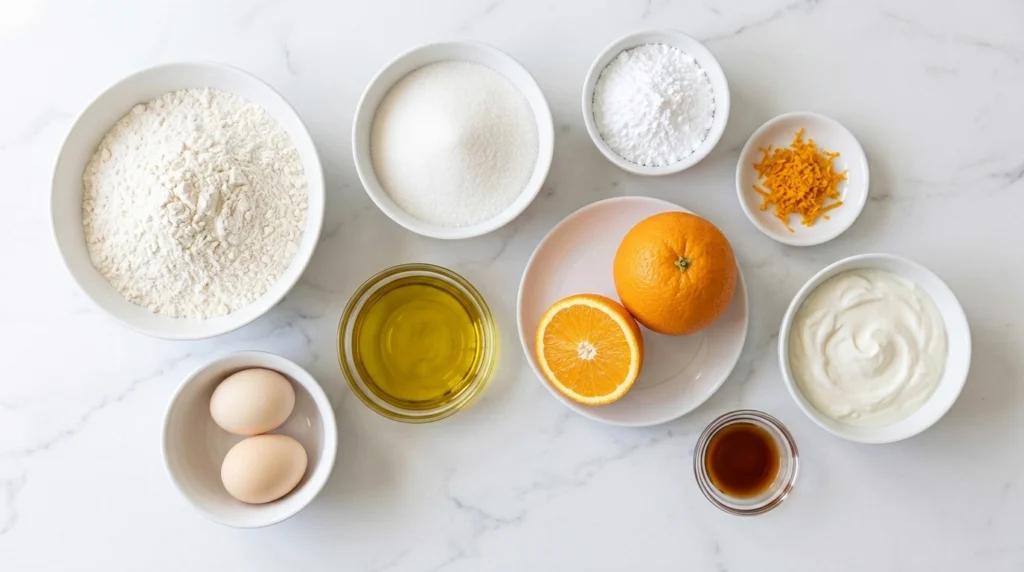
- 1 3/4 cups (220g) all purpose flour
- 1 1/2 teaspoons baking powder
- 1/4 teaspoon baking soda
- 1/2 teaspoon fine salt
- 1 cup (200g) granulated sugar
- 2 tablespoons orange zest, from 2 large oranges
- 3 large eggs, at room temperature
- 3/4 cup (180ml) mild extra virgin olive oil
- 1/2 cup (120ml) fresh orange juice, strained
- 1/2 cup (120g) plain whole milk yogurt, at room temperature
- 1 teaspoon alcohol free vanilla extract
For the Orange Glaze
- 1 cup (120g) powdered sugar, sifted
- 2 to 3 tablespoons fresh orange juice
- 1/2 teaspoon orange zest
- Tiny pinch of fine salt
For Garnish
- Fresh orange zest curls
- Thin orange slices or toasted sliced almonds, optional
Ingredient Notes: Use a mild, fruity extra virgin olive oil, since a peppery oil makes the cake taste bitter. I tested this with California Olive Ranch Everyday and Bertolli Extra Light Tasting, and both gave a soft, balanced flavor. Navel or Valencia oranges give the sweetest juice and the most fragrant zest.
Tip: Zest the oranges before you juice them. A whole orange is much easier to zest, and you can squeeze the juice straight after.
Equipment Needed
- Microplane zester: removes only the orange layer and skips the bitter white pith
- Large balloon whisk: whips the eggs pale and emulsifies the oil
- Fine mesh sieve: sifts the dry ingredients for a fine, even crumb
- 9 inch round cake pan, 2 inches deep: bakes a tall, even cake
- Parchment paper: releases the cake cleanly from the pan
- Wire rack: cools the cake so the bottom stays dry
Practical Tip: Zest with light pressure and rotate the orange as you go. Once you see white, stop and move to a fresh patch.
Preparation
Set the eggs and yogurt on the counter for 30 minutes. Preheat the oven to 350°F (175°C) with the rack in the center.
Grease a 9 inch round cake pan, line the bottom with parchment, and grease the parchment lightly. Zest the oranges, then juice them and strain out any seeds. Measure everything before you start.
Step by Step Instructions
- Prep the pan. Heat the oven to 350°F, then grease the pan and line it with parchment. The pan should look evenly coated with no dry spots.
- Rub the zest into the sugar. Pinch the zest into the sugar with your fingertips for 1 minute, until the sugar looks like damp sand and smells strongly of orange. This releases the oils that carry the flavor.
- Whisk the eggs. Add the eggs and whisk by hand for 2 minutes, until the mixture turns pale, thick, and falls from the whisk in a ribbon.
Chef’s Note: Do not stop early, since this step builds the cake’s light structure. - Emulsify the oil. Pour in the olive oil in a slow, steady stream while whisking, until the batter looks glossy and smooth, then whisk in the juice, yogurt, and vanilla. The batter should look creamy with no oil pooling on top.
Chef’s Note: Pour the oil slowly while whisking to help it blend evenly into the batter. - Fold in the dry ingredients. Sift the flour, baking powder, baking soda, and salt over the bowl in two parts, folding gently after each. Stop as soon as no dry streaks remain.
Chef’s Note: A few tiny lumps are fine; overmixing makes the cake dense. - Bake. Pour the batter into the pan, smooth the top, tap twice on the counter, and bake at 350°F for 40 to 45 minutes. The cake is done when the top is deep golden, the edges pull away from the pan, and a toothpick comes out clean.
- Cool and glaze. Cool the cake in the pan for 15 minutes, then on a wire rack for 30 minutes. Whisk the powdered sugar, 2 tablespoons of juice, zest, and salt until thick but pourable, add more juice 1 teaspoon at a time if needed, pour over the cooled cake, and garnish with zest curls.
Expert Tips & Tricks
- Rub the zest into the sugar. The sugar crystals scrape the oil from the zest, and that is why the orange flavor tastes bright instead of faint.
- Learn from my mistake. My first cake used a strong, peppery olive oil from my pantry, and the whole loaf tasted bitter. A mild, fruity oil fixed it right away.
- Use room temperature eggs and yogurt. They blend into the oil smoothly, and a smooth batter gives a fine, even crumb.
- Whisk the eggs until thick. The pale ribbon stage traps air, which gives the cake its soft lift without any butter.
- Make ahead. Bake the cake a day early and keep it covered, then glaze it a few hours before serving.
- Store it covered. Olive oil keeps the crumb moist, so an airtight cake keeper is enough to keep it soft for 4 days.
- Save time. Zest and juice the oranges while the oven preheats, so the batter goes into the pan within 15 minutes.
Common Mistakes & Troubleshooting
Dense, heavy crumb: Overmixing, cold eggs, or old baking powder make the cake tight. Use room temperature ingredients and fold only until the streaks disappear. If the cake bakes dense, brush the top with 2 tablespoons of orange juice mixed with 1 tablespoon of sugar.
Greasy, oily crumb: Pouring the oil too quickly stops it from blending into the eggs. Stream the oil in slowly while whisking, until the batter looks glossy. Blot an oily top with a paper towel and cool the cake fully before glazing.
Sunken center: Opening the oven door early, too much baking powder, or underbaking drops the middle. Level your spoons and wait 30 minutes before checking. Fill the dip with extra glaze.
Dry cake: Overbaking or too much flour dries out the crumb. I once scooped the flour straight from the bag and got a dry, crumbly cake, so now I weigh it. Brush a dry cake with orange syrup, made from 1/4 cup of juice and 2 tablespoons of sugar warmed until the sugar dissolves.
Weak orange flavor: Skipping the zest rub, or using dull, old oranges, mutes the taste. Rub the zest into the sugar, and use juicy navel or Valencia oranges. Fix a mild cake by adding 1 teaspoon of zest to the glaze.
Storage Instructions
- Room Temperature: Keep the glazed cake covered for up to 4 days, in a cool spot below 75°F.
- Refrigerator: Store covered for up to 7 days, and let slices sit out for 15 minutes before serving.
- Freezer: Freeze the unglazed cake, wrapped twice in plastic wrap and once in foil, for up to 3 months. Thaw overnight on the counter and glaze before serving.
- Reheating: Warm a slice in the microwave for 8 seconds to bring back the soft, fresh from the oven feel.
- Make Ahead: Bake the cake up to 1 day ahead, and glaze it on the day you serve it.
- My storage tip: I slice the cake only as needed, since a whole cake stays much moister than cut slices.
Variations & Substitutions
- Warm spiced version: Add 1/2 teaspoon ground cardamom and 1/4 teaspoon ground ginger to the dry ingredients.
- Mild, kid friendly version: Cut the zest to 1 tablespoon and fold 1/2 cup of mini chocolate chips into the batter.
- Vegetarian version: The recipe is already vegetarian, with no gelatin or meat ingredients.
- Dairy free version: Replace the yogurt with plain unsweetened coconut yogurt in the same amount.
- Gluten free version: Use a 1:1 gluten free baking flour blend with xanthan gum, and let the batter rest for 10 minutes.
- Citrus swaps: Use blood oranges in winter, or replace the oranges with lemons or tangerines.
- Other substitutions: Swap 1/2 cup of the flour for almond flour, add 1 teaspoon of chopped fresh rosemary, or bake the batter as a loaf or cupcakes.
Serving Suggestions
Orange olive oil cake is best served at room temperature, so the crumb stays soft and the glaze stays glossy.
- Garnishes: Fresh orange slices, toasted sliced almonds, or a pinch of flaky salt
- Sauces: A spoonful of whipped cream, mascarpone, or plain Greek yogurt
- Drinks: Hot tea, black coffee, or a silky matcha latte for a fresh, creamy contrast
- Fresh pairings: Serve beside a fresh and colorful fruit bowl for a bright brunch table
- Dessert tables: Set next to an Ultimate Apple Pie for a spread with two classics
- Meal combinations: Explore more dessert and baking recipes for other crowd pleasers
Meal Prep Tip: I bake the cake the night before a gathering, wrap it once it cools, and glaze it that morning, so the only job left is slicing.
Frequently Asked Questions
Can I make the glaze ahead of time?
Yes, you can mix the glaze up to 3 days ahead. Whisk the powdered sugar, orange juice, zest, and salt, then press plastic wrap against the surface and refrigerate. Let it sit at room temperature for 10 minutes and whisk in a few drops of juice to loosen it. Always pour it over a fully cooled cake, since warm cake melts the glaze into a thin, sticky film instead of leaving a glossy white sheet on top of your orange olive oil cake.
Why does my olive oil cake taste bitter?
Bitterness usually comes from three things: a very peppery, grassy olive oil, white pith grated into the zest, or overbaking. Choose a mild, fruity extra virgin oil labeled smooth or delicate, zest only the bright orange layer, and pull the cake when a toothpick comes out clean. Taste your oil on a spoon first. If it makes your throat tickle, save it for salads. A bitter orange olive oil cake can be balanced with extra glaze.
Can I swap the olive oil for another oil?
Yes, use a neutral oil like canola or avocado in the same amount, and the cake will still be moist. You lose the soft, fruity depth that olive oil brings, so add an extra teaspoon of orange zest to keep the flavor lively. Melted butter also works, but use 3/4 cup plus 1 tablespoon and expect a firmer crumb. For a true orange olive oil cake, though, a mild extra virgin olive oil is the star.
How long do I bake it as a loaf, Bundt, or cupcakes?
For a 9 by 5 inch loaf pan, bake at 350°F for 50 to 60 minutes, tenting with foil after 40 minutes if the top browns fast. For a 6 cup Bundt pan, bake 40 to 45 minutes. For 14 cupcakes, fill liners two thirds full and bake 20 to 24 minutes. In every pan, look for a golden top, edges pulling from the sides, and a clean toothpick.
Does olive oil cake taste like olive oil?
Not in the savory sense. A mild extra virgin olive oil adds a soft, fruity depth and a slightly grassy finish, while the orange zest and juice take center stage. Most guests only notice an unusually moist, tender crumb. If you are nervous, use a light tasting oil for your first orange olive oil cake, and let the glaze and zest carry the flavor. Strong, peppery oils taste more noticeable, so save them for drizzling.
Conclusion
The best orange olive oil cake is the one that gets a day to rest. The orange settles into the crumb, the glaze sets, and every slice tastes rounder and softer than it did warm from the oven.
I baked this for my friend’s book club last spring, and I watched a guest sneak a second slice into a napkin while the host was still talking. By the end of the afternoon, three people had asked for the recipe, and the plate held only crumbs.
Make it once as written, then bend it to the season. Blood oranges in winter or lemons in summer keep this orange olive oil cake exciting all year.
For more easy dessert and baking recipes like this one, follow along on Pinterest at MyRecipesDiary.
Orange Olive Oil Cake Recipe Card

Orange Olive Oil Cake Recipe
Ingredients
Equipment
Method
- Preheat the oven to 350°F and grease and line a 9 inch round pan.
- Rub the orange zest into the sugar for 1 minute until it smells strongly of orange.
- Whisk in the eggs for 2 minutes until pale and thick.
- Stream in the olive oil while whisking, then whisk in the juice, yogurt, and vanilla.
- Sift in the flour, baking powder, baking soda, and salt in two parts and fold until just combined.
- Pour into the pan and bake for 40 to 45 minutes until deep golden and a toothpick comes out clean.
- Cool for 15 minutes in the pan and 30 minutes on a rack.
- Whisk the glaze, pour over the cooled cake, and garnish with zest curls.
Notes
- Zest only the orange layer, and skip the white pith.
- Whisk the eggs until pale and thick for a light crumb.
- Cool the cake fully before glazing.