Mango Sticky Rice in 6 Easy Steps to Irresistible Bliss

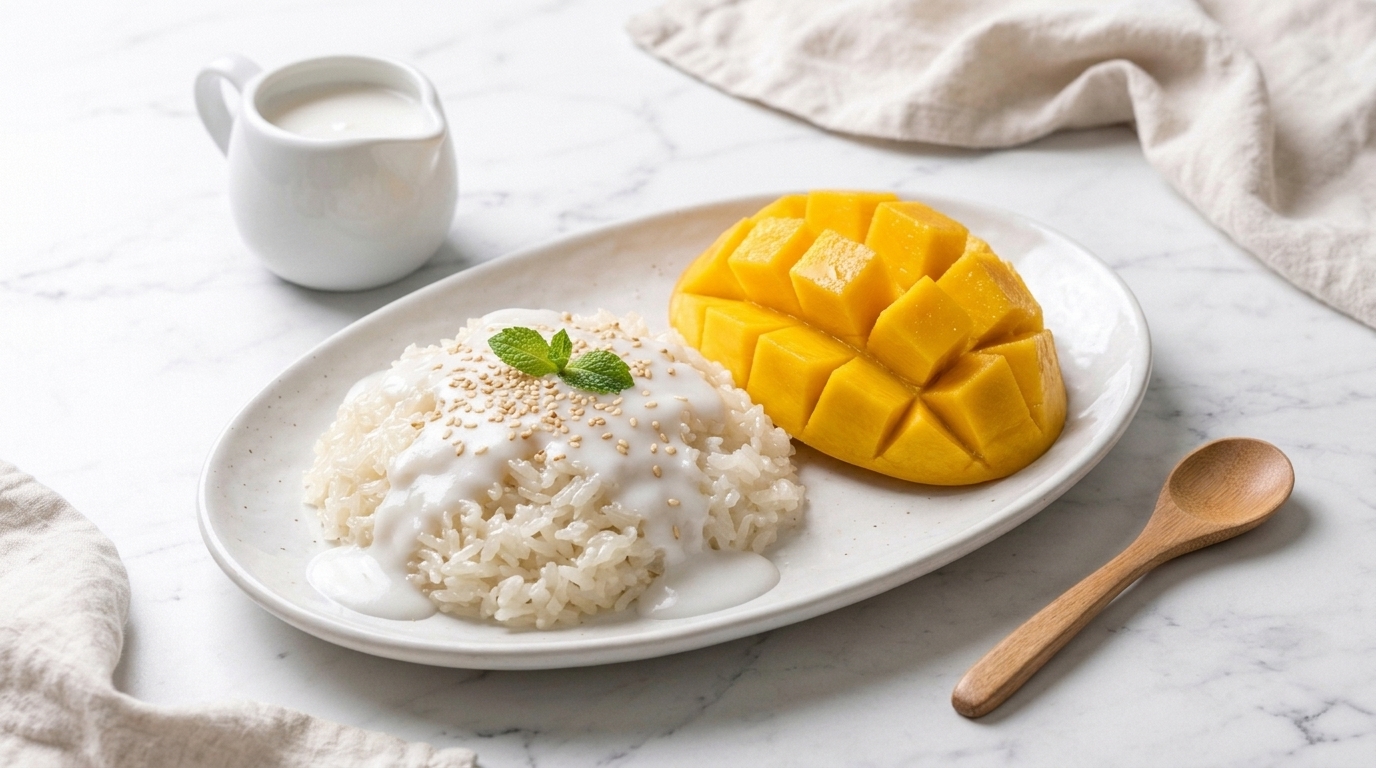
Mango sticky rice is the Thai dessert I crave when the weather turns hot and I want something sweet without a heavy bake. Warm, chewy rice soaks up silky coconut sauce, and the cool, ripe mango slices on top bring a bright, floral sweetness. My first attempt was a disappointment. I used regular long grain rice, and it came out hard and separate, nothing like the soft, glossy rice I had in Bangkok.
What makes this version different is the glutinous rice soaked overnight and the two part coconut sauce. Soaking the rice for at least 4 hours gives each grain a tender, sticky center, and I steam it for 25 minutes until it is soft but not mushy. I tested three coconut sauce ratios over two weeks, and I found that warming the sugar and salt into the coconut milk gives a smooth, balanced flavor. My husband, who usually skips rice desserts, asked for a second plate the moment he tasted the sauce.
Table of Contents
Why You’ll Love This Recipe
- Chewy, glossy rice: Glutinous rice soaked for 4 hours turns soft and sticky, with a tender bite that holds the sauce.
- Balanced sweetness: Salted coconut sauce tempers the sweet mango, so the dessert tastes rich without being cloying.
- About 15 minutes of hands-on work: Allow at least 4 hours for soaking, followed by steaming and a 15-minute rest.
- Serves a crowd: One batch of rice serves 6 people, which makes it an easy dessert for a family dinner.
- Make ahead friendly: The rice and sauce keep separately for 1 day, so you can assemble each plate in under 5 minutes.
Quick Information
- Prep Time: 15 minutes
- Soak Time: 4 hours
- Cook Time: 30 minutes
- Total Time: About 5 hours, mostly hands off
- Servings: 6
- Difficulty: Medium
- Calories: 360 per serving
- Important Tool: A bamboo steamer or a steaming basket with a lid
- Best For: Summer desserts, Thai themed dinners, and potlucks
- Course: Dessert
- Cuisine: Thai
- Category: Desserts
Nutrition Information
- Calories: 360
- Protein: 5g
- Carbohydrates: 62g
- Fat: 11g
- Fiber: 3g
- Sugar: 26g
- Sodium: 190mg
- Serving Size: About 1 cup (1/6 of the recipe)
- Servings Per Recipe: 6
Most of the calories in this dessert come from the rice and the coconut milk. Mango adds vitamin C and vitamin A, and it brings natural sweetness that lets you use less added sugar. Reducing the sugar in the sauce by a third lowers the calories without losing the classic flavor.
Nutrition information is an estimate calculated from standard ingredient values and will vary based on specific brands and portion sizes used.
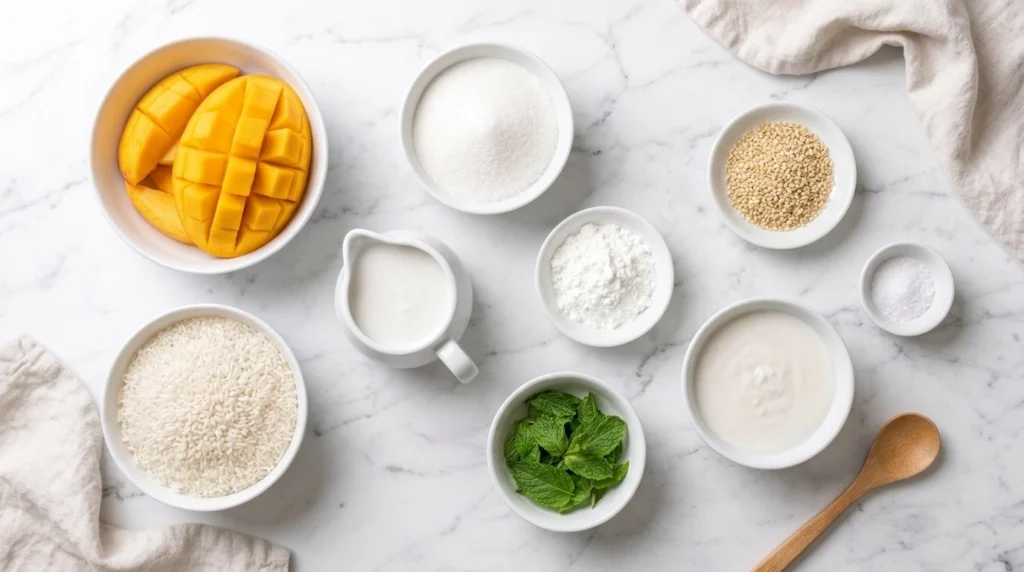
Ingredients
For the Sticky Rice
- 1 1/2 cups glutinous rice (sweet rice, about 10 ounces)
- Water, enough to cover the rice generously, for soaking
- 1 cup full fat canned coconut milk
- 1/2 cup granulated sugar
- 1/2 teaspoon fine sea salt
For the Coconut Sauce
- 1/2 cup full fat canned coconut milk
- 1/4 cup granulated sugar
- 1/4 teaspoon fine sea salt
- 1 tablespoon cornstarch mixed with 1 tablespoon cold water (optional, for thickening)
For Serving
- 2 ripe mangoes (about 1 1/2 pounds), peeled and sliced
- 2 tablespoons toasted white sesame seeds
- Fresh mint leaves, optional
Ingredient Notes: Use glutinous rice, sometimes labeled sweet rice, since regular long grain rice stays firm and separate. Soak it for at least 4 hours so the grains turn tender and chewy when steamed. Choose Ataulfo or Honey mangoes for the sweetest, least fibrous flesh, and ripen them on the counter until they yield to gentle pressure. Full fat coconut milk gives the sauce its silky body, and shaking the can first helps the cream blend evenly.
Tip: Rinse the soaked rice in cold water until the water runs clear. This removes the surface starch that can make the rice gummy instead of tender.
Equipment Needed
- Bamboo steamer or steaming basket: Lets the rice cook evenly through steam without getting waterlogged.
- Fine mesh strainer: Drains the soaked rice and rinses away excess starch.
- Medium saucepan: Warms the coconut sauce gently so the sugar dissolves without boiling over.
- Cheesecloth or a clean cotton cloth: Lines the steamer so the rice does not stick to the basket.
- Sharp paring knife: Slices the mango cleanly along the pit.
Practical Tip: Line the steamer basket with cheesecloth and spread the rice in an even layer no thicker than 1 inch. Thick piles cook unevenly, leaving hard centers.
Preparation
Start by soaking the glutinous rice in enough water to cover it generously for at least 4 hours or overnight. Drain it in a fine mesh strainer and rinse until the water runs clear. Line the steamer basket with cheesecloth and set it over a pot of simmering water.
Peel the mangoes, cut the flesh away from the pit, and slice it into thin strips. Toast the sesame seeds in a dry skillet over medium heat for 2 to 3 minutes, until golden and fragrant. There is no oven to preheat, so your main job is mise en place, with the sauce ingredients measured and ready beside the stove.
Step by Step Instructions
- Steam the rice. Spread the drained rice in the lined steamer basket in an even layer. Cover and steam over simmering water for 25 minutes, until the grains look translucent and feel soft when pressed. Chef’s Note: Spread the rice evenly and keep the simmering water below the basket.
- Warm the sauce. Combine 1 cup coconut milk, 1/2 cup sugar, and 1/2 teaspoon salt in a saucepan over medium low heat. Stir for 3 to 4 minutes until the sugar dissolves and the sauce steams gently without boiling.
- Mix the rice. Transfer the hot rice to a bowl and pour in the warm coconut milk and sugar mixture. Stir gently, then cover and rest for 15 minutes so the rice absorbs the sauce and turns glossy.
- Make the topping sauce. Whisk 1/2 cup coconut milk with 1/4 cup sugar and 1/4 teaspoon salt over low heat until dissolved. If using the optional cornstarch slurry, add it gradually and simmer gently for about 1 minute, stirring until the sauce thickens to your liking. Chef’s Note: Add the slurry gradually; you may not need all of it.
- Slice the mango. Cut the mango flesh into thin strips, about 1/4 inch thick. The slices should look bright orange and feel soft but not mushy.
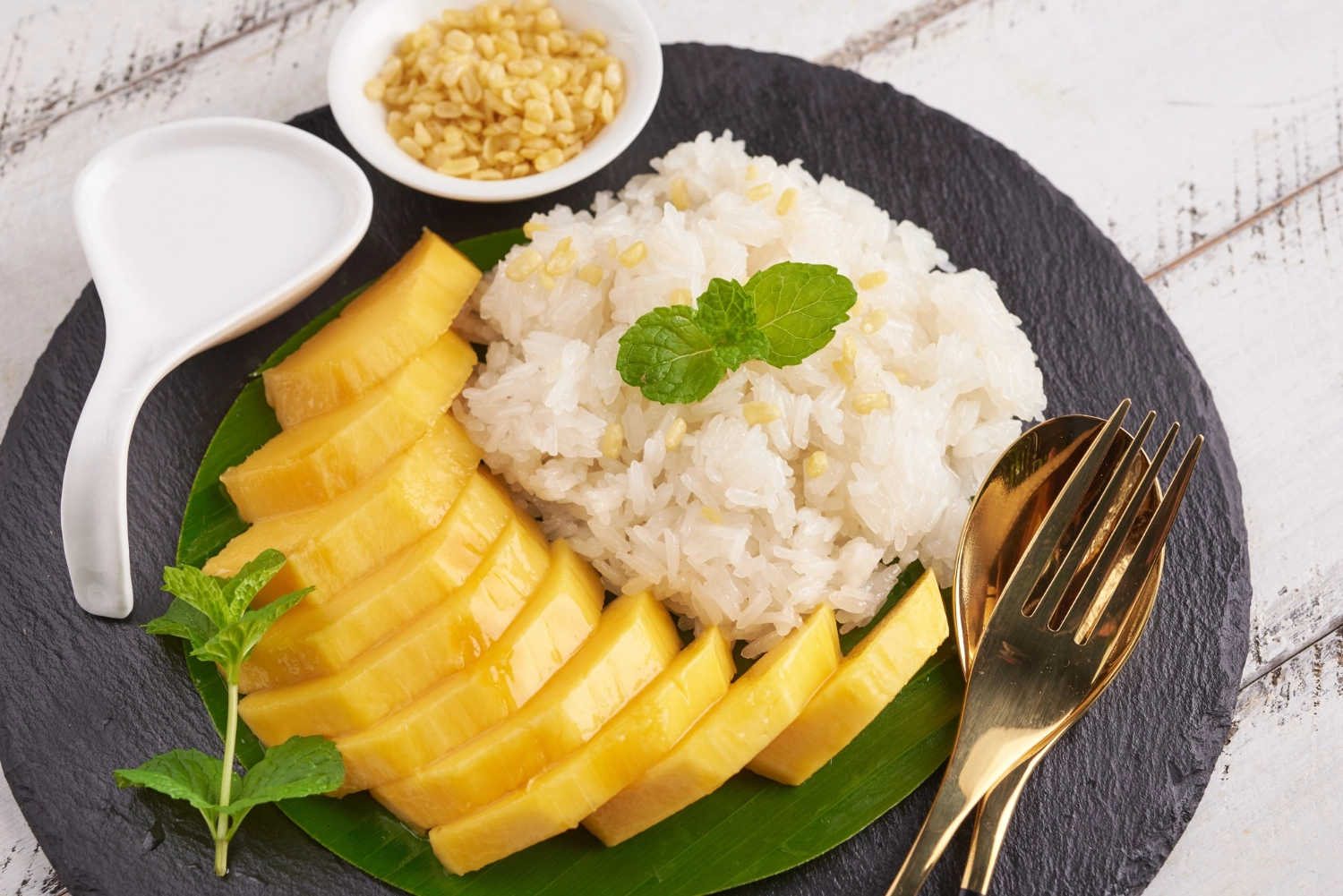
- Assemble and serve. Scoop a generous portion of rice onto each plate, arrange the mango slices alongside, and drizzle the topping sauce over the top. Sprinkle with sesame seeds and serve warm or at room temperature.
Chef’s Note: Mix the warm coconut mixture into the rice while the rice is still hot from the steamer so it absorbs evenly.
Expert Tips & Tricks
- Personal mistake: I once skipped the soak because I was in a hurry, and the rice stayed chalky in the center. Now I soak it for at least 4 hours every time.
- Make ahead: Keep the cooked rice and the coconut sauce in separate containers in the fridge for up to 1 day. Warm both gently before assembling.
- Storage: Refrigerate leftover rice promptly in a shallow covered container. Do not leave it out for more than 2 hours, or 1 hour above 90°F.
- Texture: Steam the rice until it is tender but still holds its shape. Overcooked rice turns mushy and loses its chew.
- Flavor: Add a small pinch of salt to the rice sauce. It balances the sweetness and makes the mango taste brighter.
- Time saving: Buy pre cut mango from the produce section. You still need to check ripeness, but you skip the peeling and slicing step.
Common Mistakes & Troubleshooting
Hard, chalky rice: Regular long grain rice or rice that was not soaked long enough stays firm in the center. Use glutinous rice and soak it for at least 4 hours. If the rice is still hard after steaming, sprinkle it with 2 tablespoons of water and steam for 5 more minutes.
Mushy rice: Overcooking or stirring too vigorously can break the grains and make the rice gluey. Steam the rice just until it is tender, and stir gently with a spatula. If the rice has turned mushy, spread it on a tray to cool and use it in a rice pudding instead.
Thin, watery sauce: Coconut milk that was not shaken well can separate and taste thin. Shake the can before measuring, and warm the sauce gently rather than boiling it. If the sauce is too thin, add the cornstarch slurry and simmer for 1 minute.
Sour or dull mango: Mangoes picked too early taste tart and flat. Choose fruit that gives slightly when pressed and smells sweet near the stem. If the mango is firm, let it ripen at room temperature for 1 to 2 days.
Sugar crystals in the sauce: Sugar that is not fully dissolved can leave a gritty texture. Stir the sauce over low heat for a few minutes until no crystals remain, and avoid boiling it hard, which can make the sauce grainy as it cools.
Storage Instructions
- Room Temperature: Do not leave assembled mango sticky rice out for more than 2 hours, or 1 hour above 90°F.
- Refrigerator: Store the rice and sauce in separate airtight containers for up to 1 day. Fresh mango is best eaten the same day it is cut.
- Freezer: Not recommended, since the rice turns hard and the coconut sauce separates when thawed.
- Reheating: Warm the rice in a steamer for 5 minutes until soft again, then gently rewarm the coconut sauce over low heat before assembling.
- Make Ahead: Cook the rice and sauce up to 1 day ahead and store them separately. Slice the mango and assemble just before serving.
- My storage tip: I press a piece of plastic wrap directly onto the surface of the rice before sealing the container. It keeps the top from drying out and turning hard.
Variations & Substitutions
- Spicy: Add a pinch of chili flakes to the sesame seeds for a subtle, sweet heat that balances the mango.
- Mild or kid friendly: Reduce the sugar in the sauce to 2 tablespoons and serve the mango on its own on top of the rice.
- Vegetarian: This recipe is already vegetarian and vegan, as long as you use plain granulated sugar.
- Gluten free: Mango sticky rice is naturally gluten free. Use pure coconut milk and check that any sesame seeds or cornstarch are labeled gluten free.
- Other substitutions: Swap the mango for ripe papaya or sliced fresh lychee, or use toasted coconut flakes in place of sesame seeds for extra crunch.
Serving Suggestions
Mango sticky rice is sweet and creamy, so it pairs best with light, fresh, and savory dishes that balance each bite.
- Drinks: Iced Thai tea, jasmine tea, or a cold glass of sparkling lime water
- Brunch spread or Sides: Serve a small plate alongside Spicy Cucumber Salad for a cool, crunchy contrast, or with Easy Garlic Roasted Asparagus for a lighter dinner.
- Sauces or dips: A small bowl of extra warm coconut sauce for drizzling. For another coconut dessert, try creamy mango sago
- Garnishes: Toasted sesame seeds, fresh mint leaves, or a few thin lime zest curls
- Meal combinations: Follow a savory main with this dessert for a balanced Thai style dinner at home.
Meal Prep Tip: Prepare the rice and sauce the day before serving, refrigerate them promptly in separate containers, and use within 1 day. Reheat the rice until steaming hot throughout, then add freshly sliced mango.
Frequently Asked Questions
Can I make mango sticky rice the day before?
Yes, you can cook the rice and sauce a day ahead and keep them in separate containers in the fridge. Warm the rice in a steamer for about 5 minutes so it softens again, and gently rewarm the sauce over low heat. Slice the mango fresh on the day you serve it, since cut mango can darken and turn soft. Assemble the dessert just before serving for the best texture.
Why is my sticky rice hard in the middle?
A hard center usually means the rice was not soaked long enough or you used regular long grain rice instead of glutinous rice. Soak the rice for at least 4 hours, and rinse it until the water runs clear. Steam it for 25 minutes, checking that the grains look translucent and feel soft when pressed. If the rice is still firm, sprinkle a little water over it and steam for 5 more minutes.
Can I use regular rice instead of glutinous rice?
Regular long grain rice will not give you the same chewy, sticky texture. Glutinous rice has a higher starch content that makes it cling together and turn glossy. Jasmine rice can be used in a pinch, but it will be softer and less sticky, so the dessert will taste more like a rice pudding. For the most authentic result, buy glutinous rice from an Asian grocery or the international aisle.
How do I know when the mango is ripe enough to use?
Ripe mango gives slightly when pressed near the stem and smells sweet and fruity. Avoid fruit with bruises, soft black spots, or a sour, fermented smell. If the mango is still firm, leave it on the counter for 1 to 2 days, checking it daily. The flesh should look bright orange or yellow and slice cleanly without feeling stringy.
Why does my coconut sauce look separated?
Coconut milk naturally separates when it sits, so the cream and liquid can split in the can. Shake the can well before measuring, and warm the sauce gently over low heat while stirring. Avoid boiling the sauce, since high heat can break the emulsion and make the coconut fat look oily. If it still separates, whisk it briskly for 30 seconds off the heat.
Conclusion
The best mango sticky rice comes from patience with the rice and gentle handling of the sauce. Soak the grains fully, steam them until tender, and warm the coconut milk slowly so it stays smooth. Those habits matter far more than any special tool or rare ingredient.
I made this dessert for a friend’s dinner party last summer, and the bowl was scraped clean before the main course had finished. A guest who had never tried sticky rice asked for the recipe and said the salted coconut sauce was what won her over. Watching someone discover a new favorite is one of my favorite parts of cooking.
For more dessert recipes like this one, browse more ideas on my Pinterest.

Easy Mango Sticky Rice
Ingredients
Equipment
Method
- Soak the glutinous rice in enough water to cover generously for at least 4 hours, then drain and rinse.
- Spread the rice in a cheesecloth-lined steamer basket. Cover and steam over simmering water for about 25 minutes, until soft and translucent.
- Warm 1 cup coconut milk with 1/2 cup sugar and 1/2 teaspoon salt, stirring until dissolved. Gently stir this mixture into the hot steamed rice.
- Cover and rest the rice for 15 minutes to absorb the coconut mixture.
- For the topping sauce, warm 1/2 cup coconut milk with 1/4 cup sugar and 1/4 teaspoon salt until dissolved. If desired, gradually add the cornstarch mixed with cold water and simmer gently for about 1 minute until thickened.
- Slice the mango. Divide the rice among 6 plates, add mango, drizzle with the topping sauce, and sprinkle with toasted sesame seeds. Add mint if desired.
Notes
- Use glutinous rice, not regular long grain rice, for the chewy texture.
- Choose ripe Ataulfo or Honey mangoes for the sweetest flavor.
- Mix the warm coconut mixture into the rice while it is still hot from the steamer for the best gloss.