Coconut Cake with 2 Layers of Irresistible Fluffy Bliss

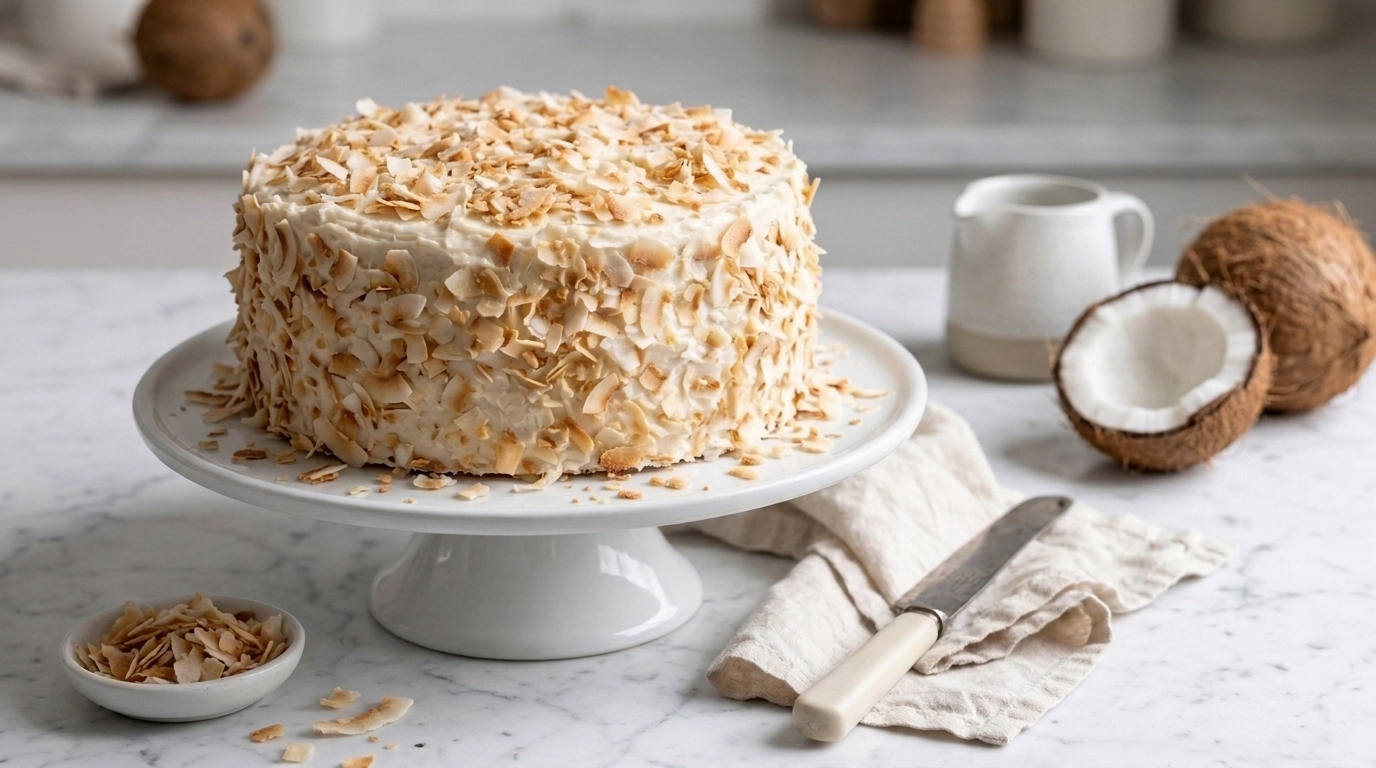
Coconut cake is the dessert I make when I want a celebration to feel special without a lot of fuss. Each slice is tender and sweet, with a soft, moist crumb and a snowy frosting studded with toasted coconut. My first attempt came out dry and crumbly, mostly because I overbaked it while chatting with guests. Once I learned to pull the layers out when a toothpick comes out with a few moist crumbs, the cake finally tasted the way I had imagined.
What makes this version different is the coconut milk in the batter and the coconut cream in the frosting. Coconut milk keeps the crumb soft for days, and the cream gives the frosting a light, spreadable texture instead of a heavy, sugary coat. I tested three frosting ratios over two weeks before settling on this one, and I toast the flakes in a dry skillet for extra flavor. My daughter, who usually picks the chocolate cake, asked for a second slice before the candles were lit.
Table of Contents
Why You’ll Love This Recipe
- Moist, tender crumb: Coconut milk and butter keep each layer soft for up to 4 days.
- Light, fluffy frosting: Chilled coconut cream whips into a spreadable frosting that holds its shape on top of the cake.
- Big coconut flavor: Toasted flakes in the batter and on top give a rich, nutty coconut taste in every bite.
- Serves a crowd: Two 9 inch layers yield 12 generous slices, which is enough for a birthday or holiday gathering.
- Make ahead friendly: The layers can be baked a day ahead and wrapped, so assembly takes less than 30 minutes on the day you serve it.
Quick Information
- Prep Time: 25 minutes
- Cook Time: 30 minutes
- Cool Time: At least 1 hour
- Total Time: About 2 hours 30 minutes, including cooling, decorating, and chilling
- Servings: 12 slices
- Difficulty: Medium
- Calories: 480 per serving
- Important Tool: Two 9 inch round cake pans and a stand mixer or hand mixer
- Best For: Birthdays, holiday tables, potlucks, and special occasions
- Course: Dessert
- Cuisine: American
- Category: Desserts
Nutrition Information
- Calories: 480
- Protein: 5g
- Carbohydrates: 58g
- Fat: 27g
- Fiber: 2g
- Sugar: 40g
- Sodium: 260mg
- Serving Size: 1 slice (1/12 of the cake)
- Servings Per Recipe: 12
Most of the calories in this cake come from the sugar, butter, and coconut fat. Coconut adds a small amount of fiber and minerals like manganese, though it is still a rich dessert. Cutting the frosting by a third and serving slightly smaller slices lowers the calories without losing the coconut flavor.
Nutrition information is an estimate calculated from standard ingredient values and will vary based on specific brands and portion sizes used.
Ingredients
For the Cake
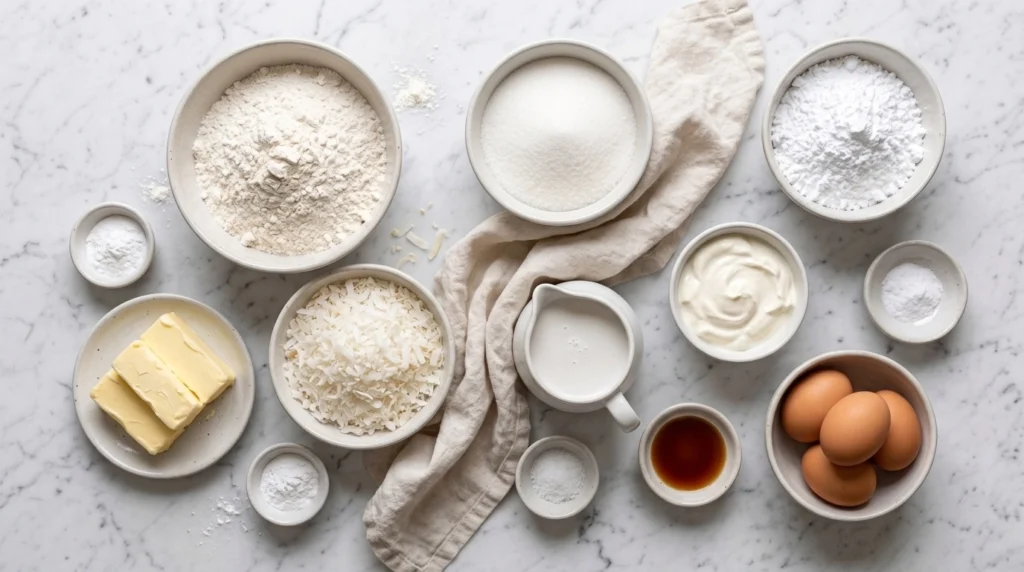
- 2 1/2 cups all purpose flour (about 313g), spooned and leveled
- 2 teaspoons baking powder
- 1/2 teaspoon baking soda
- 1/2 teaspoon fine sea salt
- 1 cup (2 sticks) unsalted butter, softened to room temperature
- 1 1/2 cups granulated sugar
- 4 large eggs, at room temperature
- 2 teaspoons pure vanilla extract
- 1 cup full fat canned coconut milk, shaken well
- 1/2 cup sour cream
- 1 cup sweetened shredded coconut, lightly toasted
For the Coconut Cream Frosting
- 1 cup (2 sticks) unsalted butter, softened
- 4 cups powdered sugar
- 1/2 cup cold coconut cream (from the top of a chilled can)
- 1 teaspoon pure vanilla extract
- 1/4 teaspoon fine sea salt
- 1 cup sweetened shredded coconut, toasted, for decorating
Ingredient Notes: Full fat canned coconut milk gives the cake its tender crumb and gentle coconut flavor, so avoid the light version. The coconut cream sits at the top of a chilled can, and it whips into a stable frosting better than milk does. Toast the coconut in a dry skillet over medium heat for 3 to 4 minutes, stirring often, until it turns golden. Sour cream adds tang and extra moisture, and you can swap it for plain Greek yogurt in the same amount.
Tip: Chill the can of coconut milk overnight so the cream separates and rises to the top. Scoop only the thick cream for the frosting. Use a separate, well-mixed portion of full fat coconut milk for the batter; do not replace it with the thin liquid left after scooping off the cream.
Equipment Needed
- Stand mixer or hand mixer: Whips the butter and sugar until light and fluffy, which gives the cake its airy structure.
- Two 9 inch round cake pans: Bake the layers evenly, and light colored metal pans help prevent overbrowning.
- Parchment paper: Lines the pan bottoms so the layers release cleanly without tearing.
- Offset spatula: Spreads the frosting smoothly over the layers and the sides of the cake.
- Instant read thermometer: Confirms the cake reaches an internal temperature of 205°F to 210°F (96°C to 99°C) when fully baked.
Practical Tip: Use an offset spatula and a thin layer of frosting, called a crumb coat, before the final layer. Chill the cake for 15 minutes so the crumbs stay trapped and the top stays clean.
Preparation
Take the butter, eggs, and sour cream out of the fridge about 1 hour before you begin, so they reach room temperature. Preheat the oven to 350°F (175°C) and position a rack in the center. Grease both 9 inch pans, line the bottoms with parchment, and dust the sides with flour so the layers release cleanly.
Toast the shredded coconut for the batter and the frosting first, then set it aside to cool. Whisk the flour, baking powder, baking soda, and salt together in a bowl. Measure the coconut milk and sour cream into separate small bowls so everything is ready when you need it.
Step by Step Instructions
- Cream the butter. Beat the softened butter and granulated sugar in a stand mixer on medium high for 3 to 4 minutes, until pale and fluffy. The mixture should look light, with a visibly lighter texture.
- Add the eggs. Beat in the eggs one at a time, mixing 30 seconds after each. Stir in the vanilla, and scrape down the bowl so the batter looks smooth and even.
- Alternate the dry and wet. Add one third of the flour mixture, then half the coconut milk and sour cream, mixing on low speed. Repeat until everything is combined, and mix only until no dry streaks remain. Chef’s Note: Stop mixing as soon as the flour disappears to keep the crumb tender.
- Fold in the coconut. Stir in the toasted coconut with a spatula. The batter should look thick and creamy and fall slowly from the spatula.
- Bake the layers. Divide the batter evenly between the pans and smooth the tops. Bake at 350°F (175°C) for 25 to 30 minutes, until the tops are golden and a toothpick comes out with a few moist crumbs.
- Cool completely. Let the layers rest in their pans for 10 minutes, then turn them onto a wire rack. Cool for at least 1 hour, until the cake feels room temperature all the way through. Chef’s Note: Warm layers can melt the frosting, so allow extra cooling time if needed.
- Whip the frosting. Beat the butter on medium speed for 2 minutes. Add the powdered sugar, cold coconut cream, vanilla, and salt, then beat on high for 3 minutes until light, fluffy, and spreadable.
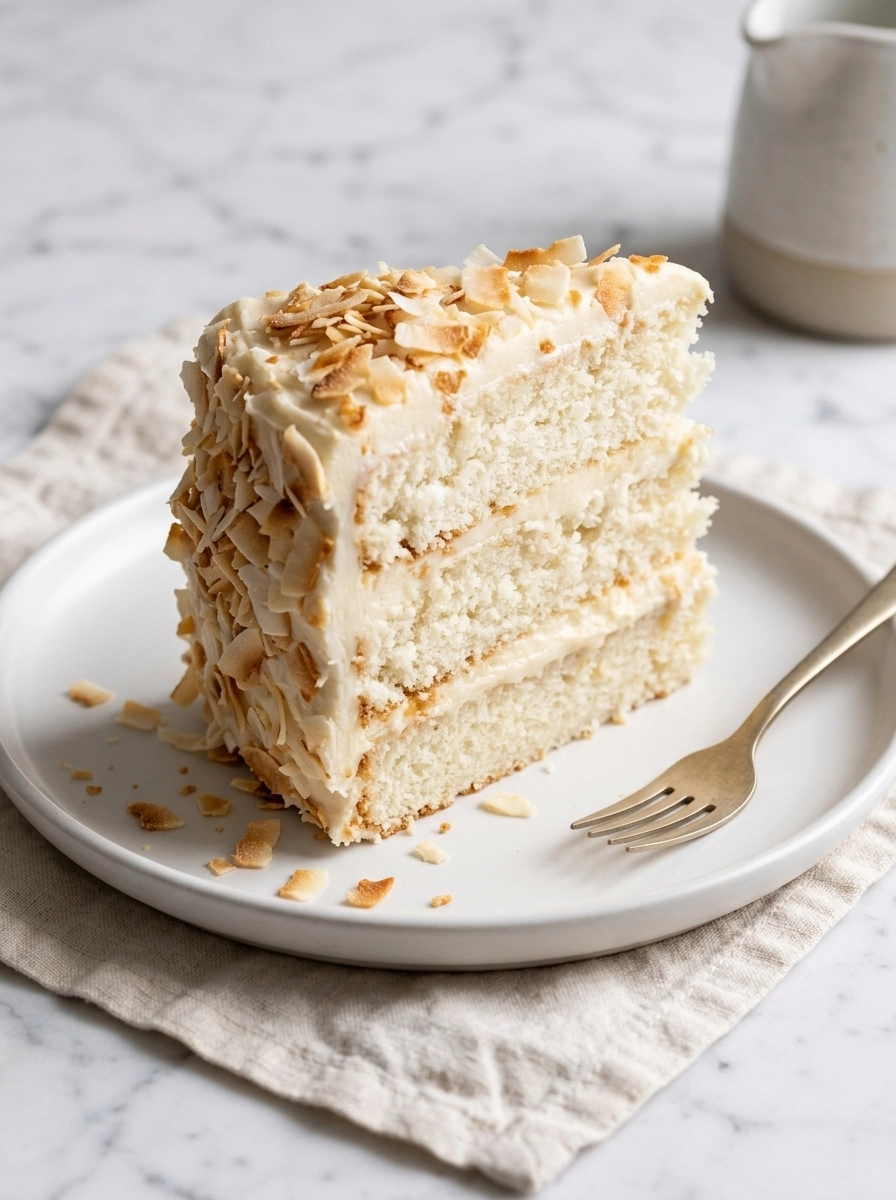
- Assemble and decorate. Place one layer on a plate and spread frosting over it for the filling. Add the second layer, then apply a thin crumb coat over the entire cake. Chill for 15 minutes, frost the top and sides, and press the toasted coconut onto the sides. Chef’s Note: Let the crumb coat firm up before adding the final frosting layer.
Expert Tips & Tricks
- Personal mistake: I once frosted a warm cake because I was in a hurry, and the frosting slid off the sides in a sad puddle. Now I always wait the full hour.
- Make ahead: Bake the layers a day ahead, wrap each one tightly in plastic wrap, and store them at room temperature. Frost the cake on the day you serve it.
- Storage: Keep the frosted cake in a cake keeper or covered container in the fridge. Bring it to room temperature for 30 minutes before slicing for the softest texture.
- Texture: Beat the butter and sugar for the full 3 to 4 minutes. This step creates the air pockets that give the cake its light, fluffy crumb.
- Flavor: Toast the coconut before using it. The toasting brings out a nutty, caramel taste that plain coconut lacks.
- Time saving: Buy a jar of pre toasted coconut flakes from the baking aisle. You will still want to check the color, but you skip the 4 minute toasting step.
Common Mistakes & Troubleshooting
Dry, crumbly cake: Overbaking and too much flour are the most common causes. Spoon the flour into the measuring cup and level it off, then check the layers at 25 minutes. If the cake is already dry, brush each layer with a tablespoon of coconut milk before frosting to add moisture.
Dense, heavy layers: Cold butter, rushed creaming, or overmixing the flour can weigh the batter down. Let the butter and eggs reach room temperature, and beat the butter and sugar until fully fluffy. Mix the flour only until it disappears, since extra mixing builds gluten.
Runny frosting: Warm coconut cream or butter that is too soft can thin the frosting. Chill the coconut cream and keep the butter at a cool room temperature. If the frosting is loose, refrigerate it for 15 minutes, then beat it again on high.
Sunken center: Opening the oven door too early or underbaking can cause the middle to collapse. Wait until the last 5 minutes of baking before checking, and confirm a toothpick comes out clean. Let the cake cool gradually on the counter rather than moving it into a draft.
Coconut frosting that tastes grainy: Powdered sugar that has not been sifted can leave tiny lumps. I once skipped sifting and found clumps in every bite. Sift the powdered sugar first, then beat it in gradually.
Storage Instructions
- Room Temperature: Keep the frosted cake refrigerated until shortly before serving. Limit time out of refrigeration to 2 hours, or 1 hour above 90°F.
- Refrigerator: Keep the cake in an airtight container in the fridge for up to 4 days. Bring slices to room temperature for 20 minutes before serving.
- Freezer: Wrap unfrosted layers tightly in plastic wrap and then foil, and freeze for up to 3 months. Thaw them overnight in the fridge before frosting.
- Reheating: Not applicable, since this cake is served at room temperature or chilled.
- Make Ahead: Bake and cool the layers up to 1 day ahead, wrap them, and keep them at room temperature. Frost the cake on the day you serve it.
- My storage tip: I place a sheet of parchment on the cut side of leftover slices before covering them. It keeps the crumb moist and stops the frosting from sticking to the wrap.
Variations & Substitutions
- Spicy: Add 1/2 teaspoon of ground cardamom to the batter and a pinch of cinnamon to the frosting for a warm, fragrant twist.
- Mild or kid friendly: Skip the toasting and use a little less coconut in the batter. Top with rainbow sprinkles for a playful birthday look.
- Vegetarian: This recipe is already vegetarian. Check that your powdered sugar and vanilla labels are free of animal products if that matters to you.
- Gluten free: Replace the all purpose flour with a 1 to 1 gluten free baking flour that contains xanthan gum. Expect a slightly more tender crumb, and bake for 2 to 3 minutes longer.
- Other substitutions: Swap the sour cream for plain Greek yogurt, or replace half the butter in the frosting with cream cheese for a tangy finish. Use unsweetened coconut instead of sweetened for a less sugary cake.
Serving Suggestions
Coconut cake is rich and sweet, so it pairs well with bright, fresh, and lightly bitter flavors that balance each bite.
- Drinks: Hot coffee with a splash of cream, a silky matcha latte, or a glass of cold milk
- Brunch spread or Sides: Serve thin slices with a fresh fruit bowl and plain Greek yogurt for a lighter dessert plate
- Sauces or dips: A drizzle of warm pineapple sauce or a spoonful of whipped cream on the side
- Garnishes: Toasted coconut flakes, lime zest, or a few fresh mint leaves
- Meal combinations: Serve after a light dinner of grilled fish or chicken salad for a balanced, celebratory meal. For a dessert table, offer creamy mango sago alongside the cake.
Meal Prep Tip: I bake the layers on Saturday, wrap them well, and store them in the freezer. The night before the party, I thaw them in the fridge and frost the cake in about 30 minutes, which leaves me free to host.
Frequently Asked Questions
Can I make coconut cake a day ahead?
Yes, you can bake the layers a day ahead and keep them wrapped at room temperature. Let them cool completely, then wrap each layer tightly in plastic wrap. Frost the cake the next day, and chill it for 15 minutes after the crumb coat so the frosting sets. Keeping the layers wrapped prevents them from drying out, and the cake will taste just as moist the next day.
Why is my coconut cake dry?
Dry coconut cake usually comes from too much flour, overbaking, or measuring flour by scooping. Spoon the flour into the cup and level it off, and check the layers at 25 minutes using a toothpick. Remove them as soon as the toothpick shows a few moist crumbs. If the cake is already dry, brush each layer with a little coconut milk before frosting to bring back moisture.
Can I use light coconut milk instead of full fat?
You can, but the cake will be less tender and less rich. Full fat coconut milk adds the fat that keeps the crumb soft, so light coconut milk can make the layers taste thin. If you must use it, add an extra tablespoon of sour cream to the batter to restore some moisture. Stick with full fat canned coconut milk for the best flavor and texture.
How do I know when the cake layers are done?
The layers are done when the tops turn golden and a toothpick inserted into the center comes out with a few moist crumbs. The cake should also spring back when lightly touched. For certainty, use an instant read thermometer and aim for an internal temperature of 205°F to 210°F (96°C to 99°C). If the center is still wet or the top looks pale, bake for 2 to 3 minutes longer and check again.
Can I freeze coconut cake?
Yes, coconut cake freezes well when wrapped properly. Freeze unfrosted layers wrapped in plastic wrap and then foil for up to 3 months. Thaw them overnight in the fridge, then bring them to room temperature before frosting. A fully frosted cake also freezes, but the frosting may soften slightly after thawing, so chill it for an extra 30 minutes before slicing for clean edges.
Conclusion
The best coconut cake comes from patience and small, careful habits. Let the butter soften, bake the layers until they are just done, and wait for them to cool before frosting. Those steps matter far more than any special pan or fancy decoration.
I made this cake for my mother’s birthday last spring, and it disappeared before the candles had burned down. A cousin who usually skips coconut desserts asked for a second slice and then requested the recipe for her own family party. Watching a skeptic reach for seconds is one of my favorite kitchen moments.
For more dessert recipes like this one, browse more ideas on my Pinterest.

Easy Coconut Cake
Ingredients
Equipment
Method
- Preheat the oven to 350°F (175°C). Grease two 9 inch round cake pans, line the bottoms with parchment, and dust the sides with flour. Whisk the flour, baking powder, baking soda, and salt together.
- Cream the cake butter and granulated sugar for 3 to 4 minutes until pale and fluffy.
- Beat in the eggs one at a time, then add the vanilla and scrape down the bowl.
- On low speed, alternate the flour mixture with the coconut milk and sour cream, beginning and ending with flour. Mix just until no dry streaks remain.
- Fold in the toasted, cooled coconut and divide the batter evenly between the pans.
- Bake for 25 to 30 minutes, until golden and a toothpick inserted in the center shows a few moist crumbs.
- Cool the layers in their pans for 10 minutes, then turn onto a wire rack. Cool for at least 1 hour, until completely at room temperature.
- For the frosting, beat the butter for 2 minutes. Gradually mix in the sifted powdered sugar, coconut cream, vanilla, and salt, then beat for about 3 minutes until fluffy.
- Spread filling between the two layers, stack them, and apply a thin crumb coat over the whole cake. Chill for 15 minutes, then frost the top and sides and press on the toasted coconut.
Notes
- Use full fat coconut milk for a tender, rich crumb.
- Toast the coconut in a dry skillet for a deeper, nutty flavor.
- Let the layers cool completely before frosting to avoid a slippery coat.
- Use a separate, well-mixed portion of coconut milk for the batter, rather than the thin liquid remaining after removing the frosting cream.
- Chill the can for the frosting overnight before starting; this advance preparation is not included in the total time.