Creamy Mango sago Recipe with Coconut Milk

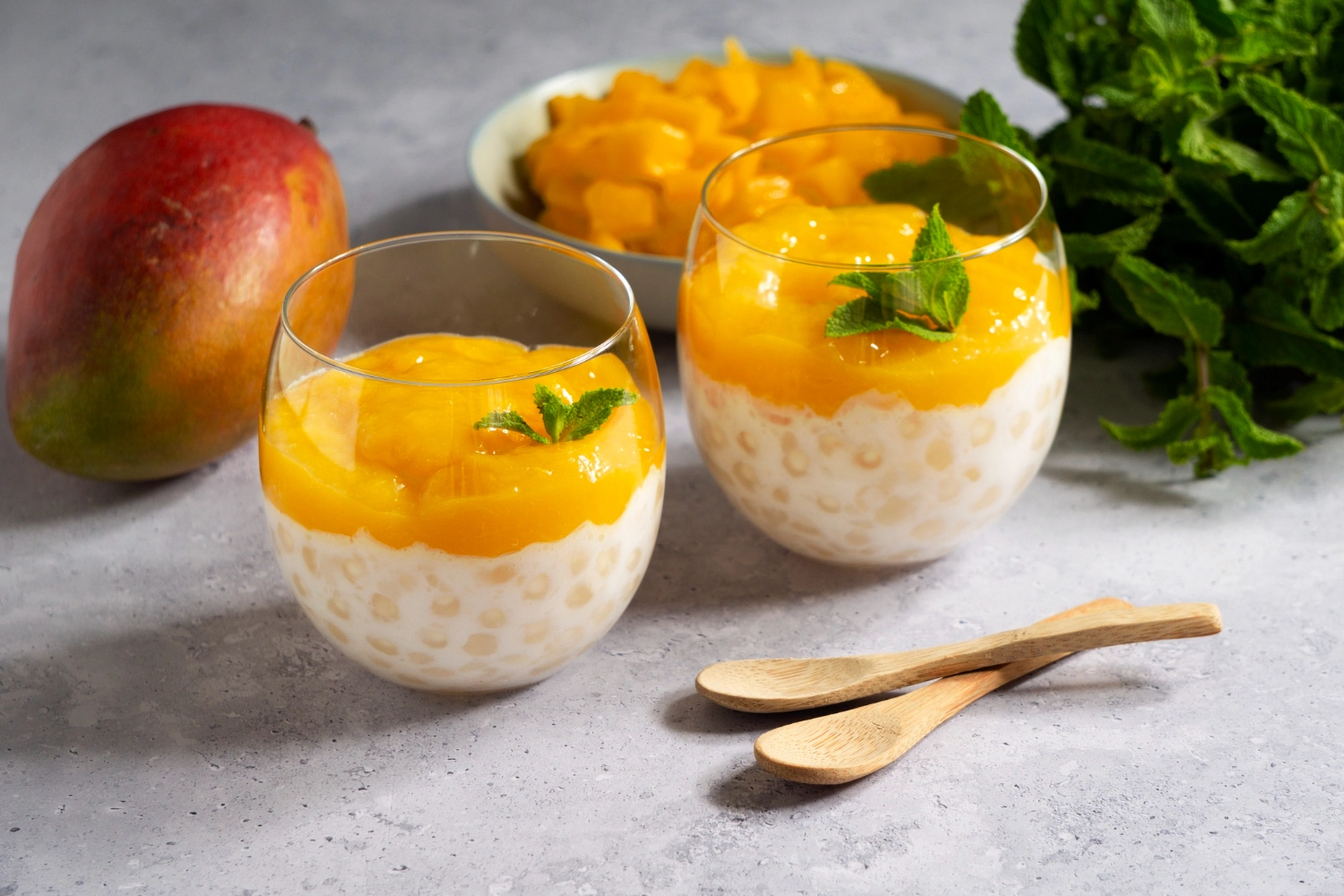
A tall glass of mango sago, layered with golden mango, glossy pearls, and cool coconut cream, tastes like a tropical vacation in a spoon. It is sweet without being heavy, creamy without being rich, and so refreshing on a hot afternoon that the glass is usually empty in minutes.
My first batch was a sticky disaster. The sago pearls fused into one cloudy lump, and the mango tasted watery next to the coconut milk. After seven test batches, three fixes made the difference: a big pot of boiling water, a 10 minute rest off the heat, and a mango puree that is thick and sweet instead of thin.
What makes this mango sago different is the layering. Half the mango is blended into a bright puree, and half stays in juicy cubes, so every spoonful has both silky and chunky texture. It uses one pot, one blender, and about 45 minutes of work before the fridge does the rest. My niece, who never finishes dessert, asked for a second glass before the first was gone.
Table of Contents
Why You’ll Love This Mango Sago Recipe
- Chewy, clear pearls that stay separate instead of clumping into a lump
- Two mango textures, with a silky puree on the bottom and juicy cubes on top
- Creamy coconut base that tastes rich but stays light and cool
- Make ahead friendly, since the base and puree keep for 2 days
- Easy to serve a crowd, scaled up in jars or small glasses
- Simple ingredients, with no oven, no gelatin, and no special equipment
Quick Information
- Prep Time: 20 minutes
- Cook Time: 12 minutes
- Rest Time: 10 minutes
- Chill Time: At least 2 hours
- Total Time: About 2 hours 45 minutes, mostly chilling
- Servings: 4
- Difficulty: Easy
- Calories: 395 per serving
- Important Tool: A large pot and a fine mesh strainer
- Best For: Hot summer days, parties, or an easy make ahead dessert
- Course: Dessert
- Cuisine: Hong Kong inspired
- Category: Desserts & Baking
Nutrition Information
- Calories: 395
- Protein: 4g
- Carbohydrates: 57g
- Fat: 17g
- Fiber: 3g
- Sugar: 35g
- Sodium: 45mg
- Serving Size: 1 glass (about 1 1/2 cups)
- Servings Per Recipe: 4
Most of the calories in this mango sago come from the coconut milk, the sago pearls, and the sugar. Ripe mango adds a little fiber, and cutting the sugar to 3 tablespoons is an easy way to lighten the dessert if your mangoes are very sweet.
Nutrition information is an estimate calculated from standard ingredient values and will vary based on specific brands and portion sizes used.
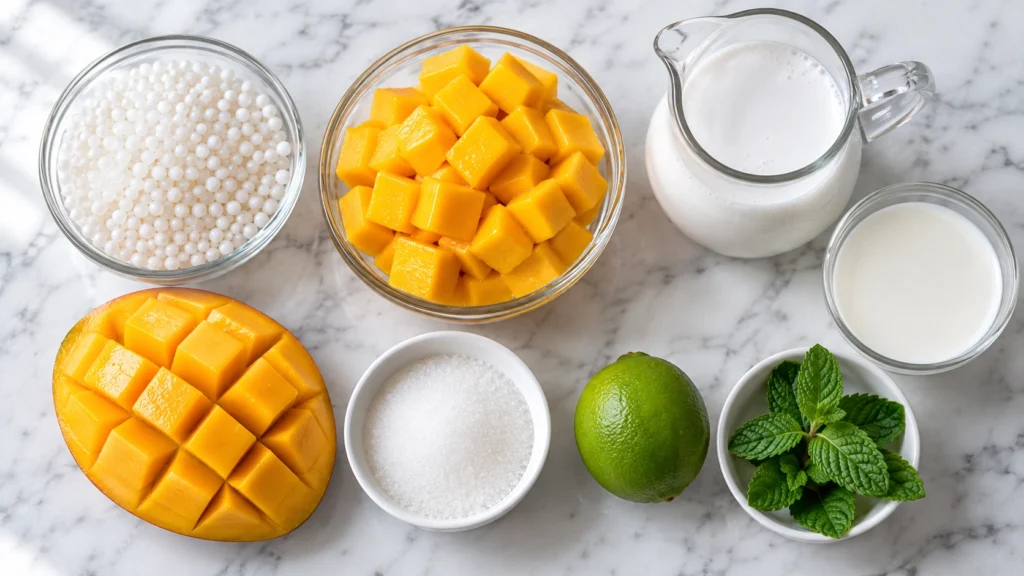
Ingredients for Mango Sago Recipe
For the Sago Pearls
- 1/2 cup (80g) small sago pearls, also sold as small tapioca pearls
- 6 cups (1.4 liters) water, for boiling
For the Mango Puree
- 1 large ripe mango (about 1 cup of flesh), peeled and cubed
- 1 tablespoon granulated sugar, optional
- 1 teaspoon fresh lime juice
For the Coconut Cream Base
- 1 can (13.5 ounces, 400ml) full fat coconut milk
- 1/2 cup (120ml) whole milk
- 1/4 cup (50g) granulated sugar, or to taste
- Pinch of fine salt
For Assembly
- 2 large ripe mangoes, peeled and cut into 1/2 inch cubes (about 2 cups)
- Pomelo segments, optional
- Fresh mint leaves, optional
Ingredient Notes: Choose ripe, fragrant mangoes such as Ataulfo (honey) or Kent, which are sweet and have little fiber. Small sago pearls give the classic texture, while large bubble tea pearls need a much longer cook. I have made this with Chaokoh and Aroy-D coconut milk, and both gave a smooth, creamy base.
Tip: Press near the stem of each mango. If it gives slightly and smells sweet, it is ready to use.
Equipment Needed
- Large pot: gives the pearls room to move so they do not stick
- Fine mesh strainer: drains and rinses the pearls cleanly
- Blender: purees the mango until silky
- Small saucepan: dissolves the sugar into the coconut base
- Bowl of ice water: stops the cooking and keeps the pearls from clumping
- Clear serving glasses: show off the golden layers
Practical Tip: Stir the pearls constantly for the first 2 minutes of boiling. That is when they are stickiest and most likely to fuse together.
Preparation
Bring the water to a boil, and fill a bowl with ice water for the pearls. Chill your serving glasses in the fridge while you cook, so the dessert stays cold longer.
Peel the mangoes by slicing off the cheeks, scoring each one in a grid, and scooping out the cubes with a spoon. Keep 1 mango for the puree and 2 for dicing, and measure everything before you start.
Step by Step Instructions
- Boil the water. Bring 6 cups of water to a rolling boil in a large pot, then stir in the sago. Keep stirring for the first 2 minutes so the pearls do not stick to each other.
- Simmer the pearls. Reduce the heat to medium, partly cover, and cook for 10 to 12 minutes, stirring now and then. The pearls are ready for the rest when they are mostly clear with a small white dot in the center.
- Rest and rinse. Turn off the heat, cover the pot, and let the pearls sit for 10 minutes, until fully clear. Drain through a fine mesh strainer, rinse under cold water, and dip in ice water for 2 minutes. Pro tip: rinse until the water runs clear, since leftover starch is what makes pearls clump.
- Make the coconut base. Shake the can well, then warm the coconut milk, whole milk, sugar, and salt in a small saucepan over medium low heat for 3 to 4 minutes. Stir until the sugar dissolves and the milk steams, without letting it boil. Cool for 15 minutes.
- Blend the puree. Blend 1 mango, the optional sugar, and the lime juice for 30 seconds, until completely smooth. It should be thick enough to coat a spoon.
- Combine and chill. Stir the sago into the cooled coconut base, cover, and refrigerate for at least 2 hours, until very cold. Pro tip: keep the diced mango separate until serving so it stays fresh and firm.
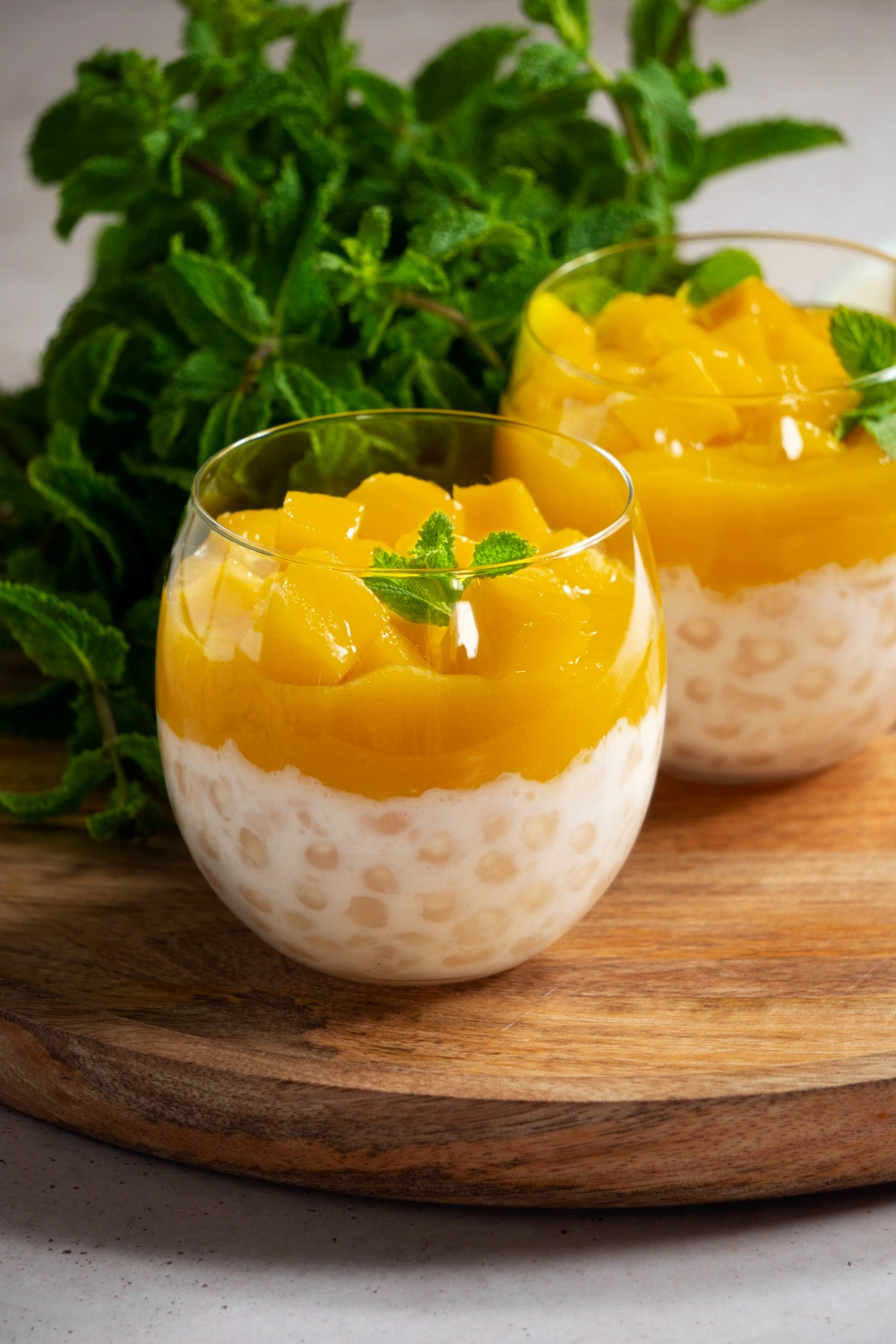
- Assemble and serve. Spoon 1/4 cup of puree into each of 4 glasses, then add 1/4 cup of diced mango. Ladle in the sago mixture, top with the remaining diced mango, pomelo, and mint, and serve right away.
Expert Tips & Tricks
- Stir early. The first 2 minutes in boiling water decide whether your pearls stay separate or become one clump.
- Learn from my mistake. The first time I made this, I added the sago to water that was not yet boiling, and the pearls dissolved into a cloudy paste. A full rolling boil gives clear, chewy pearls.
- Use a big pot. Plenty of water dilutes the starch, so the pearls cook evenly and stay glossy.
- Make ahead. Prepare the coconut base and puree up to 2 days ahead, but cook the sago the same day for the best chew.
- Store the sago in the base. Pearls harden when chilled alone, so keep them submerged in the coconut mixture.
- Use very ripe mango. Sweet, fragrant fruit means you need less sugar, and the puree tastes brighter.
- Save time. Peel and dice the mango while the sago rests, and use thawed frozen mango for the puree if you are in a hurry.
Common Mistakes & Troubleshooting
Pearls clump together: Too little water, no early stirring, or skipping the rinse leaves them sticky. Use plenty of water, stir for the first 2 minutes, and rinse until the water runs clear. If they clump anyway, rinse again under cold water and gently separate them with your fingers.
Hard center in the pearls: The pearls were pulled off the heat too soon or the rest was skipped. Simmer until only a tiny white dot remains, then rest for the full 10 minutes. If they are still firm, simmer for 3 more minutes and rest for 5.
Pearls dissolve into a cloudy paste: Water that is not boiling, or cooking too long, breaks them down. This happened to me in my first batch, so now I always wait for a rolling boil. Mushy pearls can still be stirred into the base as a thickener.
Watery, bland dessert: Unripe mango or too much milk dilutes the flavor. Use sweet, fragrant fruit and measure the coconut base carefully. Fix it with an extra tablespoon of sugar and a bit more puree.
Coconut base splits: Boiling the coconut milk makes it separate. Heat it gently until steaming, then whisk. If it still looks grainy, blend it for 10 seconds.
Storage Instructions
- Room Temperature: Do not leave the dessert out longer than 2 hours, since it contains dairy and fresh fruit.
- Refrigerator: Store assembled glasses covered for up to 2 days; it tastes best within 24 hours.
- Freezer: Do not freeze the assembled dessert. Freeze the mango puree in ice cube trays for up to 2 months.
- Reheating: Not applicable, since this dessert is served cold.
- Make Ahead: Make the coconut base and puree up to 2 days ahead, cook the sago on the day, and assemble just before serving.
- My storage tip: I stir a splash of cold coconut milk into leftover glasses the next day, which brings back the creamy texture.
Variations & Substitutions
- Warm spiced version: Add a pinch of ground cardamom to the coconut base for a fragrant twist.
- Mild, kid friendly version: Cut the sugar to 3 tablespoons and use only soft diced mango, with no pomelo.
- Vegetarian version: The recipe is already vegetarian, since it has no gelatin or meat ingredients.
- Dairy free version: Replace the whole milk with oat milk or extra coconut milk.
- Gluten free version: The dessert is naturally gluten free, as sago and tapioca are pure starch.
- Other substitutions: Swap evaporated milk for the whole milk, add 1 cup of diced strawberries, or top with toasted coconut flakes.
Serving Suggestions
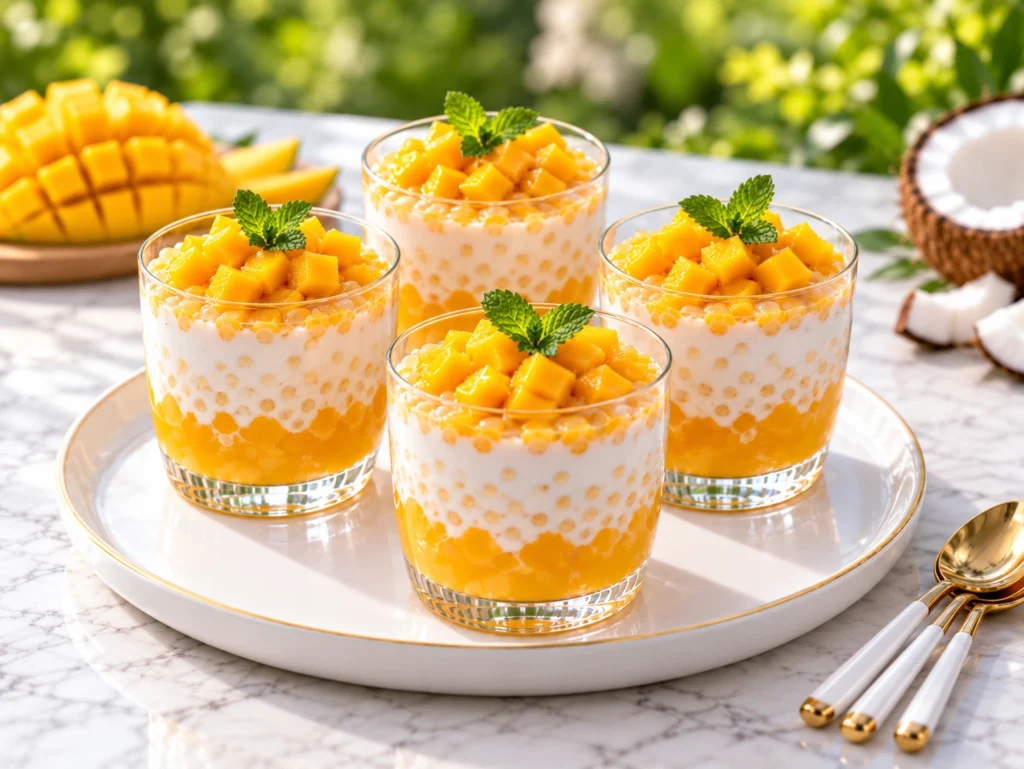
Mango sago is best served very cold in clear glasses, so the layers show.
- Garnishes: Pomelo segments, fresh mint, or toasted coconut flakes
- Drinks: Iced jasmine tea, cold green tea, or sparkling water
- Fruit pairings: Serve beside raspberry cake and blueberry cake for a bright fruit dessert spread
- Dessert tables: Set next to coconut cookies for a crunchy contrast
- Meal combinations: Explore more dessert and baking recipes for other crowd pleasers
Meal Prep Tip: I make the coconut base and puree the night before a gathering, then cook the sago and assemble the glasses a few hours before guests arrive.
Frequently Asked Questions
How do I pack mango sago for a picnic or lunch box?
Spoon the sago and coconut base into a sealed jar, then pack the diced mango and puree in separate small containers so the fruit stays bright. Nest everything in a cooler with a frozen ice pack and keep it below 40°F. Assemble just before eating, and finish it within 2 hours of leaving the fridge. Dairy and fresh fruit spoil fast in warm weather, so do not let your mango sago sit in a hot car.
Why does my mango sago taste sour?
Sour mango sago usually comes from underripe mangoes or from sitting too long. Choose fruit that smells sweet at the stem and gives slightly under your thumb, and add the lime juice sparingly. Once assembled, the dessert is best within 24 hours, since the fruit and coconut milk both turn tangy by day three. If the flavor is already sharp, stir in 1 tablespoon of sugar and a splash of cold coconut milk to rebalance it.
Can I use frozen mango or canned mango pulp?
Yes, both work well. Thaw frozen mango chunks completely, drain the extra liquid, and blend them for the puree, then dice a second batch for the cubes. Canned mango pulp, such as Alphonso or Kesar, works for the puree only and is already sweetened, so skip the added sugar and taste before you add more. Fresh mango gives the brightest flavor, but frozen is a solid choice for homemade mango sago when mangoes are out of season.
How long do large tapioca pearls take to cook?
Large tapioca pearls, the kind used for bubble tea, take 25 to 30 minutes at a gentle simmer, followed by a 15 minute rest off the heat. They are done when a pearl is soft and chewy all the way through with no hard center. Quick cook pearls follow the package, usually 5 minutes. Small sago, as used in this mango sago, cooks in about 12 minutes plus a 10 minute rest, so do not swap the two without adjusting the time.
Is sago the same as tapioca?
Not exactly, but they behave almost the same in a mango sago dessert. Sago comes from the starchy center of sago palm trunks, while tapioca comes from the cassava root. Both are nearly pure starch and naturally gluten free, and in many grocery stores, small tapioca pearls are sold as sago. If the package lists small pearls, it will work in this recipe.
Conclusion
The best mango sago is the one you make when the mangoes smell so sweet you can find the bowl from across the room. Good fruit does most of the work, and the rest is just patience at the stove and a few cold hours in the fridge.
I made a big batch for a summer dinner last July, served it in jam jars, and watched the table go quiet. A neighbor who had never tried sago finished hers and asked if there was more hiding in the kitchen.
Try it once as written, then make it yours. A handful of strawberries or a spoonful of toasted coconut changes the whole mood of this mango sago.
For more easy dessert and baking recipes like this one, follow along on Pinterest at MyRecipesDiary.

Creamy Mango sago Recipe with Coconut Milk
Ingredients
Equipment
Method
- Boil 6 cups of water, add the sago, and stir for the first 2 minutes.
- Simmer for 8 to 10 minutes until the pearls are mostly clear with a small white dot.
- Turn off the heat, cover, and rest for 10 minutes, then drain, rinse, and dip in ice water.
- Warm the coconut milk, whole milk, sugar, and salt until steaming, then cool for 15 minutes.
- Blend 1 mango with the optional sugar and lime juice until smooth.
- Stir the sago into the coconut base and chill for at least 2 hours.
- Layer the puree, diced mango, and sago mixture in glasses, then top with mango, pomelo, and mint.
Notes
- Rinse the pearls until the water runs clear to remove the starch that causes clumping.
- Use very ripe, fragrant mangoes for the sweetest flavor.
- Keep the sago in the coconut base while chilling so it stays soft.