Biscoff Cheesecake Recipe

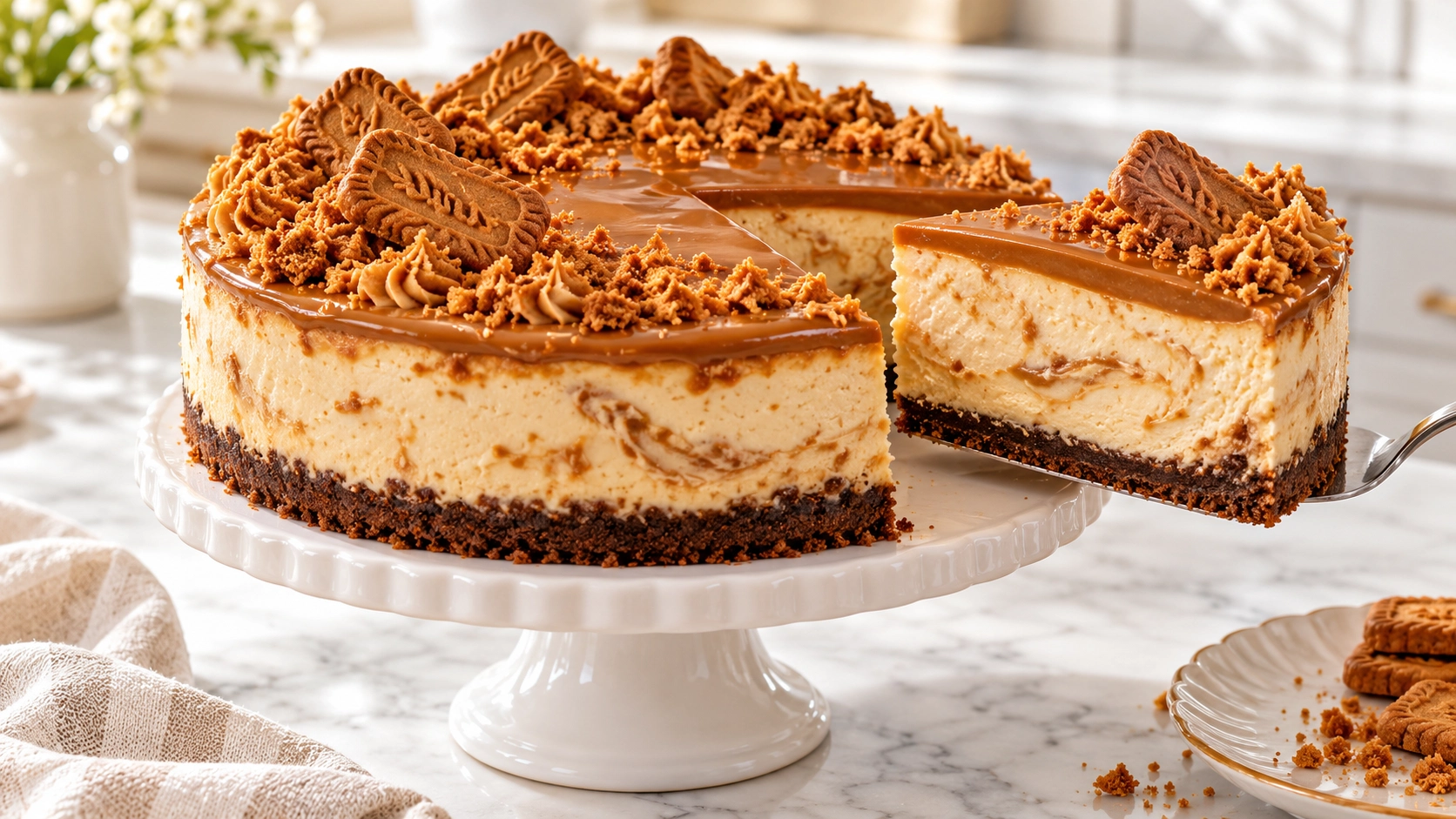
A thick, buttery cookie crust, a silky cheesecake filling swirled with spiced cookie butter, and a glossy caramel colored topping on top is the kind of dessert that gets quiet at the table after the first bite. This Biscoff Cheesecake builds all three layers from simple ingredients, and the spiced, caramelized flavor of the cookies runs through every one of them.
My first attempt cracked down the middle and had a crust so hard it fought the fork. Since then I have learned that a creamy Biscoff cheesecake mostly depends on three habits, mixing on low speed, baking gently with a water bath, and letting the cake cool slowly in the oven. Follow those and the top stays smooth, the center stays creamy, and the crust cuts cleanly. It does need an overnight chill, but nearly all of that time is hands off, which makes it ideal for making ahead for guests.
Table of Contents
Why You’ll Love This Biscoff Cheesecake Recipe
- A buttery, spiced cookie crust that holds together and slices cleanly
- Silky, creamy filling with real cookie butter flavor in every bite
- Three distinct layers, which makes it look as good as it tastes
- Make ahead friendly, since it tastes best after a night in the fridge
- Simple ingredients, with no unusual equipment
- Easy to customize, with a no bake version and mini cheesecakes
Quick Information
- Prep Time: 30 minutes
- Cook Time: 1 hour
- Cool Time: 1 hour
- Chill Time: At least 6 hours
- Total Time: About 8 hours 30 minutes, mostly chilling
- Servings: 12
- Difficulty: Medium
- Calories: 520 per serving
- Important Tool: A 9 inch springform pan
- Best For: Birthdays, holidays, dinner parties, or any make ahead dessert
- Course: Dessert
- Cuisine: American
- Category: Desserts & Baking
Nutrition Information
- Calories: 520
- Protein: 8g
- Carbohydrates: 44g
- Fat: 36g
- Fiber: 1g
- Sugar: 32g
- Sodium: 330mg
- Serving Size: 1 slice (about 1/12 of the cheesecake)
- Servings Per Recipe: 12
This Biscoff cheesecake is a rich dessert, with most of the fat and sugar coming from the cream cheese, cookie crust, and cookie butter. A thin slice goes a long way, and serving it with fresh berries helps balance the richness.
Nutrition information is an estimate calculated from standard ingredient values and will vary based on specific brands and portion sizes used.
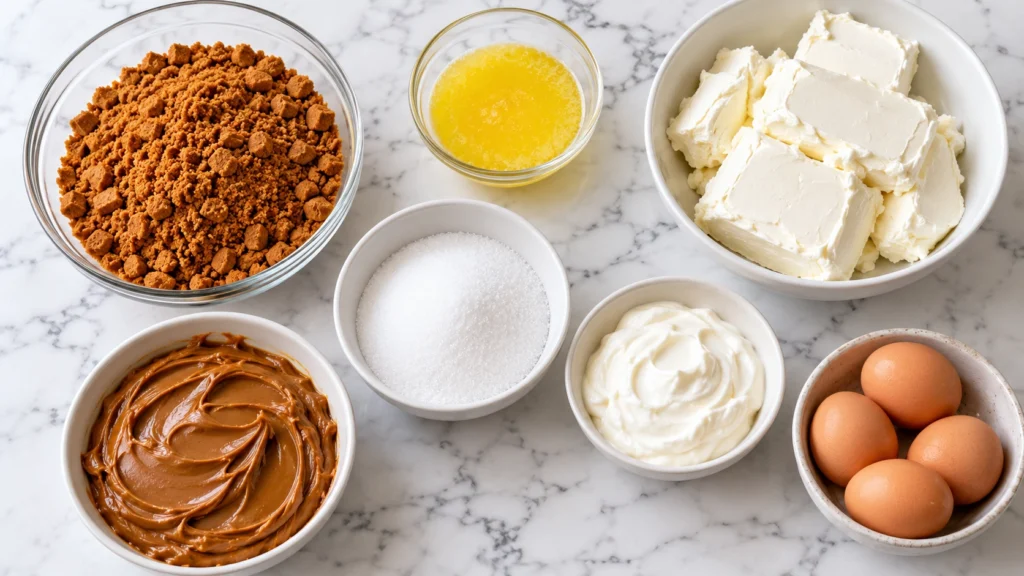
Ingredients
For the Cookie Crust
- 200g (about 25 cookies) Biscoff cookies, finely crushed
- 6 tablespoons (85g) unsalted butter, melted
- Pinch of salt
For the Cheesecake Filling
- 24 ounces (680g) full fat cream cheese, softened
- 3/4 cup (150g) granulated sugar
- 1/2 cup (115g) sour cream, at room temperature
- 1/2 cup (130g) smooth cookie butter spread, slightly warmed
- 3 large eggs, at room temperature
- 2 tablespoons all purpose flour
- 1 teaspoon vanilla extract
- 1/2 teaspoon ground cinnamon
For the Swirl and Topping
- 1/3 cup (85g) smooth cookie butter spread, warmed
- 6 whole cookies, for garnish
- 1/4 cup crushed cookies, for sprinkling
- Whipped cream, optional
Ingredient Notes: Block style full fat cream cheese gives the filling its dense, creamy texture, so avoid whipped tubs or reduced fat versions. All of the dairy ingredients should be at room temperature, since cold cream cheese leaves lumps that never fully blend out.
Tip: Crush the cookies in a zip top bag with a rolling pin, or pulse them in a food processor, until they look like fine sand, since larger chunks make the crust crumble when you slice it.
Equipment Needed
- 9 inch springform pan – releases the cheesecake without flipping it
- Aluminum foil – wraps the pan so water does not seep into the crust
- Roasting pan – holds the water bath that keeps the cheesecake creamy
- Hand mixer or stand mixer – blends the filling smooth
- Offset spatula – spreads the topping neatly
Practical Tip: Use two large sheets of heavy duty foil, overlapping them, to wrap the outside of the springform pan, since a single seam can leak and make the crust soggy.
Preparation
Preheat your oven to 325°F (160°C). Take the cream cheese, sour cream, and eggs out of the refrigerator at least an hour ahead so they come fully to room temperature.
Wrap the outside of a 9 inch springform pan with a double layer of heavy duty foil, and set a kettle of water to heat for the water bath.
Step by Step Instructions
- Make the crust. Stir the crushed cookies, melted butter, and salt until they look like wet sand. Press firmly into the bottom of the pan and about 1 inch up the sides, using the bottom of a measuring cup to pack it tightly.
- Bake the crust. Bake for 8 minutes, then let it cool while you make the filling.
- Beat the cream cheese. Beat the cream cheese and sugar on low speed for about 2 minutes, until smooth and creamy. Keep the speed low and stop as soon as it is smooth, because beating in too much air is one of the main causes of cracked cheesecake.
- Add the flavorings. Mix in the sour cream, 1/2 cup cookie butter, flour, vanilla, and cinnamon on low speed until just combined.
- Add the eggs. Beat in the eggs one at a time, mixing only until each one disappears into the batter.
- Fill and swirl. Pour the filling over the cooled crust. Drop teaspoons of the 1/3 cup warmed cookie butter over the surface and drag a knife through it in gentle figure eights to make a swirl, being careful not to mix it in completely.
- Set up the water bath. Set the wrapped pan in a roasting pan, then pour hot water into the roasting pan until it comes about halfway up the side of the springform.
- Bake. Bake for 55 to 65 minutes, until the edges are set and the center still jiggles slightly when you gently shake the pan. The center should wobble like firm gelatin, not slosh like liquid, and it will finish setting as it cools.
- Cool slowly. Turn off the oven, crack the door open, and leave the cheesecake inside for 1 hour. Cooling gradually keeps the surface from cracking from a sudden temperature change.
- Chill. Remove the cheesecake from the water bath, take off the foil, and cool to room temperature. Cover and refrigerate for at least 6 hours, or overnight.
- Top and serve. Run a thin knife around the edge, release the springform, and spread warmed cookie butter over the top. Garnish with whole and crushed cookies and slice with a knife dipped in hot water.
Expert Tips & Tricks
- Use room temperature ingredients. The first time I used cold cream cheese, the filling was lumpy, so now I leave everything out for at least an hour.
- Mix on low speed. Low speed keeps air out of the batter and the surface smooth.
- Do not overbake. A slight wobble in the center is exactly what you want.
- Cool in the oven. Leaving the cheesecake in the turned off oven prevents cracks.
- Warm the cookie butter slightly. A few seconds in the microwave makes it easy to swirl and spread.
- Use a hot knife. Dipping the blade in hot water and wiping it between cuts gives clean slices.
- Chill overnight. The flavor and texture are noticeably better the next day.
Common Mistakes & Troubleshooting
Cracked top: Overbeating the batter, overbaking, or cooling too quickly can all cause cracks. Mix on low speed, pull the cheesecake while the center still wobbles, and cool it slowly in the oven.
Soggy crust: Water seeping into the pan is the usual cause. Wrap the pan with a double layer of heavy duty foil, and make sure the seam is on the outside.
Lumpy filling: Cold cream cheese does not blend smoothly. Let all of the dairy come to room temperature, and scrape the bowl well between additions.
Runny center after chilling: Underbaking, or slicing before the cheesecake has chilled long enough, leaves it soft. Bake until the center just wobbles, and chill for at least 6 hours.
Crust crumbles when sliced: Too little butter or coarse cookie pieces cause it to fall apart. I learned to crush the cookies very finely and press them firmly, because that makes the crust hold together.
Storage Instructions
- Room Temperature: Do not leave the cheesecake out longer than 2 hours.
- Refrigerator: Store covered in the refrigerator for up to 5 days.
- Freezer: Freeze whole or sliced, wrapped tightly, for up to 2 months, and thaw overnight in the fridge.
- Reheating: Not applicable, since this dessert is served chilled.
- Make Ahead: Bake and chill the cheesecake up to 2 days ahead, and add the warm cookie butter topping the day you serve it.
- My storage tip: I freeze individual slices on a tray before wrapping them, so I can thaw a single slice whenever a craving strikes.
Variations & Substitutions
- Warm spiced version: Add 1/4 teaspoon of nutmeg and a pinch of ginger to the filling for a stronger speculoos flavor.
- Mild, kid friendly version: Skip the cinnamon and top with whipped cream and crushed cookies instead of warm cookie butter.
- No bake version: Beat the cream cheese with the sugar and spread, fold in 1 1/2 cups of whipped heavy cream, spoon over a chilled crust, and refrigerate for at least 6 hours.
- Gluten free version: Use gluten free spiced cookies for the crust and replace the flour with cornstarch.
- Other substitutions: Make mini cheesecakes in a lined muffin tin and bake for 18 to 20 minutes, or drizzle with salted caramel instead of cookie butter.
Serving Suggestions
Biscoff cheesecake is rich, so a small slice with something fresh works best.
- Fresh fruit: Berries, sliced strawberries, or caramelized bananas
- Drinks: Hot coffee, espresso, or a cold glass of milk
- Dessert tables: Pair with tres leches cake and brownie cake for a variety of rich flavors
- Sweet pairings: Serve beside coconut cookies and chocolate covered strawberries
- Meal combinations: Explore more dessert and baking recipes for other crowd pleasers
Meal Prep Tip: I bake the cheesecake two days before a party and add the warm cookie butter topping on the day, which keeps the top glossy and the slices clean.
Frequently Asked Questions
Can I make Biscoff cheesecake ahead of time?
Yes, it is actually better made ahead. Bake and chill it up to 2 days in advance and add the warm topping and garnish just before serving. You can also freeze whole or sliced cheesecake for up to 2 months.
Why did my Biscoff cheesecake crack?
Cracks usually come from overbeating the batter, overbaking, or cooling the cheesecake too quickly. Mix on low speed, pull it from the oven when the center still jiggles slightly, and leave it in the turned off oven with the door cracked for an hour before cooling.
Can I use something other than Biscoff cookies and spread?
Yes, any spiced shortbread or speculoos style cookies work for the crust, and cookie butter or speculoos spread can replace the Biscoff spread. In a pinch, graham crackers with a little cinnamon work for the crust, though the flavor will be milder.
How do I know when Biscoff cheesecake is done baking?
The edges should look set and slightly puffed, while the center still wobbles gently like firm gelatin when you shake the pan. If it sloshes like liquid, it needs more time. The center firms up as it cools and chills.
Why is my Biscoff cheesecake watery or runny?
A runny cheesecake is usually underbaked or was sliced before it had chilled long enough. Bake until the center wobbles rather than ripples, cool it slowly, and chill for at least 6 hours, ideally overnight, before slicing.
Conclusion
This Biscoff Cheesecake shows how a handful of pantry ingredients can become a bakery style dessert when you pay attention to a few details, low speed mixing, a gentle water bath, and a slow cool down. Each layer, crust, creamy filling, and cookie butter topping, adds a different texture and the same warm, caramelized spice. Make this Biscoff cheesecake the day before your next gathering, and be ready to share the recipe.
For more easy dessert and baking recipes like this one, follow along on Pinterest at MyRecipesDiary.
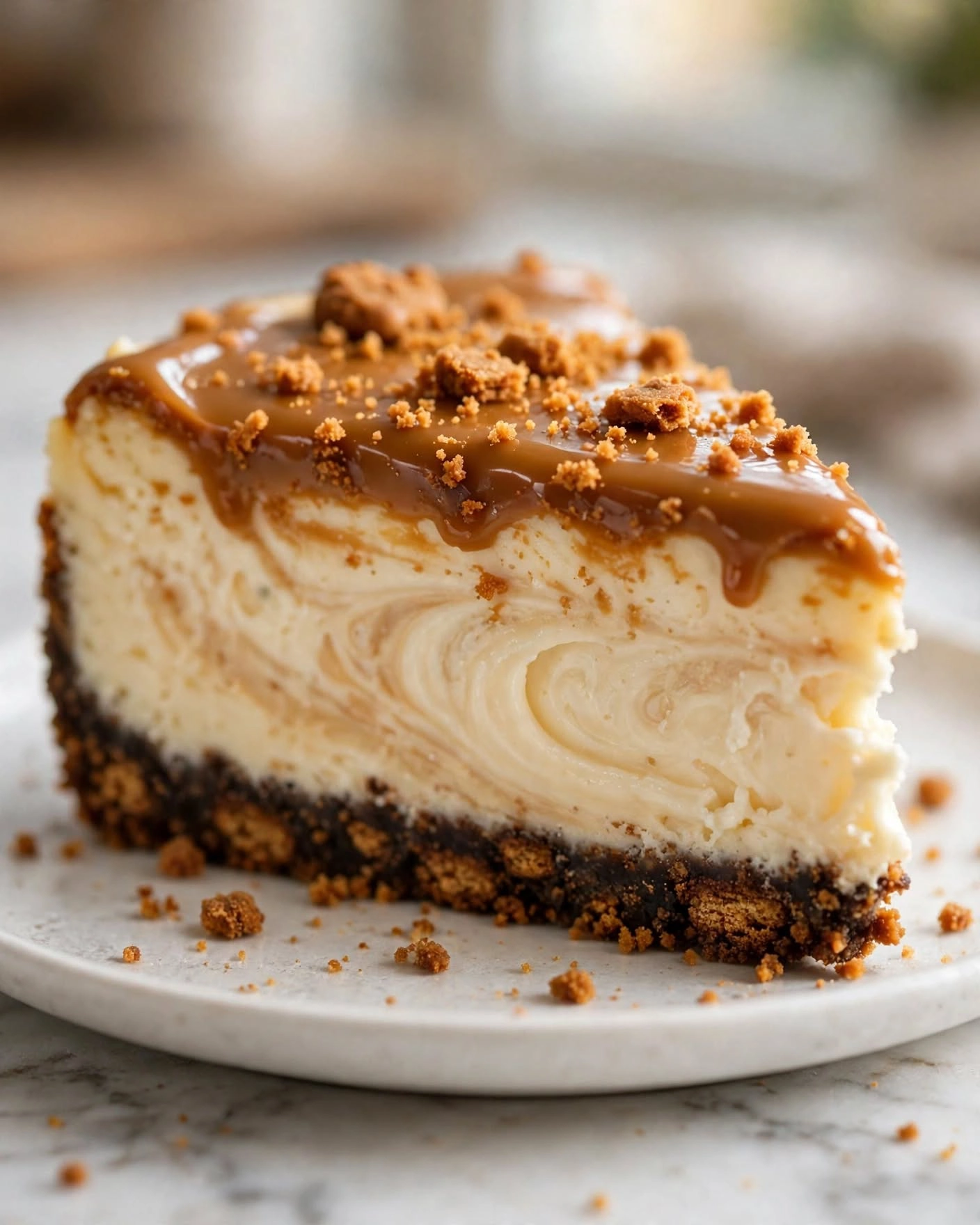

Biscoff Cheesecake Recipe
Ingredients
Equipment
Method
- Mix crushed cookies, butter, and salt; press into a springform pan and bake at 325°F for 8 minutes.
- Beat cream cheese and sugar on low speed until smooth.
- Mix in sour cream, cookie butter, flour, vanilla, and cinnamon, then eggs one at a time.
- Pour over the crust and swirl in the warmed cookie butter.
- Bake in a water bath for 55 to 65 minutes until the edges set and the center jiggles slightly.
- Cool in the turned off oven for 1 hour, then chill at least 6 hours.
- Top with warmed cookie butter and crushed cookies before slicing.
Notes
- Bring the cream cheese, sour cream, and eggs to room temperature for a lump free filling.
- Wrap the pan in double heavy duty foil to keep water out of the crust.
- Pull the cheesecake while the center still wobbles; it firms up as it chills.
- A knife dipped in hot water gives clean slices.