Gingerbread Cookies With Cozy Winter Spices


This Gingerbread Cookies Recipe fills the kitchen with warm ginger, cinnamon, and molasses. Crisp edges, soft chewy centers, and neatly cut shapes make these spicy-sweet cookies a festive project for decorating with family.
My first batches were disappointing. The cookies spread into blobs, the arms fell off the gingerbread men, and the flavor was mild and flat. After seven test bakes, I found three fixes: a long chill, a little extra flour dusted only on the cutters, and fresh ground spices.
What makes this version different is the spice balance. Dark molasses gives a deep, almost caramel flavor, fresh ginger adds a bright kick, and a pinch of black pepper wakes everything up. The dough rolls out without sticking, and the cookies stay soft for a week. My niece, who usually picks the icing off, ate her whole cookie, ears and all, and asked to bake another batch.
Table of Contents
Why You’ll Love This Gingerbread Cookies Recipe
- Soft, chewy centers and crisp edges from molasses, brown sugar, and a short bake
- Clean cut shapes that keep every point, ear, and star after baking
- Deep, layered spice from ginger, cinnamon, cloves, nutmeg, and a touch of black pepper
- Make ahead and freezer friendly, since the dough keeps 3 days and the cookies freeze for 3 months
- Easy to serve a crowd, with 24 three inch cookies from one batch
- Rolls out without sticking, thanks to a long chill and parchment instead of extra flour
Quick Information
- Prep Time: About 1 hour, including rolling and decorating
- Chill Time: At least 2 hours, plus 10 minutes for cut shapes
- Cook Time: 9 to 11 minutes per tray
- Cool Time: 20 minutes
- Icing Drying Time: At least 6 to 8 hours, or overnight before packing
- Total Time: About 10 hours including 6 hours of icing drying; allow longer if needed, mostly chilling
- Servings: 24 cookies
- Difficulty: Medium
- Calories: 170 per cookie, with icing
- Important Tool: A rolling pin with thickness guides and 3 inch cutters
- Best For: Christmas cookie exchanges, holiday gifts, baking with kids, or a cozy winter weekend
- Course: Dessert
- Cuisine: American
- Category: Desserts & Baking
The total assumes two trays baked one at a time, ready-softened butter, and a minimum of six hours for icing to dry. More detailed decorating, extra trays, or humid conditions add time.
Nutrition Information
- Calories: 170
- Protein: 2g
- Carbohydrates: 31g
- Fat: 4g
- Fiber: 1g
- Sugar: 19g
- Sodium: 105mg
- Serving Size: 1 iced cookie (about 40g)
- Servings Per Recipe: 24
These gingerbread cookies are a sweet holiday treat, with most of the calories coming from the flour, molasses, and sugar. One cookie with a cup of tea makes a satisfying portion, and skipping the icing reduces the sugar and calories; the amount depends on how much icing you use.
Nutrition information is an estimate calculated from standard ingredient values and will vary based on specific brands and portion sizes used.
Ingredients
For the Gingerbread Dough
- 3 cups (375g) all purpose flour, plus more for dusting the cutters
- 2 teaspoons ground ginger
- 1 1/2 teaspoons ground cinnamon
- 1/2 teaspoon ground cloves
- 1/4 teaspoon ground nutmeg
- 1/4 teaspoon freshly ground black pepper
- 1 teaspoon baking soda
- 1/2 teaspoon fine salt
- 1/2 cup (113g) unsalted butter, softened
- 1/2 cup (100g) packed dark brown sugar
- 1/2 cup (170g) dark unsulphured molasses
- 1 large egg, at room temperature
- 1 teaspoon fresh grated ginger
- 1 teaspoon alcohol free vanilla extract
For the Royal Icing
- 2 cups (240g) powdered sugar, sifted
- 1 1/2 tablespoons meringue powder, following the brand’s measuring guidance
- 3 tablespoons (45ml) warm water, plus more to thin
- 1/2 teaspoon alcohol free vanilla extract
For Decorating
- Edible mini candies or sprinkles, optional
Ingredient Notes: Use dark unsulphured molasses, since it gives the deepest flavor without the bitter edge of blackstrap. I tested this with Grandma’s Original molasses and King Arthur flour, and both gave a soft, flavorful cookie. Use spices that smell strong when you open the jar, since old ginger and cloves taste flat and dusty.
Tip: Spray the measuring cup with cooking spray before you pour in the molasses. It slides right out, and you leave nothing behind.
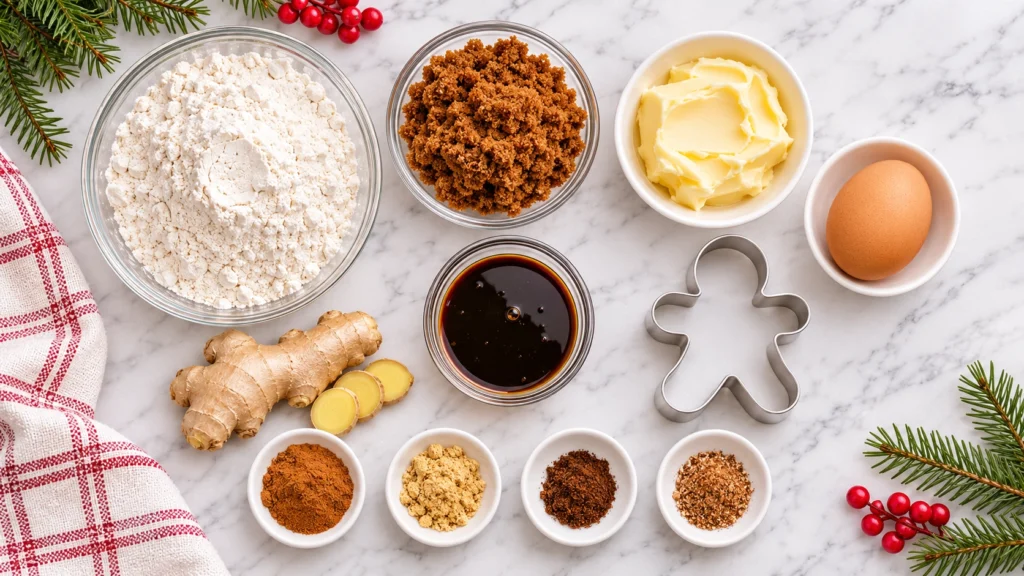
Equipment Needed
- Rolling pin with thickness guides: rolls the dough to an even 1/4 inch for cookies that bake at the same speed
- 3 inch cookie cutters: cut sharp, clean shapes that hold their edges
- Parchment paper: stops the dough from sticking, so you do not need extra flour
- Digital kitchen scale: weighs the flour for a soft, never dry cookie
- Piping bags with small round tips: pipe thin lines and dots for the icing
- Thin metal spatula: lifts the cut shapes onto the trays without bending the arms
Practical Tip: Roll the dough between two sheets of parchment. The dough never touches the counter, so it picks up no extra flour, and the cookies stay tender.
Preparation
Start with softened butter and a room temperature egg. Line two rimmed baking sheets with parchment paper. Preheat the oven near the end of the dough chill, rather than leaving it on for two hours.
Weigh the flour, or spoon it into the cup and level it with a knife. Grate the ginger, measure the spices into a small bowl, and sift the powdered sugar for the icing.
Step by Step Instructions
1. Mix the dry ingredients
Whisk the flour, ginger, cinnamon, cloves, nutmeg, pepper, baking soda, and salt in a medium bowl for 30 seconds. The mixture should look evenly speckled and golden brown.
2. Cream the butter and sugar
Beat the butter and brown sugar on medium speed for 2 minutes, until smooth and creamy.
3. Add the wet ingredients
Beat in the molasses, egg, fresh ginger, and vanilla for 1 minute, until the mixture looks glossy with no streaks of egg.
4. Mix the dough
Add the flour mixture in two parts on low speed, until a soft dough forms with no dry flour. The dough should look thick and slightly sticky.
Chef’s Note: Stop mixing as soon as the flour disappears. Extra mixing can toughen the cookies.
5. Chill the dough
Divide the dough in half, shape each into a flat disc, wrap tightly, and refrigerate for at least 2 hours, or up to 3 days, until firm and cool like play dough.
6. Roll and cut
Preheat the oven to 350°F (175°C) with the rack in the center and line two baking sheets with parchment. Roll one disc between two sheets of parchment to an even 1/4 inch thick, peel off the top sheet, and cut the shapes, dusting each cutter with flour. Move the cookies to the lined trays with a thin spatula, spaced 1 inch apart, then chill the trays for 10 minutes.
Chef’s Note: Keep the second disc refrigerated while you work. Reroll scraps gently and chill again if the dough becomes sticky.
7. Bake
Bake at 350°F for 9 to 11 minutes, until the edges are set and the centers look puffed and slightly soft. Cool on the pan for 5 minutes, then move to a wire rack until completely cool, about 20 minutes total. Repeat with the remaining dough, allowing the baking sheet to cool between batches.
8. Make the icing and decorate
Beat the powdered sugar, meringue powder, water, and vanilla until stiff and glossy, starting with about 4 minutes and following the powder manufacturer’s guidance. Reserve thick icing for outlines and details; thin a separate portion a few drops at a time for filling, until a drizzled line disappears in about 10 seconds. Decorate completely cooled cookies and add edible candies if desired. Let dry uncovered for at least 6 to 8 hours or overnight, until fully firm before stacking or wrapping.
Chef’s Note: Keep some icing thick for outlines and details. Thin only the portion you need for filling, and dry fully before stacking.
Expert Tips & Tricks
- Chill the dough fully. A cold dough holds its shape, so the points and limbs stay sharp, and the cookies bake tall instead of flat.
- Learn from my mistake. I once rolled warm dough on a heavily floured counter. The cookies spread, and the extra flour made them dry and tough, so now I roll between parchment.
- Use fresh spices. Ground spices gradually lose aroma during storage, and old ones leave the cookies mild and flat.
- Chill the cut shapes. Ten minutes in the fridge before baking keeps the edges crisp and the shapes true.
- Make ahead. Mix the dough up to 3 days ahead and keep it wrapped in the fridge, or freeze the discs for up to 3 months.
- Cool before icing. Warm cookies melt the icing into a glossy puddle, so wait until they are completely cool.
- Save time. Roll out all the dough at once, cut the shapes, and freeze the extra trays, so you can bake fresh cookies on demand.
Common Mistakes & Troubleshooting
Cookies spread and lose their shape: Warm dough, a hot pan, or whipped butter make them melt outward. Chill the dough for 2 hours, cool the pan between batches, and chill the cut shapes for 10 minutes. If they start to spread, chill the remaining dough for 15 minutes.
Hard, dry cookies: Overbaking, extra flour, or rolling too thin makes them stiff. Weigh the flour, roll to 1/4 inch, and pull the pan while the centers still look soft. For undecorated cookies, a small piece of fresh bread kept separate in the container can soften them overnight; remove it the next day. Keep bread away from royal icing.
Bland or flat flavor: Old spices, light molasses, or skipped salt leave the cookies mild. I made a batch with a jar of ginger from three years back and got a dull, sweet cookie. Use fresh spices, dark molasses, and the black pepper. A little fresh grated ginger brightens any dough.
Dough cracks or crumbles when rolled: Dough that is too cold, or too much flour, cracks at the edges. Let the disc sit on the counter for 5 minutes, then press the cracks together with warm hands. Add 1 teaspoon of water if the dough feels dry.
Icing runs or bleeds: Icing that is too thin, or piped onto warm cookies, spreads past the lines. Thin it a few drops at a time, and cool the cookies fully. Stiff icing for outlines should hold a peak, and flood icing should disappear into itself in about 10 seconds.
Storage Instructions
- Room Temperature: Store undecorated cookies in an airtight container for up to 7 days, and iced cookies, once fully dry, for up to 5 days.
- Refrigerator: Wrap the dough discs for up to 3 days. Baked cookies do not need the fridge.
- Freezer: Freeze dough discs for up to 3 months, or baked, undecorated cookies, layered with parchment, for up to 3 months. Thaw dough overnight in the fridge.
- Reheating: Warm a cookie in the microwave for 5 seconds, or in a 300°F oven for 3 minutes, to bring back the soft center.
- Make Ahead: Mix the dough up to 3 days ahead, and bake and decorate the cookies up to 5 days before serving.
- My storage tip: I layer completely cooled cookies in an airtight tin with parchment, and keep iced cookies separate until the icing is fully dry.
Variations & Substitutions
- Spicy version: Add 1 extra tablespoon of fresh grated ginger and 1/4 teaspoon of cayenne for a warm, zippy bite.
- Mild, kid friendly version: Cut the cloves and pepper, use 1 teaspoon of ginger, and decorate with edible sprinkles.
- Vegetarian version: The recipe is already vegetarian, though some candies and sprinkles contain gelatin or confectioner’s glaze, so check the label.
- Vegan version: Use vegan butter, replace the egg with 1 tablespoon of ground flaxseed mixed with 3 tablespoons of water, and skip the royal icing for a lemon and powdered sugar glaze.
- Gluten free version: Use a 1:1 gluten free baking flour blend with xanthan gum, and chill the dough for 3 hours.
- Thick and chewy version: For a drop-cookie variation, use a ginger molasses cookie recipe developed for scooping; this dough is designed for cutouts.
- Other substitutions: Add 1 tablespoon of orange zest to the dough, replace the vanilla with lemon juice in the icing, or dip the cooled cookies in melted white chocolate.
Serving Suggestions
Gingerbread cookies are best served with something hot to drink, on a platter at room temperature.
- Garnishes: Royal icing, sparkling sugar, mini candies, or a dusting of powdered sugar
- Drinks: Hot tea, warm apple cider, cold milk, or a silky matcha latte for a creamy pairing
- Cookie platters: Set beside no bake peanut butter protein balls for a mix of chewy and crisp treats
- Dessert tables: Serve next to an Ultimate Apple Pie for a holiday spread with two classics
- Gift ideas: Stack cooled, fully dry cookies in a tin or cellophane bag with a ribbon
- Meal combinations: Explore more dessert and baking recipes for other celebration favorites
Meal Prep Tip: I mix the dough the weekend before a cookie exchange, refrigerate what I will bake within 3 days, freeze the rest, and decorate a few trays at a time, so the holidays stay relaxed.
Frequently Asked Questions
How far ahead can I decorate gingerbread cookies?
You can decorate gingerbread cookies up to 5 days ahead. Let the royal icing dry, uncovered, for 6 to 8 hours or overnight, until it is hard to the touch, then layer the cookies between sheets of parchment in an airtight tin. Keep them at room temperature, away from sunlight, since heat and humidity soften the icing and fade the colors. For gifts, wrap in cellophane only after the icing is fully set.
Why did my gingerbread men lose their arms and legs?
Thin limbs snap when the dough is rolled too thin, cut too warm, or baked too long. Roll to an even 1/4 inch, chill the cut shapes for 10 minutes, and pull the pan while the centers still look slightly soft. Use a thin spatula to move each cookie, and cool on the pan for 5 minutes before lifting. These steps keep your gingerbread cookies intact, even the tiniest arms and legs.
Can I use light molasses, honey, or maple syrup instead of dark molasses?
Light molasses works in a one to one swap, though the gingerbread cookies taste milder and look paler. Skip blackstrap molasses, which tastes bitter and strong. Honey or maple syrup changes moisture, acidity, and spread, so use a recipe developed for that sweetener rather than assuming a direct swap will hold cutout shapes. Dark unsulphured molasses gives the deep, caramel flavor you expect, so use it whenever you can.
How long do I bake thicker, thinner, or larger gingerbread cookies?
Thin cookies rolled to 1/8 inch bake in 7 to 8 minutes and turn crisp, perfect for hanging ornaments. Cookies at 1/4 inch bake 9 to 11 minutes and stay soft and chewy. Large 5 inch gingerbread cookies at 3/8 inch need 12 to 14 minutes. Pull each tray when the edges look set and the centers feel barely firm, since they finish on the hot pan.
Why do gingerbread cookies taste better the next day?
Gingerbread cookies taste better after a day because the spices mellow and blend with the molasses, and moisture redistributes within the cookie during storage. A freshly baked cookie tastes sharp and slightly crisp at the edge. Store them overnight in an airtight tin, and the next morning they taste rounder, deeper, and more like the bakery version.
Conclusion
The best gingerbread cookies are the ones you roll out with someone else. A little flour on the counter, a handful of cutters, and a mug of something hot turn a cold afternoon into the part of the holidays people remember.
Last December I baked three trays with my niece and nephew, and we spent more time decorating than eating. The gingerbread men came out with crooked smiles and too many buttons, and my brother ate every one of the ugliest ones first.
Bake a batch once as written, then make the dough your own. A little orange zest or an extra pinch of ginger keeps these gingerbread cookies new every year.
For more easy dessert and baking recipes like this one, follow along on Pinterest at MyRecipesDiary.


Gingerbread Cookies Recipe
Ingredients
Equipment
Method
- Whisk the flour, ginger, cinnamon, cloves, nutmeg, pepper, baking soda, and salt in a medium bowl for 30 seconds. The mixture should look evenly speckled and golden brown.
- Beat the butter and brown sugar on medium speed for 2 minutes, until smooth and creamy.
- Beat in the molasses, egg, fresh ginger, and vanilla for 1 minute, until the mixture looks glossy with no streaks of egg.
- Add the flour mixture in two parts on low speed, until a soft dough forms with no dry flour. The dough should look thick and slightly sticky.
- Divide the dough in half, shape each into a flat disc, wrap tightly, and refrigerate for at least 2 hours, or up to 3 days, until firm and cool like play dough.
- Preheat the oven to 350°F (175°C) with the rack in the center and line two baking sheets with parchment. Roll one disc between two sheets of parchment to an even 1/4 inch thick, peel off the top sheet, and cut the shapes, dusting each cutter with flour. Move the cookies to the lined trays with a thin spatula, spaced 1 inch apart, then chill the trays for 10 minutes.
- Bake at 350°F for 9 to 11 minutes, until the edges are set and the centers look puffed and slightly soft. Cool on the pan for 5 minutes, then move to a wire rack until completely cool, about 20 minutes total. Repeat with the remaining dough, allowing the baking sheet to cool between batches.
- Beat the powdered sugar, meringue powder, water, and vanilla until stiff and glossy, starting with about 4 minutes and following the powder manufacturer’s guidance. Reserve thick icing for outlines and details; thin a separate portion a few drops at a time for filling, until a drizzled line disappears in about 10 seconds. Decorate completely cooled cookies and add edible candies if desired. Let dry uncovered for at least 6 to 8 hours or overnight, until fully firm before stacking or wrapping.
Notes
- Use fresh spices and dark unsulphured molasses.
- Pull the cookies while the centers still look slightly soft.
- Cool the cookies fully before icing.