Homemade Monkey Bread Recipe

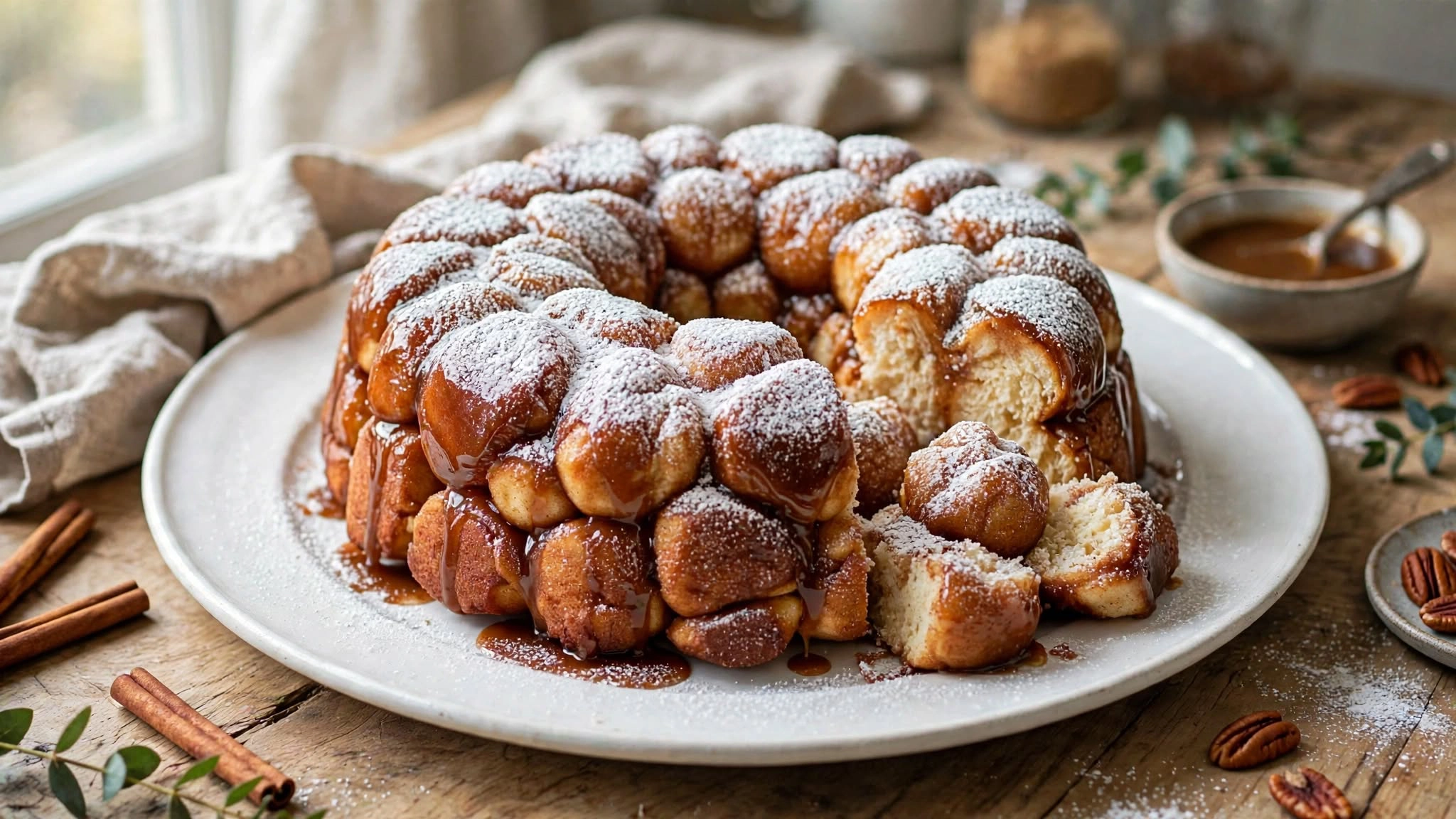
A golden mound of soft, cinnamon coated dough balls glazed with buttery caramel, meant to be pulled apart with your fingers straight from the pan, is one of the most fun things you can put on a brunch table. This Monkey Bread Recipe starts with a real yeast dough, which gives it a tender, bakery style center that boxed biscuit versions simply cannot match.
I made my first homemade monkey bread with canned biscuits and it was good, but the dough tasted flat and the center was gummy. Switching to a simple yeast dough changed everything, because the balls bake up fluffy and the cinnamon sugar and caramel have something worth soaking into. Now this homemade monkey bread recipe is the one I make for holidays, birthdays, and slow weekend mornings. It takes a little time because of the rises, but nearly all of it is hands off, and the smell alone makes it worth the wait.
Table of Contents
Why You’ll Love This Recipe
- Soft, fluffy yeast dough that tastes like a fresh cinnamon roll
- Gooey caramel sauce that coats every piece
- One pan bake, with no rolling pin required
- A fun, shareable centerpiece that everyone pulls apart together
- Make ahead friendly, with an easy overnight option
- Easy to customize, from nuts to cream cheese icing
Quick Information
- Prep Time: 30 minutes
- Rise Time: 1 hour 15 minutes
- Cook Time: 35 minutes
- Cool Time: 10 minutes
- Total Time: About 2 hours 30 minutes, mostly hands off
- Servings: 12
- Difficulty: Medium
- Calories: 420 per serving
- Important Tool: A 10 to 12 cup Bundt pan
- Best For: Holiday mornings, brunch, birthdays, or an easy weekend treat
- Course: Breakfast
- Cuisine: American
- Category: Breakfast
Nutrition Information
- Calories: 420
- Protein: 6g
- Carbohydrates: 62g
- Fat: 17g
- Fiber: 2g
- Sugar: 33g
- Sodium: 290mg
- Serving Size: 1 slice (about 1/12 of the bread)
- Servings Per Recipe: 12
This monkey bread is a rich, special occasion treat, with most of the calories coming from the butter, sugar, and caramel. A smaller portion with a cup of coffee makes a satisfying breakfast, and skipping the icing is an easy way to cut some sugar.
Nutrition information is an estimate calculated from standard ingredient values and will vary based on specific brands and portion sizes used.
Ingredients
For the Dough
- 1 cup (240ml) whole milk, warmed to about 110°F
- 2 1/4 teaspoons instant or active dry yeast
- 1/4 cup (50g) granulated sugar
- 1 large egg, at room temperature
- 1/4 cup (57g) unsalted butter, melted
- 3 1/4 cups (410g) all purpose flour, plus more for dusting
- 1 teaspoon salt
For the Cinnamon Sugar Coating
- 3/4 cup (150g) granulated sugar
- 1 1/2 tablespoons ground cinnamon
- 6 tablespoons (85g) unsalted butter, melted
For the Caramel Sauce
- 1/2 cup (115g) unsalted butter
- 3/4 cup (150g) packed light brown sugar
- Pinch of salt
- 1 teaspoon vanilla extract
For the Icing, Optional
- 1 cup (120g) powdered sugar
- 2 to 3 tablespoons milk
- 1/2 teaspoon vanilla extract
Ingredient Notes: The milk should feel just warm to the touch, around 110°F, since milk that is too hot kills the yeast and milk that is too cool slows it down. Measure the flour carefully, because adding extra flour to make the dough easier to handle leads to a dry, dense monkey bread.
Tip: If your dough seems very sticky, rub a little oil on your hands instead of adding more flour, which keeps the dough soft and tender.
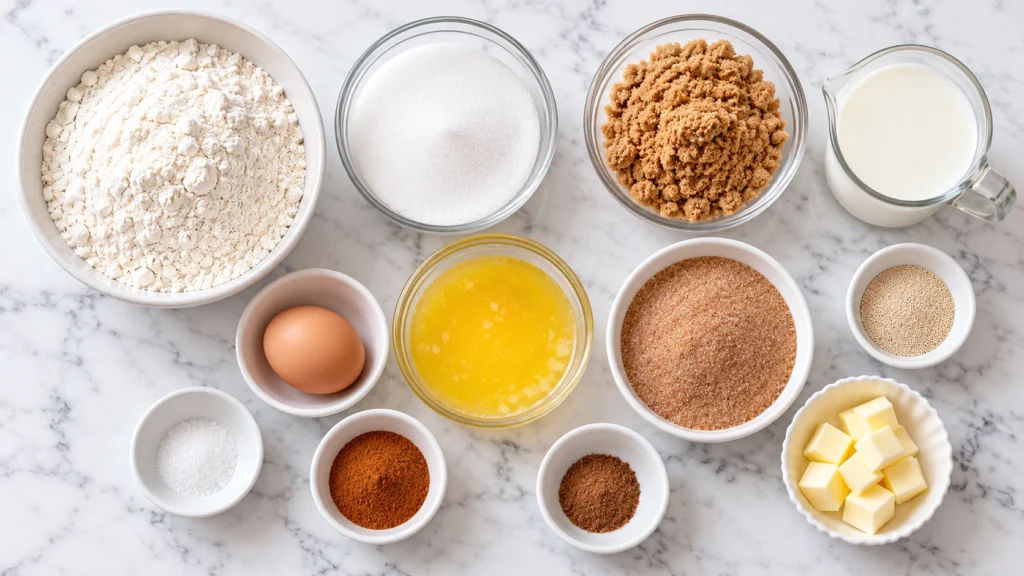
Equipment Needed
- 10 to 12 cup Bundt pan – holds the dough balls and lets the caramel pool evenly
- Stand mixer with dough hook or large bowl – kneads the dough
- Small saucepan – melts the caramel sauce
- Two shallow bowls – one for melted butter and one for cinnamon sugar
- Aluminum foil – tents the bread so the top does not over brown
Practical Tip: Grease the Bundt pan very well, including the center tube, since the caramel sauce can stick if any spots are missed.
Preparation
Warm the milk in the microwave or on the stove until it feels barely warm, then stir in the yeast and a pinch of the sugar and let it sit for 5 minutes until foamy. If it does not foam, the yeast is likely old and should be replaced before continuing.
Grease a 10 to 12 cup Bundt pan thoroughly with butter or baking spray, and set out two shallow bowls for the butter and cinnamon sugar coating.
Step by Step Instructions
- Make the dough. Stir the remaining sugar, egg, and melted butter into the foamy yeast mixture. Add the flour and salt, and mix until a soft dough forms.
- Knead. Knead with a dough hook for about 6 minutes, or by hand for 8 minutes, until the dough is smooth, soft, and slightly tacky. Stop when the dough springs back lightly when poked, and avoid adding extra flour unless it is truly sticking to your fingers.
- First rise. Place the dough in a greased bowl, cover, and let it rise in a warm spot for 45 minutes, until doubled in size.
- Cut and shape. Turn the dough onto a floured surface, pat it into a rectangle, and cut it into about 64 small pieces, each roughly 1 inch. Roll each piece into a ball.
- Coat the dough balls. Mix the sugar and cinnamon in one bowl and place the melted butter in another. Dip each ball in the butter, then roll it in the cinnamon sugar, and arrange the balls in the prepared Bundt pan.
- Second rise. Cover the pan and let the dough rise for 30 minutes, until the balls look puffy and fill the pan about three quarters of the way. Do not skip this rise, because it is what keeps the bread light instead of dense.
- Preheat and make the caramel. Preheat the oven to 350°F (175°C). Melt the butter and brown sugar with the salt in a saucepan over medium heat, stirring until it bubbles, then simmer for 1 minute and stir in the vanilla.
- Pour and bake. Pour the caramel evenly over the dough balls and bake for 33 to 37 minutes, until deep golden brown. If the top browns too fast, loosely cover the pan with foil for the last 10 minutes, and check that the center is baked by gently pulling apart a piece near the middle.
- Cool briefly and invert. Let the bread cool in the pan for 10 minutes, then place a large plate over the top and flip it over. Waiting longer than 10 minutes lets the caramel harden and glue the bread to the pan, so turn it out while it is still warm.
- Ice and serve. Whisk the powdered sugar, milk, and vanilla into a smooth icing, drizzle over the warm bread, and serve right away.
Expert Tips & Tricks
- Check the yeast. The first time I skipped the foam test, my dough never rose, so now I always confirm the yeast is active.
- Keep the dough tacky. A softer dough bakes into a fluffier bread, so resist adding too much flour.
- Make the balls the same size. Even pieces bake at the same rate, so no ball is raw in the middle.
- Do not overpack the pan. The dough needs room to rise a second time.
- Tent with foil. It protects the top from over browning while the center finishes baking.
- Invert while warm. Turning the bread out after 10 minutes keeps the caramel from sticking.
- Try an overnight version. After assembling and pouring the caramel, cover and refrigerate overnight, then bake in the morning.
Common Mistakes & Troubleshooting
Dough does not rise: Old yeast or milk that was too hot or cold is the usual cause. Test the yeast first, and warm the milk only to about 110°F.
Dense, heavy bread: Too much flour or skipping the second rise leaves it heavy. Measure the flour carefully, and let the pan rise until the balls look visibly puffy.
Raw or doughy center: The bread can brown on top before the center bakes. Tent with foil and test a piece near the middle before removing it from the oven.
Caramel sticks to the pan: Waiting too long to invert, or not greasing well, makes it stick. Turn the bread out after about 10 minutes, and grease every part of the pan.
Dry monkey bread: Overbaking or adding too much flour dries it out. I learned to pull the bread as soon as it is deep golden, because the carry over heat keeps it cooking.
Storage Instructions
- Room Temperature: Store covered at room temperature for up to 2 days.
- Refrigerator: Keep in an airtight container for up to 4 days.
- Freezer: Freeze pieces or the whole loaf, tightly wrapped, for up to 2 months.
- Reheating: Warm pieces in the microwave for 15 to 20 seconds, or cover and heat in a 300°F (150°C) oven for 10 minutes.
- Make Ahead: Assemble the monkey bread, pour on the caramel, cover, and refrigerate overnight, then let it sit 30 minutes before baking.
- My storage tip: I store leftover monkey bread in a covered container with a damp paper towel on top, which keeps the dough soft and the caramel sticky.
Variations & Substitutions
- Warm spiced version: Add 1/2 teaspoon of nutmeg and a pinch of cardamom to the cinnamon sugar for a chai spiced twist.
- Mild, kid friendly version: Add mini chocolate chips between the layers of dough balls.
- Quick biscuit version: Use 2 cans of refrigerated biscuit dough cut into quarters in place of the yeast dough, and skip both rises for a faster monkey bread.
- Gluten free version: Use a 1:1 gluten free baking flour blend with an extra 1/2 teaspoon of xanthan gum if the blend does not include it.
- Other substitutions: Add 1/2 cup of chopped pecans to the caramel, swap the vanilla icing for cream cheese icing, or tuck small apple pieces between the dough balls.
Serving Suggestions
Monkey bread is meant to be shared straight from the pan.
- Drinks: Hot coffee, tea, or a cold glass of milk
- Brunch spread: Pair with egg bites and mini pancakes for a sweet and savory table
- Weekend breakfast: Serve beside Belgian waffles for a special holiday morning
- Dessert tables: Set next to blueberry cake for a bakery style spread
- Meal combinations: Explore more breakfast recipes for other weekend favorites
Meal Prep Tip: I assemble homemade monkey bread the night before a holiday, refrigerate it, and bake it in the morning, so the house smells like cinnamon when everyone wakes up.
Frequently Asked Questions
Can I make monkey bread ahead of time?
Yes, assemble the bread through the caramel step, cover it tightly, and refrigerate overnight, then let it sit at room temperature for 30 minutes before baking. You can also freeze baked monkey bread for up to 2 months. This makes it a good choice for holiday mornings.
Why is my monkey bread doughy in the middle?
A doughy center usually means the bread was not baked long enough or the top browned too fast. Tent the pan with foil for the last 10 minutes, and test by gently pulling apart a piece near the center before removing it. The dough should look cooked, not wet.
Can I use canned biscuit dough for monkey bread?
Absolutely. Use two cans of refrigerated biscuit dough, cut each biscuit into quarters, and coat them in the butter and cinnamon sugar. Skip both rises and bake for about 35 minutes. It is a faster shortcut, though homemade monkey bread has a softer, fluffier texture.
How do I keep monkey bread from sticking to the pan?
Grease the Bundt pan thoroughly, including the center tube, and invert the bread after about 10 minutes of cooling while the caramel is still warm and loose. Waiting too long lets the caramel harden and glue the bread to the pan.
Why is my homemade monkey bread dry or dense?
Dry or dense monkey bread usually comes from too much flour, a rushed second rise, or overbaking. Measure the flour carefully, let the dough puff visibly before baking, and pull the bread when it is deep golden. A softer, slightly tacky dough gives the best texture.
Conclusion
This Monkey Bread Recipe shows how a simple yeast dough, a coating of cinnamon sugar, and a pour of caramel can turn into a centerpiece everyone gathers around. The small details, a proper rise and inverting the bread while it is still warm, make the difference between a sticky mess and a gooey success. Make this homemade monkey bread for your next special morning, and plan on the pan being empty before the coffee cools.
For more easy breakfast recipes like this one, follow along on Pinterest at MyRecipesDiary.
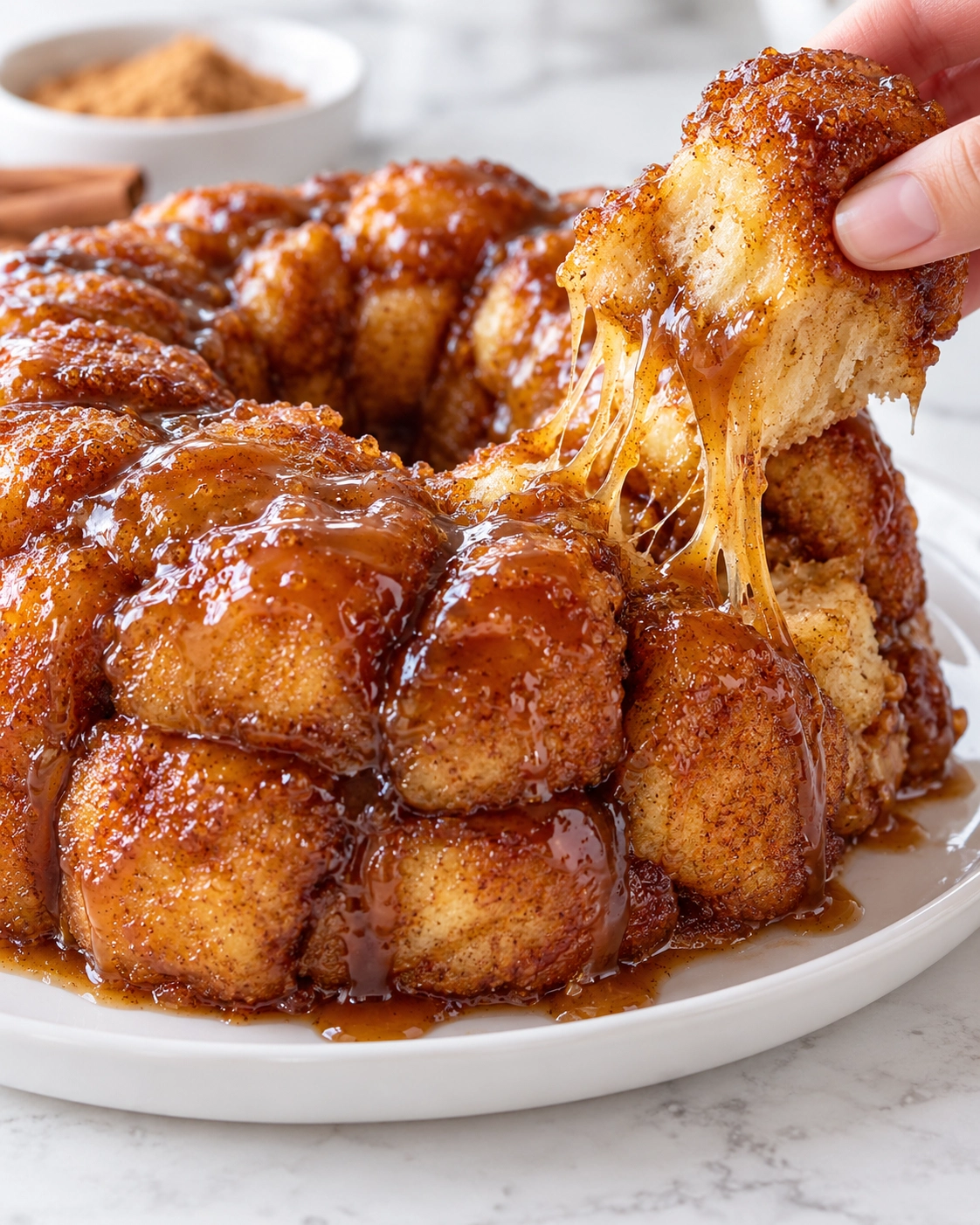

Homemade Monkey Bread Recipe
Ingredients
Equipment
Method
- Mix warm milk and yeast; add sugar, egg, butter, flour, and salt, then knead until smooth.
- Rise 45 minutes until doubled.
- Cut into about 64 pieces and roll into balls.
- Dip each ball in melted butter, then cinnamon sugar, and layer in a greased Bundt pan.
- Rise 30 minutes until puffy.
- Melt butter and brown sugar into caramel, stir in vanilla, and pour over the dough.
- Bake at 350°F for 33 to 37 minutes, tenting with foil if the top browns too fast.
- Cool 10 minutes, invert onto a plate, and drizzle with icing.
Notes
- Test the yeast first so you know the dough will rise.
- Measure the flour carefully; extra flour makes the bread dry and dense.
- Keep the dough balls the same size so they bake evenly.
- A thoroughly greased Bundt pan, including the center tube, helps the bread release cleanly.