Creamy Chicken Noodle Soup

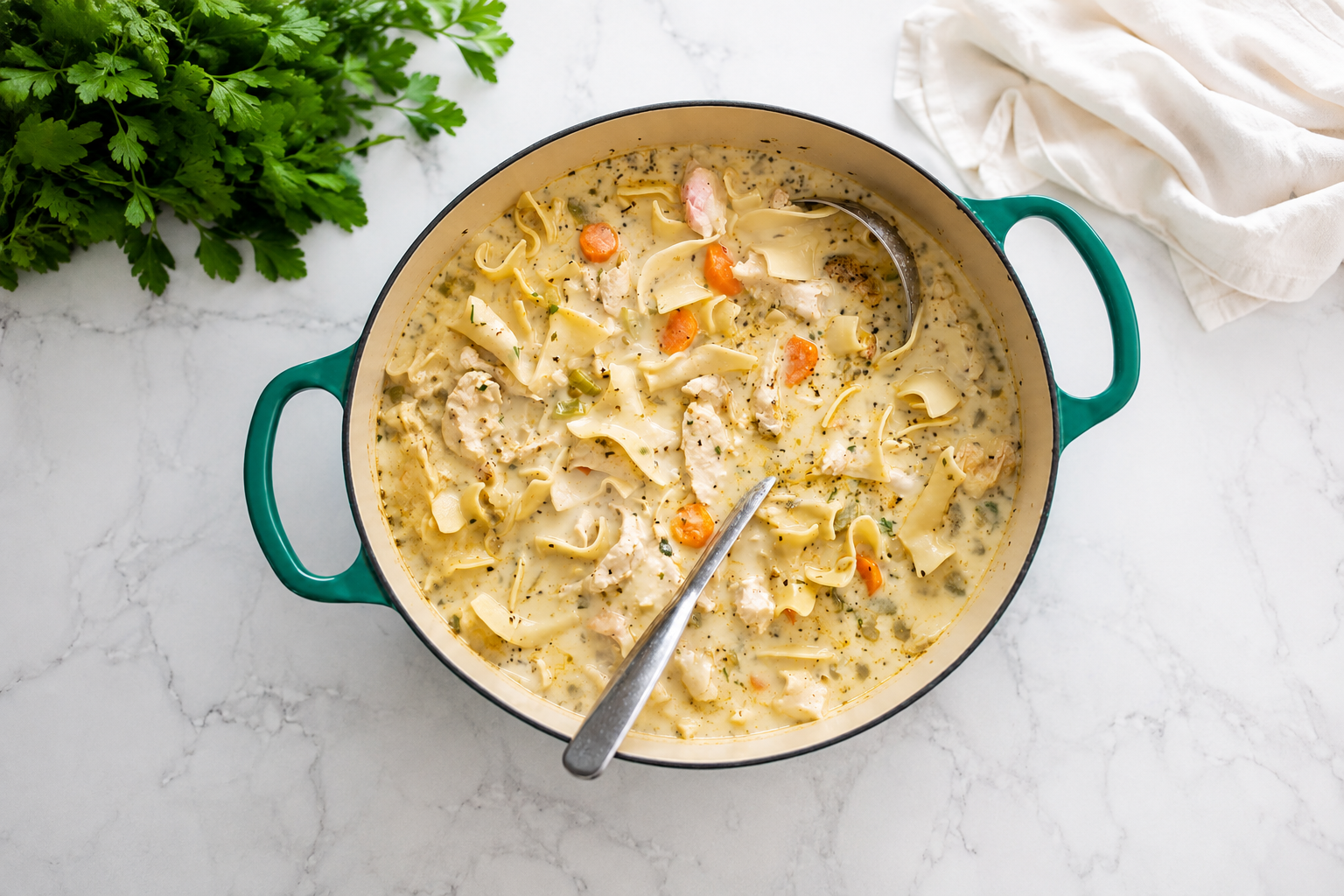
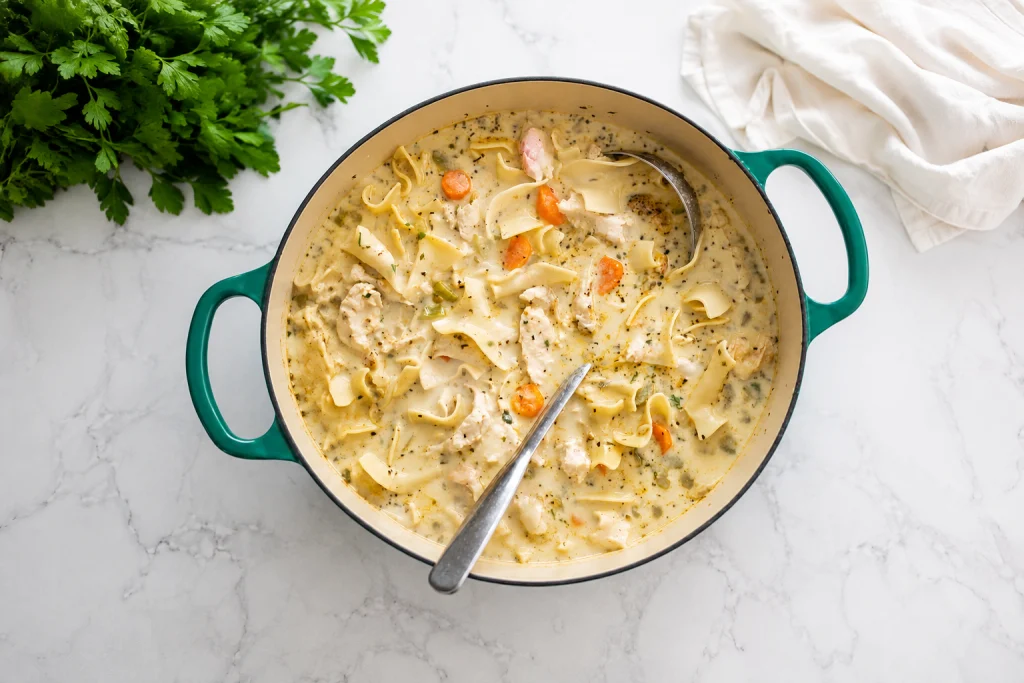
Tender chicken, soft egg noodles, and a creamy broth make a simple pot of soup feel like a proper dinner. This creamy chicken noodle soup brings them together with sweet carrots, celery, garlic, and thyme, using cooked chicken to keep the preparation manageable.
The broth has enough body to lightly coat your spoon while staying easy to sip. A small amount of flour provides gentle thickening, and cream goes in near the end for a smooth finish. There is no condensed soup to open and no long list of seasonings to measure.
You can make the whole recipe in one pot when dinner is going straight to the table. If you are cooking ahead, preparing the noodles separately gives you more control over their texture.
The most useful detail is knowing when to stop cooking. Once the noodles are tender and the chicken is hot, the soup needs very little more time. That keeps the chicken moist and leaves enough broth in every bowl.
Creamy Chicken Noodle Soup
Why You’ll Love This Recipe
- Creamy without being overly thick: The modest amount of flour gives the broth body without turning it into gravy.
- A practical use for cooked chicken: Shredded chicken saves you a separate cooking step.
- Familiar, gentle flavors: Carrots, garlic, and thyme make a savory base without strong heat.
- A complete bowl: Chicken, noodles, and vegetables provide enough substance for a satisfying lunch or dinner.
- Flexible preparation: Cook everything together for immediate serving, or keep the noodles separate for planned leftovers.
Recipe Snapshot
| Detail | Information |
| Prep time | 15 minutes |
| Cook time | About 35 minutes |
| Total time | About 50 minutes |
| Servings | 6 |
| Serving size | One sixth of the finished recipe |
| Difficulty | Easy |
| Estimated calories | 410 per serving |
| Main equipment | A heavy soup pot with at least 5 litres capacity |
| Best occasion | Family dinners, cool evenings, or prepared lunches |
Timing assumes your chicken is already cooked. Noodle brands and the size of your vegetable pieces can change the cooking time slightly.
Ingredients
For the Soup Base
- 3 tablespoons unsalted butter, 42 g
- 1 medium yellow onion, finely diced, about 150 g
- 3 medium carrots, cut into thin half moons, about 180 g
- 2 celery stalks, finely sliced, about 100 g
- 3 garlic cloves, minced
- 3 tablespoons plain flour, also called all purpose flour, 24 g
- 1 teaspoon dried thyme
- ½ teaspoon ground black pepper
- 6 cups chicken broth with reduced sodium, 1.44 litres
- 1 dried bay leaf
- ½ teaspoon fine salt, or less depending on the broth
To Finish
- 6 ounces dried wide egg noodles, 170 g
- 3 cups loosely packed cooked, shredded chicken, about 450 g
- ½ cup heavy cream, 120 ml
- 2 tablespoons finely chopped fresh parsley
Chicken: Use cooked breast, thigh meat, or a mixture. Remove skin, bones, and any tough pieces before measuring. A plainly seasoned rotisserie chicken is convenient, but strongly spiced chicken will change the flavor.
Noodles: Weigh them if possible. Wide noodles vary considerably in shape, so a cup measurement can hold very different amounts. Choose dried noodles with a package cooking time of approximately 7 to 9 minutes.
Broth: Use a broth you enjoy on its own. Reduced sodium broth lets you adjust the salt after adding the chicken, which may already be seasoned.
Cream: Heavy cream adds richness without requiring a large quantity. Lower fat dairy produces a lighter result and needs more careful heat control. Salt & Lavender’s recipe notes also flag curdling as a concern when replacing heavy cream.
ingredients: Use verified chicken and broth. Check packaged stock, rotisserie chicken seasonings, and any replacement ingredients for suitability.
Equipment Needed
- Heavy soup pot: A capacity of at least 5 litres gives you room to stir without splashing.
- Kitchen scale: Particularly useful for measuring noodles accurately.
- Flat wooden spoon or silicone spatula: Helps lift flour from the bottom and corners of the pot.
- Instant read thermometer: Useful for checking that the chicken is thoroughly reheated.
A heavy base is helpful because thickened soup can catch on a thin saucepan before the rest of the liquid becomes hot.
Preparation
Cut the carrots into half moons approximately ¼ inch thick. Thick chunks take longer to soften and may still be firm when the noodles are ready.
Shred the chicken into short pieces that fit comfortably on a spoon. Long strands can wrap around noodles and make the soup awkward to eat.
Measure the flour, broth, and seasonings before heating the pot. Keep the cream refrigerated until shortly before you need it. No oven preheating is required.
How to Make Creamy Chicken Noodle Soup
1. Soften the Vegetables
Melt the butter over medium heat, then add the onion, carrots, and celery. Cook for 8 to 10 minutes, stirring occasionally, until the onion looks translucent and the vegetables begin to soften.
2. Add the Garlic and Herbs
Stir in the garlic, thyme, and pepper. Cook for 30 seconds, just until the garlic smells fragrant.
3. Cook the Flour
Sprinkle the flour evenly over the vegetables and stir continuously for 1 minute. The flour should blend into the butter without leaving dry patches.
Chef’s note: Keep this mixture pale. Deep browning changes the flavor and color of the finished soup.
4. Add the Broth Gradually
Pour in about 1 cup of broth while stirring firmly around the bottom of the pot. Once the mixture looks smooth, gradually stir in the remaining broth.
5. Simmer the Soup Base
Add the bay leaf and salt, then bring the broth to a gentle simmer over medium high heat. Reduce to medium low and simmer uncovered for 5 to 7 minutes, until a fork enters a carrot slice with only slight resistance.
Chef’s note: Check the carrots before adding noodles. Give firm carrots a few extra minutes now so the pasta does not overcook later.
6. Cook the Noodles
Add the dried egg noodles and maintain a gentle simmer for approximately 7 to 9 minutes, following the package timing. Stir regularly and begin checking early; the noodles should bend easily but retain a slight bite.
7. Warm the Chicken and Cream
Reduce the heat to low, then stir in the cooked chicken and cream. Heat gently for approximately 3 to 5 minutes, stirring, until the chicken and soup reach 165°F, or 74°C; allow longer if needed.
Chef’s note: Avoid a prolonged hard boil after adding cream. Gentle heating helps preserve the texture of both the dairy and chicken.
8. Finish and Serve
Remove the bay leaf and stir in the parsley. Taste, adjust the seasoning, and serve promptly while the noodles still have some firmness.
Texture tip: The finished broth should flow easily from a ladle. If it becomes too thick, stir in extra hot broth, ¼ cup at a time, until it reaches the consistency you prefer.
Expert Tips for a Better Bowl
- Keep vegetable pieces consistent. Similar sizes soften at a similar rate, so you avoid crunchy carrots beside collapsing celery.
- Measure the noodles before adding them. An extra handful may look harmless, but it absorbs liquid that belongs in the broth.
- Use short pieces of chicken. Bite sized shreds distribute more evenly than a few large clumps.
- Taste after adding the chicken. Seasoned leftovers can contribute a surprising amount of salt.
- Prepare the vegetables ahead. Refrigerate the chopped onion, carrots, and celery in a sealed container for up to 24 hours.
- Portion leftovers promptly. Smaller containers cool faster and let you reheat only the amount you need.
Common Mistakes and Troubleshooting
The Soup Becomes Too Thick
Noodles continue absorbing liquid after cooking, especially during storage. Too many noodles or a long simmer can leave very little free broth.
Add warm broth in small amounts and taste again before adding salt. For future batches, weigh the pasta and keep it separate when preparing several meals.
The Noodles Turn Mushy
This usually happens when the noodles cook too long or remain in hot soup while it waits to be served. Several home cooks describe this exact problem in a discussion about noodles absorbing soup broth.
Overcooked noodles cannot become firm again. To prevent the problem, check them before the package time is up and serve soon after finishing the soup.
The Broth Has Flour Lumps
Flour can clump when liquid is added too quickly or dry pockets remain around the vegetables.
Stir the flour thoroughly into the butter before adding broth. If small lumps appear, press them against the side of the pot with your spoon before adding the noodles.
The Chicken Tastes Dry
Cooked chicken needs reheating, so adding it at the beginning exposes it to unnecessary cooking.
Add it near the end and stop heating once it reaches the required temperature. If it is already dry, shred it more finely so the creamy broth coats each piece.
The Soup Tastes Flat
A pale, creamy broth can taste dull when the vegetables are undercooked or the seasoning is too restrained.
Check the salt first, adding a small pinch at a time. Fresh parsley and a little additional black pepper can sharpen the flavor without changing the character of the soup.
Storage, Freezing, and Reheating
Room Temperature and Refrigeration
Divide leftovers into shallow containers and refrigerate within 2 hours, or within 1 hour when the surrounding temperature exceeds 90°F, or 32°C.
Keep refrigerated at 40°F, or 4°C, or below and use within 3 to 4 days. These limits follow USDA leftover handling guidance.
If you started with leftover cooked chicken, count its existing refrigerated storage time. Making soup does not give older chicken a fresh four day window.
Freezing
For better texture, freeze the vegetable and broth base before adding noodles, chicken, and cream. Use freezer suitable containers, leave room for expansion, and aim to use within 2 months for quality.
Thaw overnight in the refrigerator, bring the base to a simmer, and finish with noodles, cooked chicken, and cream.
You can freeze the completed soup, but the noodles may soften considerably and the dairy may separate after thawing.
Reheating
Reheat individual portions in a saucepan, stirring frequently and adding a little broth if necessary. Bring reheated soup to a brief rolling boil and ensure it reaches 165°F, or 74°C, then remove it promptly from the heat. USDA recommends bringing soups to a rolling boil when reheating. USDA reheating guidance
Making Ahead
Prepare the soup through the vegetable simmering stage, then cool and refrigerate promptly. Cook the noodles and add the chicken and cream when you are ready to serve.
Planning tip: For individual lunches, cook and refrigerate the noodles separately. Combine each portion with the soup during reheating to limit how much broth the pasta absorbs.
Variations and Substitutions
A little heat: Add ¼ teaspoon crushed red pepper with the garlic. For mixed preferences, offer it at the table.
A milder version: Reduce the black pepper to ¼ teaspoon and cut the chicken and noodles into smaller pieces before serving.
Different pasta: Substitute 170 g of small shells or broken pasta. Follow its package timing and monitor the broth level, since shapes absorb liquid differently.
Gluten free: Use gluten free noodles and verified gluten free broth. Omit the flour; instead, mix 1½ tablespoons cornstarch with 2 tablespoons cold water, stir into the simmering base, and cook for 1 to 2 minutes before proceeding. Cook the noodles separately for better control.
Vegetarian alternative: Replace the chicken with two drained 400 g cans of white beans and use vegetable broth. Add the beans near the end to heat through.
Lighter dairy option: Replace the cream with ½ cup whole milk. Expect a less rich broth, and keep the heat gentle after adding it.
Cooked turkey: Substitute the same weight of cooked turkey. Cooked poultry is a practical shortcut in creamy noodle soups, including the approach described in Sally’s Baking recipe.
What to Serve with Chicken Noodle Soup
Warm bread is useful for catching the last of the broth. Soft dinner rolls work particularly well. [Internal link: Homemade Dinner Rolls]
For something crisp alongside the creamy soup, serve a cucumber and tomato salad with a light lemon dressing. [Internal link: Cucumber Tomato Salad]
Roasted broccoli makes a simple vegetable side when you want a larger dinner. Keep its seasoning straightforward so it complements the soup. [Internal link: Roasted Broccoli]
Finish each bowl with parsley or freshly ground pepper. Water with lemon slices or unsweetened iced tea makes an easy drink pairing.
Nutrition Information
| Nutrient | Estimated amount per serving |
| Calories | 410 kcal |
| Protein | 32 g |
| Carbohydrates | 32 g |
| Fat | 17 g |
| Fiber | 3 g |
| Sugar | 5 g |
| Sodium | 700 mg |
Serving size: One sixth of the finished recipe.
Servings per recipe: 6.
Chicken supplies much of the protein, while noodles provide carbohydrates and the vegetables contribute some fiber.
These figures are approximate ingredient based estimates, not laboratory measurements. Chicken cuts, cream, noodle brands, broth, and added salt change the values. The sodium estimate assumes broth containing roughly 400 mg sodium per cup.
Frequently Asked Questions
Can I make creamy chicken noodle soup the day before?
Yes, but the texture is better if you prepare the soup base ahead and add the noodles when serving. Refrigerate the base promptly in shallow containers, then return it to a simmer the next day. Cook the noodles in the broth and finish with chicken and cream. If the soup is already complete, add a little broth during reheating because the noodles will absorb some liquid overnight.
Why did my soup turn into something like pasta casserole?
The noodles probably absorbed too much broth, either because too many were added or because the soup sat for a long time. This can happen even after you turn off the heat. Stir in additional broth to loosen it, then adjust the seasoning. The noodles will remain soft, but the soup can still be enjoyable. Next time, measure the dry noodles by weight and store them separately from planned leftovers.
Can I use milk instead of heavy cream?
Yes, whole milk can replace the ½ cup cream, although the soup will taste less rich. The flour still provides some body, so you do not need to increase it automatically. Add the milk near the end and heat gently, stirring frequently. Avoid prolonged boiling. Skimmed milk produces a noticeably thinner result, while unsweetened plant milks vary in flavor and heat stability and may require further adjustments.
How do I know when the noodles and chicken are ready?
Taste a noodle near the lower end of its package cooking time. It should be tender enough to eat with a little firmness remaining, since it will continue softening when the chicken and cream go in. For the cooked chicken, use a thermometer to confirm it has reheated to 165°F, or 74°C. Steam alone does not confirm that the center of a thick piece is hot enough.
Can I start with raw chicken instead of cooked chicken?
Yes, but allow additional time and cook it before adding the noodles. After adding the broth, gently poach about 600 g boneless chicken breast until its thickest part reaches 165°F, or 74°C, usually around 15 to 20 minutes depending on thickness. Remove and shred it, then continue with the noodles. Return the chicken with the cream. Use the thermometer reading, rather than time alone, to judge doneness.
One Last Tip Before Serving
The best finishing decision is to check the broth after everything is in the pot. Noodles, chicken, and cream can soften the flavor of a base that tasted well seasoned earlier. Try a spoonful containing both broth and solids before reaching for more salt.
For creamy chicken noodle soup, serving time matters almost as much as cooking time. Have bowls ready before the noodles finish, and bring the pot to the table soon after adding the parsley. If dinner needs to wait, leave the noodles out until everyone is ready. That small adjustment gives you much better control over the final texture.
Storage
Refrigerate promptly in shallow, sealed containers and use within 3 to 4 days, accounting for any previous storage of the cooked chicken. For better freezer texture, freeze the base without noodles, chicken, or cream for up to 2 months. Reheat soup to a brief rolling boil and at least 165°F, or 74°C.

Creamy Chicken Noodle Soup
Ingredients
Method
- Melt butter over medium heat in a large soup pot. Cook onion, carrots, and celery for 8 to 10 minutes, stirring.
- Add garlic, thyme, and pepper. Cook for 30 seconds.
- Stir in flour and cook for 1 minute.
- Gradually stir in broth until smooth. Add bay leaf and salt.
- Bring to a gentle simmer, reduce heat, and cook for 5 to 7 minutes, until carrots are almost tender.
- Add noodles and simmer for approximately 7 to 9 minutes, following package timing and checking early.
- Reduce heat to low. Add cooked chicken and cream, then heat for approximately 3 to 5 minutes, or until the soup and chicken reach 165°F, or 74°C.
- Remove bay leaf, add parsley, adjust seasoning, and serve promptly.
Notes
- Weigh the noodles to avoid making the soup too thick.
- Cook noodles separately if preparing several portions for later.
- Add extra broth gradually when adjusting the consistency.