Silky Matcha Latte Recipe

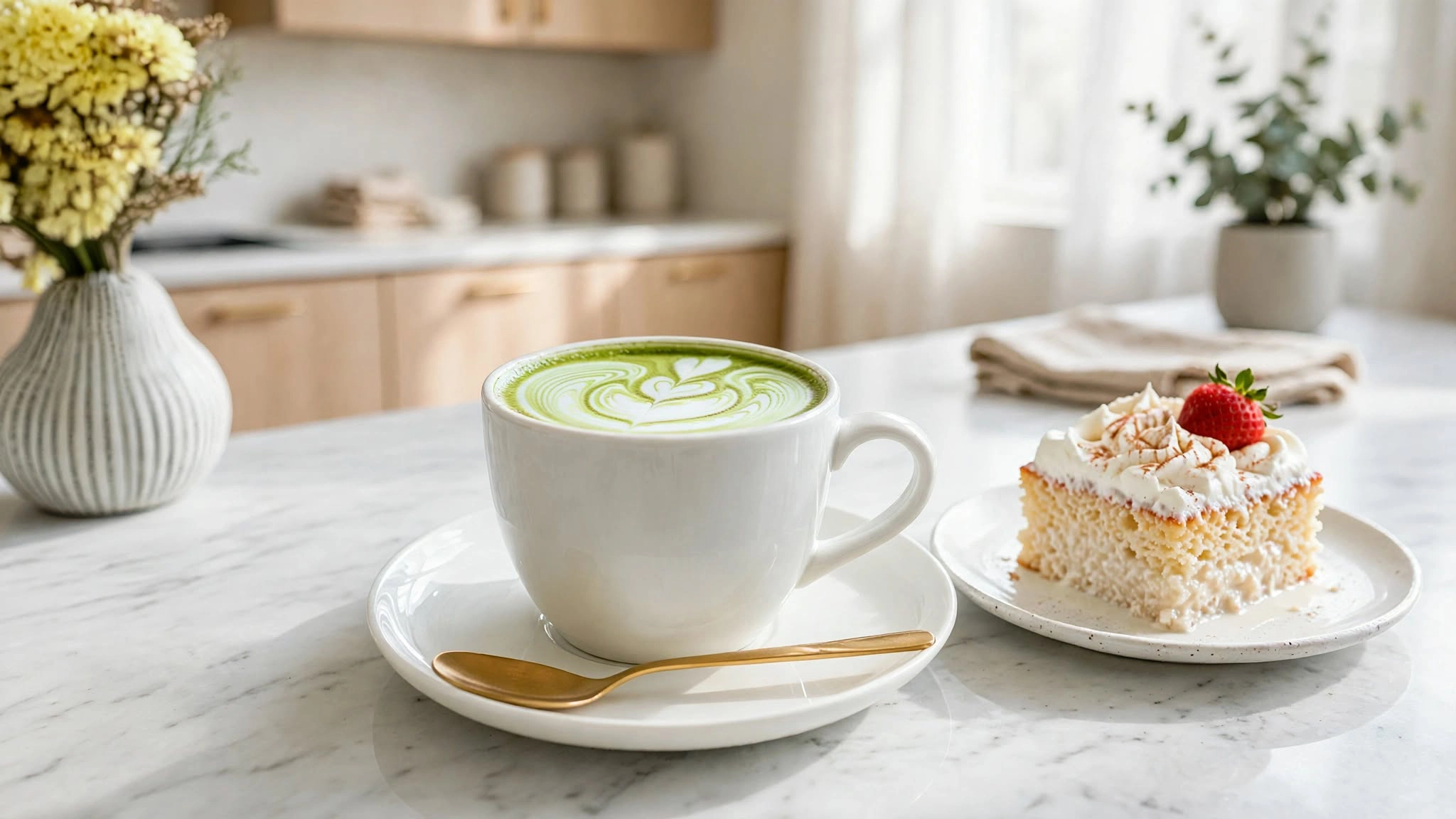
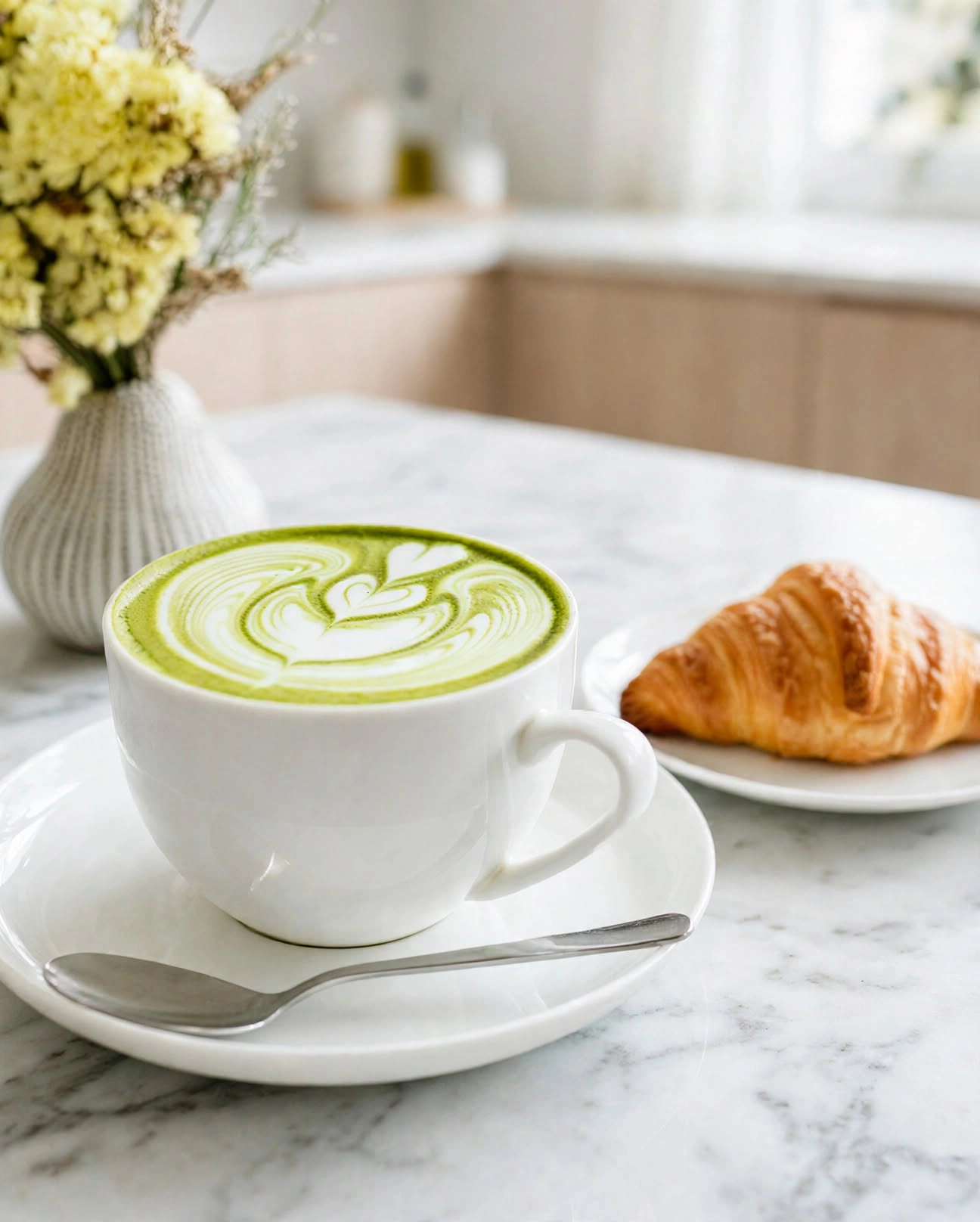
A good matcha latte is silky, lightly sweet, and green enough to make you pause before the first sip. It tastes like fresh tea and warm milk, with a gentle earthy finish and no chalky edge.
My first home versions were a mess. I dumped powder into hot milk and got floating green clumps, then I used boiling water and got a bitter, swampy flavor. After about two dozen test cups, three small habits fixed it: sifting the powder, whisking it with 175°F water first, and frothing the milk separately.
This homemade matcha latte is different because it starts with a smooth paste before any milk goes in, so every sip tastes even. It takes about 8 minutes, needs one bowl and a small saucepan, and costs a fraction of a café cup. My sister, who swore she hated matcha, now asks me to make her one whenever she visits.
Table of Contents
Why You’ll Love This Recipe
- Silky, clump free texture from sifting and making a paste first
- Bright natural green color with no food coloring or mixes
- Ready in 8 minutes, with only 5 minutes of hands on work
- Smooth, balanced flavor that is earthy but never bitter
- Easy to customize, with oat milk, iced, spiced, or extra vanilla
- Cheaper than a café, since one tin makes many lattes
Quick Information
- Prep Time: 5 minutes
- Cook Time: 3 minutes
- Total Time: About 8 minutes, mostly hands on
- Servings: 1 latte (about 10 ounces)
- Difficulty: Easy
- Calories: 195 per serving
- Important Tool: A bamboo whisk (chasen) and a fine mesh sieve
- Best For: Slow mornings, afternoon breaks, or a calm brunch drink
- Course: Drink
- Cuisine: Japanese inspired
- Category: Drinks & Dips
Nutrition Information
- Calories: 195
- Protein: 9g
- Carbohydrates: 22g
- Fat: 8g
- Fiber: 1g
- Sugar: 21g
- Sodium: 105mg
- Serving Size: 1 latte (about 10 ounces)
- Servings Per Recipe: 1
Most of the calories in this matcha latte come from the milk and the maple syrup. Matcha is ground whole tea leaf, so it adds a little fiber, and the milk gives a good amount of protein. Skipping the syrup or using unsweetened oat milk is an easy way to lower the sugar.
Nutrition information is an estimate calculated from standard ingredient values and will vary based on specific brands and portion sizes used.
Ingredients
For the Matcha Base
- 2 teaspoons (4g) ceremonial grade matcha powder
- 2 tablespoons (30ml) hot water, about 175°F (80°C)
- 2 teaspoons (10ml) pure maple syrup, or to taste
For the Milk
- 1 cup (240ml) whole milk
- 1/4 teaspoon alcohol free vanilla extract, optional
For Garnish
- Tiny pinch of matcha powder or ground cinnamon, optional
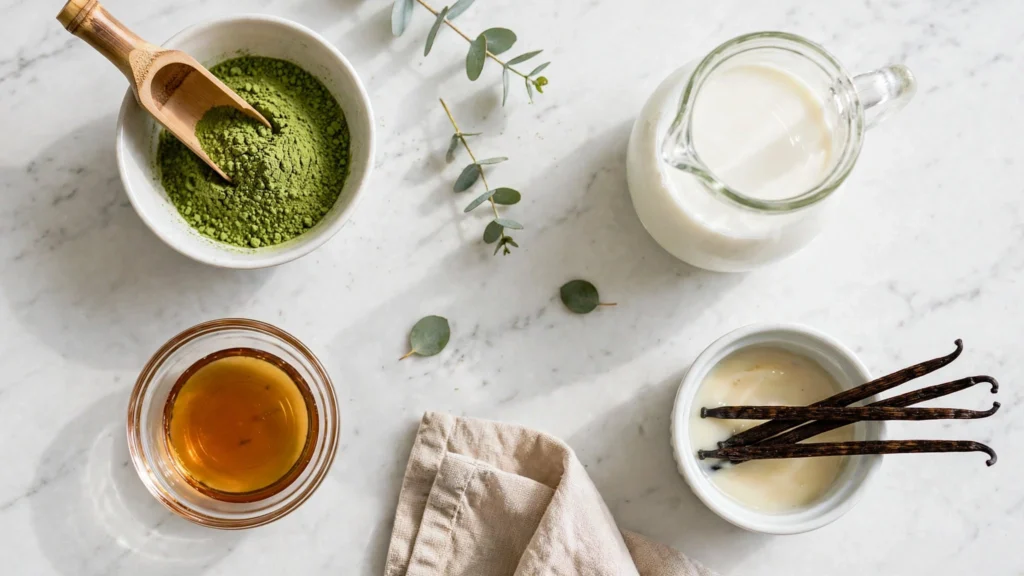
Ingredient Notes: Fresh ceremonial grade matcha gives the smoothest flavor and the brightest color. I have made this with Ippodo and Encha, and both whisk into a fine, creamy foam. Whole milk froths best, but barista style oat milk is a close second.
Tip: Boiling water scorches matcha and makes it bitter. Boil the kettle, then let it rest for 3 minutes to reach about 175°F before you pour.
Equipment Needed
- Bamboo whisk (chasen): breaks up clumps and builds a fine foam
- Fine mesh sieve: removes lumps before whisking
- Wide bowl: gives the whisk room to move
- Milk thermometer: keeps the milk near 150°F
- Handheld milk frother: adds silky microfoam
- Small saucepan: heats the milk gently
Practical Tip: Rinse the bamboo whisk with warm water only, never soap, and let it dry upright so the tines keep their shape.
Preparation
Boil the water and let it rest for 3 minutes while you measure the matcha. Fill your mug with hot tap water for a minute to warm it, then empty it just before pouring.
Place the sieve over your bowl and have the milk, maple syrup, and vanilla within reach. Everything moves quickly once the matcha is whisked.
Step by Step Instructions
- Sift and sweeten. Sift the matcha into a wide bowl and stir in the maple syrup. The powder should look like fine green dust with no lumps.
- Whisk the paste. Pour in 2 tablespoons of 175°F water and whisk in a fast W motion for 30 seconds, until a thin foam covers the surface and no clumps remain. Pro tip: keep the whisk tines just above the bowl so you do not scrape the bottom.
- Heat the milk. Warm the milk in a small saucepan over medium low heat for 3 to 4 minutes, stirring now and then, until steam rises and tiny bubbles ring the edge, about 150°F. Stir in the vanilla.
- Froth the milk. Froth for about 20 seconds, until the volume nearly doubles and the surface looks glossy like wet paint. Pro tip: tilt the pan slightly and keep the frother head just below the surface to avoid big bubbles.
- Pour and serve. Pour the matcha paste into your warmed mug, then slowly pour in the milk, holding back the foam with a spoon. Spoon the foam on top and serve right away.
Expert Tips & Tricks
- Sift every time. Matcha clumps even when it looks loose in the tin, and sifting is the single biggest fix for a smooth cup.
- Learn from my mistake. My first month, I poured water straight from the kettle and wondered why every cup tasted bitter. Letting the water cool for 3 minutes changed everything.
- Make ahead. Weigh 4g portions of matcha into small jars on Sunday, so each morning you only sift, add water, and whisk.
- Freeze leftovers. Pour any extra matcha paste into an ice cube tray and freeze it, then use the cubes in iced lattes later.
- Froth separately. Keep the milk and matcha apart until the end, which gives a creamier texture and a cleaner green color than blending them together.
- Save time. Boil the water while you sift, and warm the mug with the same kettle.
- Use a wide bowl. A wide bowl gives the whisk room to move, so the foam forms faster.
Common Mistakes & Troubleshooting
Green clumps floating on top: Adding powder straight into liquid, or skipping the sieve, leaves clumps behind. Sift first and make the paste before adding any milk. If clumps still appear, pour the paste through the sieve again or froth it with the handheld frother.
Bitter taste: Water that is too hot, too much powder, or an old tin causes the harsh flavor. I learned this when I used boiling water and the drink tasted like burnt grass, so now I always let it cool first. Fix a bitter cup with an extra teaspoon of maple syrup.
Dull or yellowish green color: Old, oxidized powder or too much milk dilutes the color. Use fresh powder and keep the ratio at 2 teaspoons to 1 cup of milk. For a stronger color, add 1/2 teaspoon more matcha to the paste.
Flat foam: Milk that is too hot, low fat milk, or skipping the frother leaves the top thin. Heat only to 150°F and use whole milk. Let it rest for 30 seconds and froth again.
Weak flavor: Too much milk or too little powder makes the drink taste mostly like milk. Measure the powder with a scale if you have one, and use a smaller mug for a stronger cup.
Storage Instructions
- Room Temperature: Drink within 15 minutes for the best flavor, and do not leave a milk drink out longer than 2 hours.
- Refrigerator: Store a finished latte in a sealed jar for up to 24 hours, and shake it well before drinking, ideally over ice.
- Freezer: Freeze leftover matcha paste in ice cube trays for up to 1 month; do not freeze the finished latte, since the milk separates.
- Reheating: Warm gently in a saucepan over low heat to about 140°F, stirring often, then froth it again.
- Make Ahead: Whisk the matcha paste, seal it, and refrigerate for up to 24 hours, then heat and froth fresh milk when you are ready.
- My storage tip: I keep one jar of cooled matcha paste in the fridge on busy weeks, so a morning latte takes less than 5 minutes.
Variations & Substitutions
- Iced version: Pour the matcha paste over a glass of ice, then top with 1 cup of cold milk and stir.
- Warm spiced version: Add a pinch of cinnamon and a tiny pinch of cardamom to the matcha before whisking.
- Mild, kid friendly version: Use 1 teaspoon of matcha, an extra teaspoon of maple syrup, and a drop of vanilla for a gentler cup.
- Vegetarian version: The recipe is already vegetarian with whole milk and maple syrup.
- Dairy free version: Use barista style oat milk, or unsweetened almond or coconut milk for a lighter drink.
- Gluten free version: This latte is naturally gluten free, as long as your milk and flavorings are too.
- Other substitutions: Swap maple syrup for honey or brown sugar, add 1 tablespoon of strawberry puree, or stir in a spoonful of vanilla syrup.
Serving Suggestions
A matcha latte is best served warm in a wide mug, with something simple on the side.
- Garnishes: A light dusting of matcha, a pinch of cinnamon, or a swirl of whipped cream
- Drinks: Serve beside a glass of cold water or sparkling water to refresh the palate
- Breakfast pairings: Serve with Belgian waffles for a slow weekend brunch
- Dessert tables: Set next to coconut cookies for an easy afternoon tea
- Holiday mornings: Pair with homemade monkey bread for a cozy table
- Meal combinations: Explore more breakfast and dessert recipes for other pairings
Meal Prep Tip: I pre-weigh a week of matcha portions on Sunday and keep the milk in a labeled jar, so weekday lattes take only a few minutes.
Frequently Asked Questions
How should I store matcha powder so it stays bright green?
Keep matcha powder in an airtight, opaque tin in the refrigerator, away from light, heat, and strong smells. Let the tin come to room temperature before opening so condensation does not form inside. Use an opened tin within 1 to 2 months for the best color and flavor. Old powder turns dull and tastes flat, which ruins a matcha latte even when your technique is perfect.
Why does my matcha latte settle at the bottom of the glass?
Matcha is suspended tea powder, not dissolved, so it slowly sinks as the drink sits. Settling is normal in any matcha latte and does not mean the drink has gone off. Stir before each sip, or serve straight after mixing. A finely milled ceremonial grade powder stays suspended longer than a coarse one, and a thorough whisk with no clumps helps. Thicker oat or whole milk also holds the powder up better than thin almond milk.
Can I use culinary grade matcha for a latte?
Yes, culinary grade matcha works, especially if you sweeten the drink or add flavors like vanilla. It tastes stronger and more bitter than ceremonial grade, and its color is usually duller. Use the same 2 teaspoons, but add an extra teaspoon of maple syrup and check that the powder is fresh. If you drink matcha plain and unsweetened, ceremonial grade gives a much smoother result.
Can I heat the milk in the microwave?
Yes, microwave the milk in a microwave safe jug for 60 to 90 seconds, stopping to stir every 30 seconds. It is ready when steam rises and the side of the jug feels hot but not painful, around 150°F. Stirring prevents scorched spots and a skin on top. Froth it right away with a handheld frother, then pour. Avoid heating it past 160°F, because overheated milk tastes flat and flattens the foam.
Does a matcha latte have as much caffeine as coffee?
A matcha latte made with 2 teaspoons of powder often has about 70 to 100 mg of caffeine, which is close to a regular cup of coffee. Exact amounts vary by brand and how much powder you use. Many people find matcha feels smoother than coffee, partly because tea also contains L theanine. If you are pregnant or limiting caffeine, check with your doctor.
Conclusion
The best matcha latte is the one you make slowly enough to enjoy, in the quiet few minutes before the day gets loud. Once the paste is smooth, everything after it is just warm milk and good company.
A friend who bought a café latte every morning stopped after one week of this version. She says the foam is silkier and the color is greener, which I take as the highest praise a home barista can get.
Keep your tin fresh, trust your thermometer, and adjust the sweetness until this matcha latte tastes like yours.
For more easy drink recipes like this one, follow along on Pinterest at MyRecipesDiary.

Silky Matcha Latte Recipe
Ingredients
Equipment
Method
- Sift the matcha into a wide bowl and stir in the maple syrup.
- Add 2 tablespoons of 175°F water and whisk in a W motion for 30 seconds until foamy.
- Warm the milk to 150°F over medium low heat for 3 to 4 minutes, then stir in the vanilla.
- Froth the milk for 20 seconds until glossy and doubled in volume.
- Pour the paste into a warmed mug, add the milk, and spoon the foam on top.
Notes
- Sift the matcha every time to prevent clumps.
- Use fresh ceremonial grade powder for the best color and flavor.
- Make the paste first, then add the milk.