Go Back
Ciabatta Bread Recipe
TahiraJaved

Ciabatta Bread Recipe

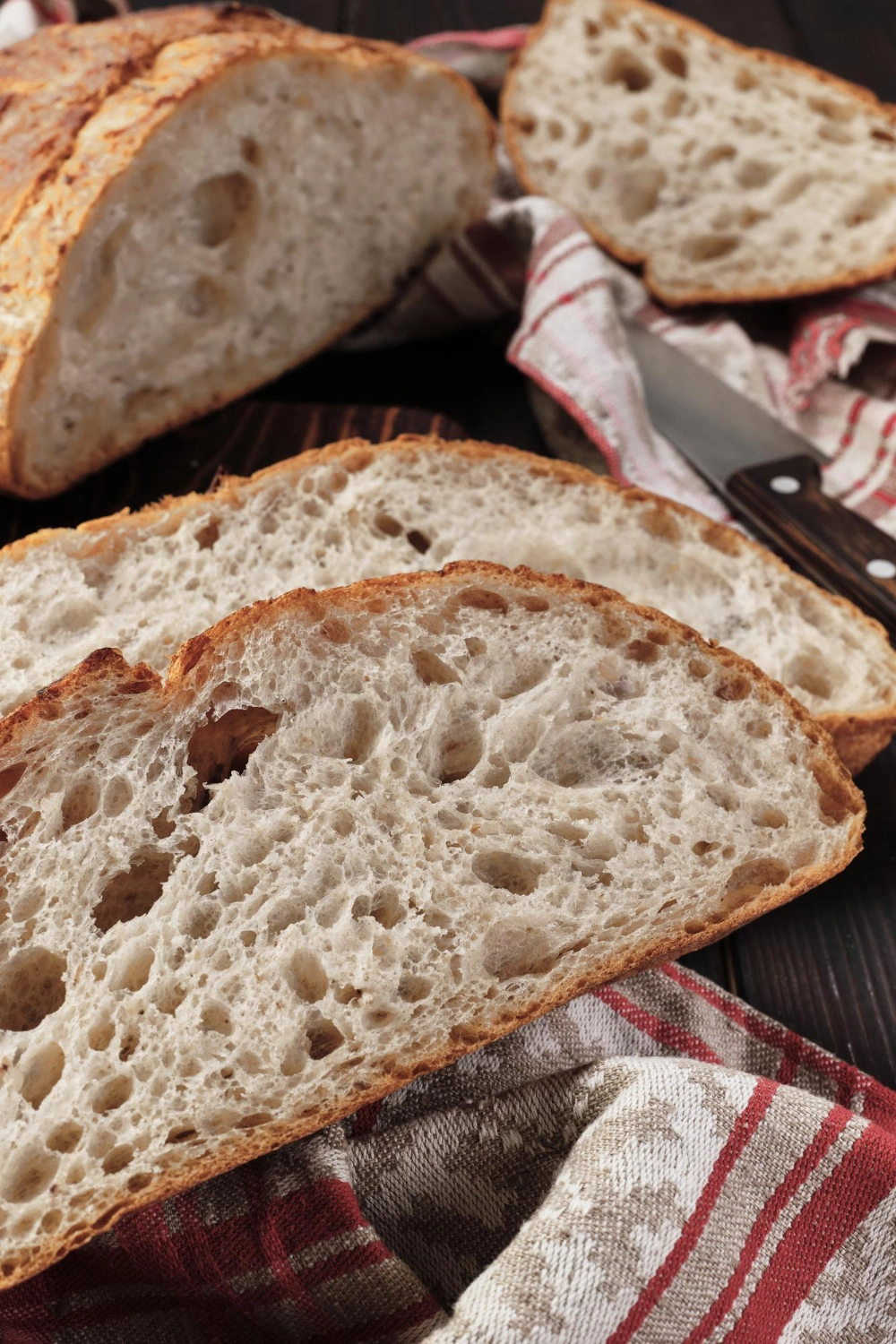
This Ciabatta Bread Recipe builds an airy, holey crumb inside a crackly, golden crust using an overnight poolish and a gentle stretch and fold technique instead of traditional kneading. The high hydration dough looks and feels nothing like typical bread dough, sticky and almost batter like, but that is exactly what produces the signature bakery style texture. It makes two full loaves, perfect for sandwiches, dipping in olive oil, or serving alongside a warm bowl of soup.
Prep Time 2 hours 20 minutes
Cook Time 25 minutes
Poolish Rest 12 hours
Servings: 8 People
Course: Bread
Cuisine: Italian
Calories: 140

Ingredients
  

For the Poolish
  • 1 cup 120g bread flour
  • 1/2 cup 120ml water, room temperature
  • 1/8 teaspoon instant yeast
For the Final Dough
  • 3 cups 360g bread flour
  • 1 1/4 cups 300ml water, room temperature
  • 1 3/4 teaspoons salt
  • 1/2 teaspoon instant yeast
  • 1 tablespoon olive oil

Equipment

  • 1 Kitchen scale ensures accurate flour and water ratios for this high hydration dough
  • 1 Large mixing bowl for both the poolish and the final dough
  • 1 Bench scraper helps handle and shape the naturally sticky dough
  • 1 Baking sheet or bread peel for transferring and baking the shaped loaves
  • 1 Wire rack lets the finished ciabatta bread cool properly before slicing

Method
 

  1. Mix poolish ingredients and rest 12 hours, or overnight.
  2. Combine poolish with remaining dough ingredients until no dry flour remains.
  3. Rest 30 minutes, then stretch and fold four times, spaced 30 minutes apart, over 2 hours.
  4. Gently divide dough into two portions on a floured surface.
  5. Shape into rough rectangles and proof 30 to 45 minutes.
  6. Bake at 475°F with steam for 20 to 25 minutes until deeply golden.
  7. Cool completely on a wire rack before slicing.
  8. Handle the risen dough as little as possible while shaping; the less you press it, the more of those signature large holes survive into the baked loaf.

Notes

  • Trust the wet, sticky dough; resist adding extra flour to make it easier to handle.
  • Use a kitchen scale rather than cups for the most accurate, reliable hydration.
  • Let the baked loaves cool completely before slicing, since the crumb is still setting as it cools.
  • A baking stone or sheet preheated with the oven helps the bottom crust bake evenly.
STORAGE: Store at room temperature up to 2 days, or freeze whole or sliced up to 3 months.
QR Code linking back to recipe