Lemon Garlic Pasta Ready in 25 Minutes

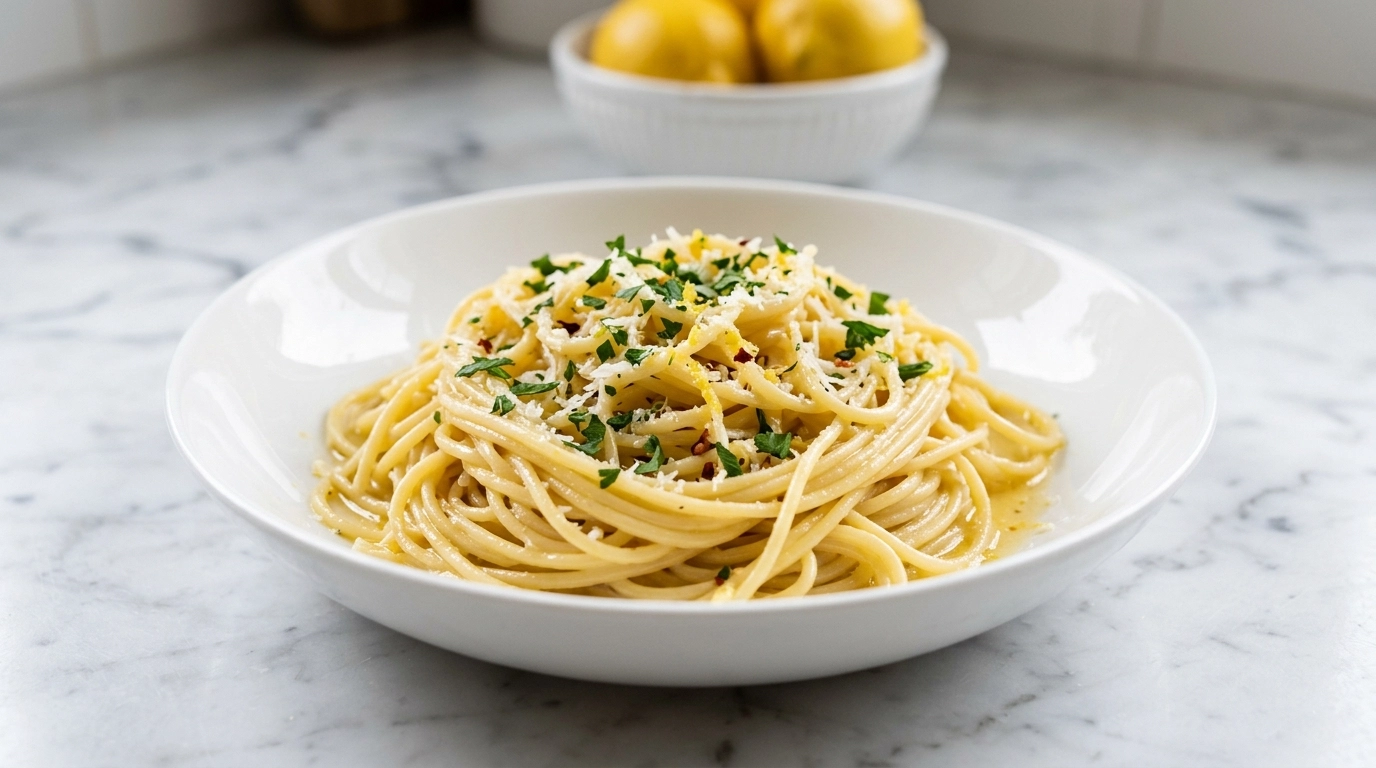
Fifteen minutes of cooking, one pot of boiling water, and two lemons are all it takes to turn plain spaghetti into a dinner that smells like a seaside kitchen. This lemon garlic pasta is bright, buttery, and silky without a drop of cream, and it reaches the table faster than most takeout orders arrive.
The secret is the sauce. Instead of a thin, sharp coating that slides off the noodles, you build a glossy emulsion from butter, olive oil, starchy pasta water, and Parmesan. It clings to every strand and tastes like fresh lemon, not cleaning spray. It also uses pantry staples, so you can start cooking without a grocery run.
My first attempt years ago was so sour that my brother politely asked for ketchup. Now I add the juice off the heat, and the balance is right every single time. This is the version I make on tired weeknights when the fridge looks empty.
Table of Contents
Why You’ll Love This Lemon Garlic Pasta
- Silky without cream: Starchy pasta water, butter, and Parmesan blend into a glossy sauce, so you skip heavy cream and the sleepy feeling afterward.
- Ready in 25 minutes: The sauce comes together in the skillet while the spaghetti boils, so there is almost no waiting.
- Pantry friendly: Spaghetti, lemons, garlic, butter, and Parmesan are all you really need.
- Bright, never bitter: Zest brings the fragrant lemon oil and juice goes in off the heat, which keeps the flavor clean and sunny.
- Easy to build on: It is a perfect base for grilled chicken, shrimp, or roasted vegetables, and kids love the mild version.
Recipe Snapshot
- Prep Time: 10 minutes
- Cook Time: 15 minutes
- Total Time: 25 minutes
- Servings: 4
- Difficulty: Easy
- Calories: 520 per serving
- Key Ingredient or Tool: Fresh lemons and a fine zester
- Best Occasion: Weeknight dinners, quick lunches, and casual guests
Nutrition Information
- Calories: 520
- Protein: 16g
- Carbohydrates: 68g
- Fat: 21g
- Fiber: 3g
- Sugar: 3g
- Sodium: 480mg
- Serving Size: About 1 1/2 cups
- Servings per Recipe: 4
Most of the energy here comes from the spaghetti, which gives you steady carbohydrates for a busy evening. Parmesan adds protein and calcium, while the olive oil contributes heart friendly fats. Lemon and garlic add big flavor for almost no extra calories.
Nutrition values are approximate and calculated per serving using standard ingredient amounts. Values may vary based on brands used and portion sizes.
Ingredients
For the Pasta
- 12 oz spaghetti
- 16 cups water, for boiling
- 1 tbsp kosher salt, for the boiling water
For the Sauce
- 3 tbsp unsalted butter, divided
- 2 tbsp extra virgin olive oil
- 5 garlic cloves, thinly sliced
- 1/2 tsp red pepper flakes
- 2 lemons, zested
- 1/4 cup fresh lemon juice, strained
- 1 cup pasta water, reserved
- 3/4 cup grated Parmesan cheese, freshly grated
- 1/2 tsp black pepper, freshly ground
- 1/2 tsp kosher salt, for finishing if needed
To Finish
- 1/4 cup chopped fresh parsley
- 2 tbsp grated Parmesan cheese, for serving
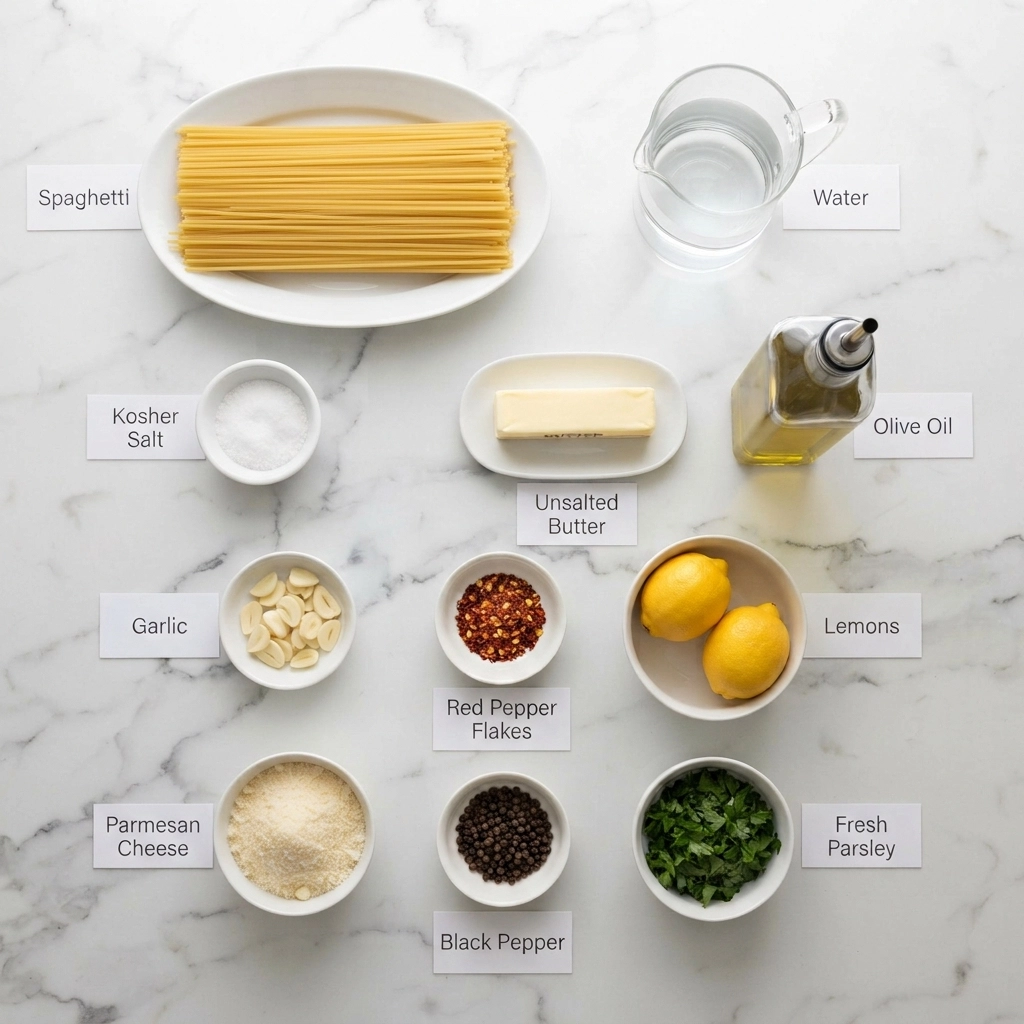
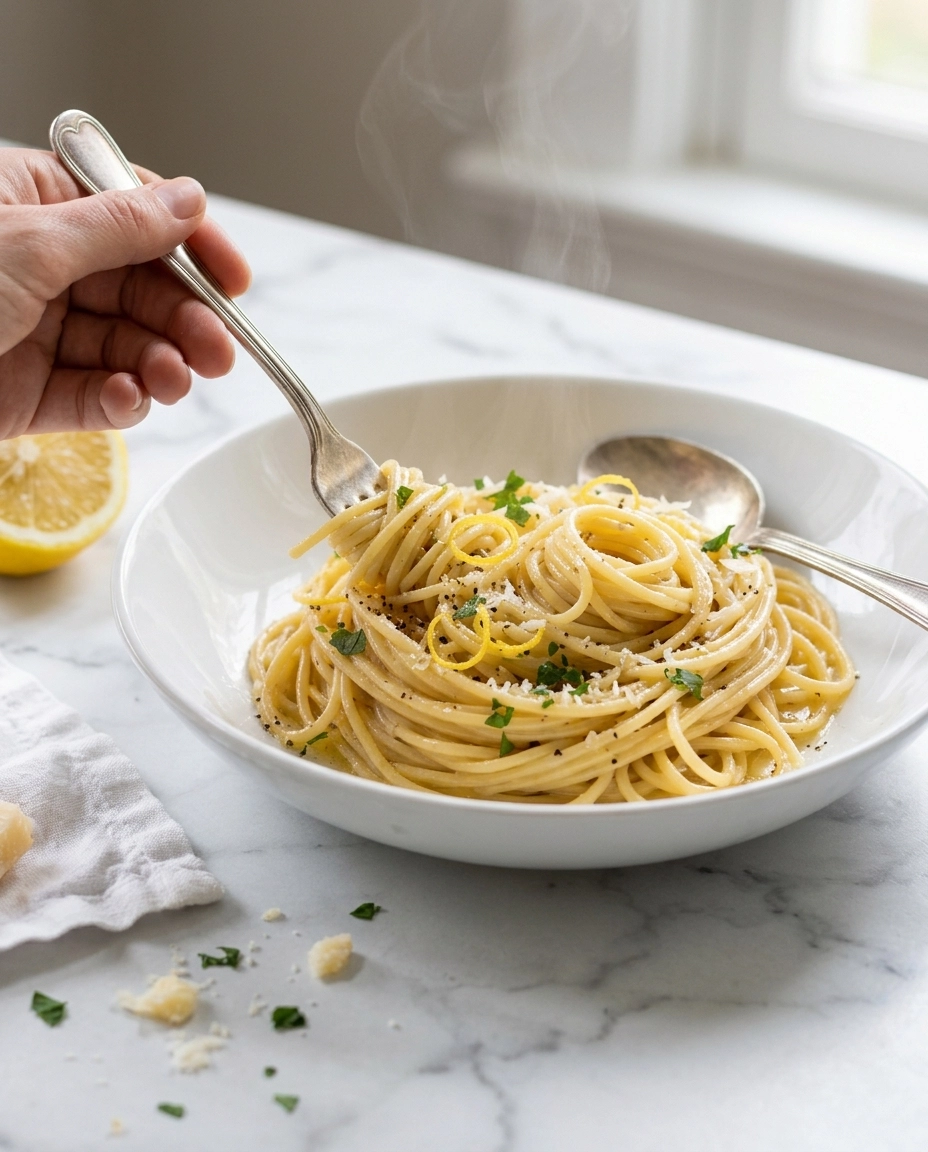
Spaghetti is the classic choice because its thin strands carry a light sauce well. Freshly grated Parmesan melts smoothly, while the pre grated kind in a shaker can turn grainy. Fresh lemons matter most here: the zest gives aroma and the juice gives the tang.
For substitutions, linguine or fettuccine work in place of spaghetti. Bottled lemon juice will do in a pinch, but use 3 tbsp and expect a flatter taste. Pecorino Romano can replace Parmesan, though it is saltier, so skip the finishing salt.
Equipment Needed
- Fine zester: Removes only the yellow zest and leaves the bitter white pith behind
- Large deep skillet: Gives you room to toss the spaghetti without flinging sauce
- Tongs: Lift and twirl the noodles through the sauce for even coating
- Heatproof liquid measuring cup: Catches the pasta water so you can measure it accurately
- Citrus reamer or hand juicer: Pulls out every drop of juice from the lemons
Preparation
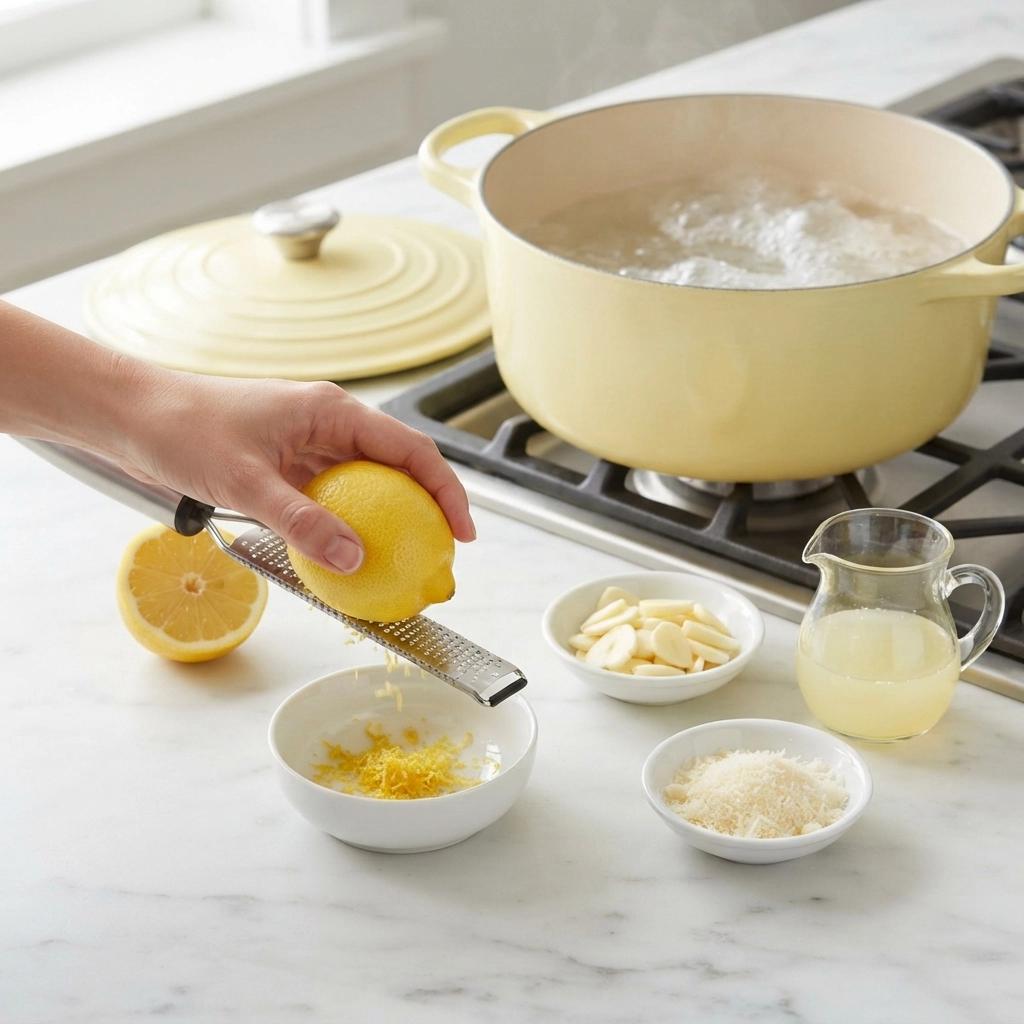
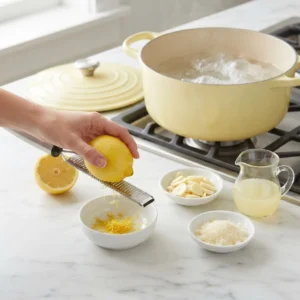
Zest both lemons before you juice them, since a whole lemon is far easier to grip. Strain the juice through a small sieve to catch seeds, which can add bitterness. Slice the garlic thinly so it softens evenly, and grate the Parmesan from a block.
Measure everything into small bowls and line them up beside the stove. The sauce moves quickly once it starts, and you will not want to hunt for the pepper flakes while the garlic cooks.
Chef’s Note: Press lightly when zesting and stop as soon as you see white. The pith is where most of the bitterness hides.
Step-by-Step Instructions
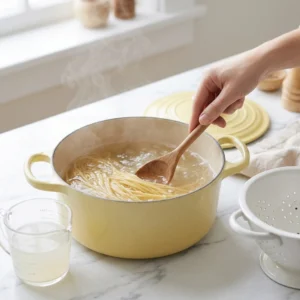
- Prep and Boil: Zest 2 lemons with a fine zester, then juice them until you have 1/4 cup, and thinly slice the garlic. Grate the Parmesan and set everything near the stove. Fill a large pot with 16 cups of water, add 1 tbsp kosher salt, and bring it to a full boil over high heat. The water is ready when large bubbles roll across the entire surface, not just the edges.
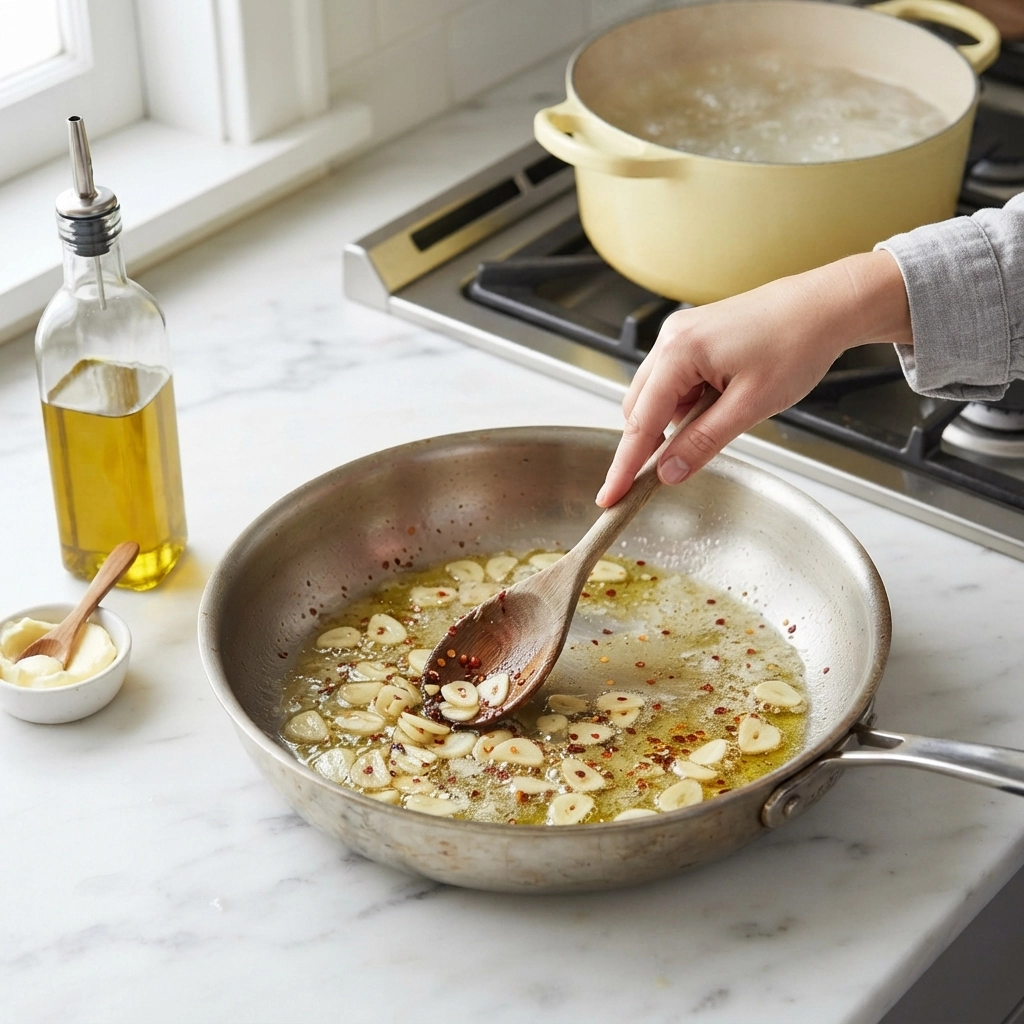
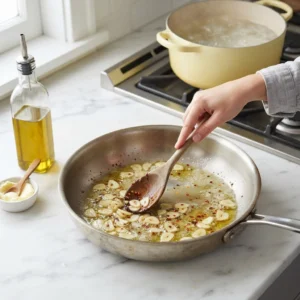
- Toast the Garlic: While the water heats, set a large deep skillet over medium low heat and add 2 tbsp olive oil and 1 tbsp butter. Stir in the sliced garlic and red pepper flakes, and cook for 2 minutes, stirring often. The garlic is ready when it turns pale gold and smells sweet, before any edge turns brown. Slide the skillet off the heat until the pasta is drained.
- Cook the Pasta: Once the water is boiling, add 12 oz spaghetti and stir for the first 30 seconds so the strands separate. Cook for 9 minutes. Before draining, scoop out 1 cup of the cloudy pasta water into a heatproof measuring cup. The spaghetti is ready when it bends smoothly but still has a tiny firm dot in the center when you bite a strand. Drain without rinsing.
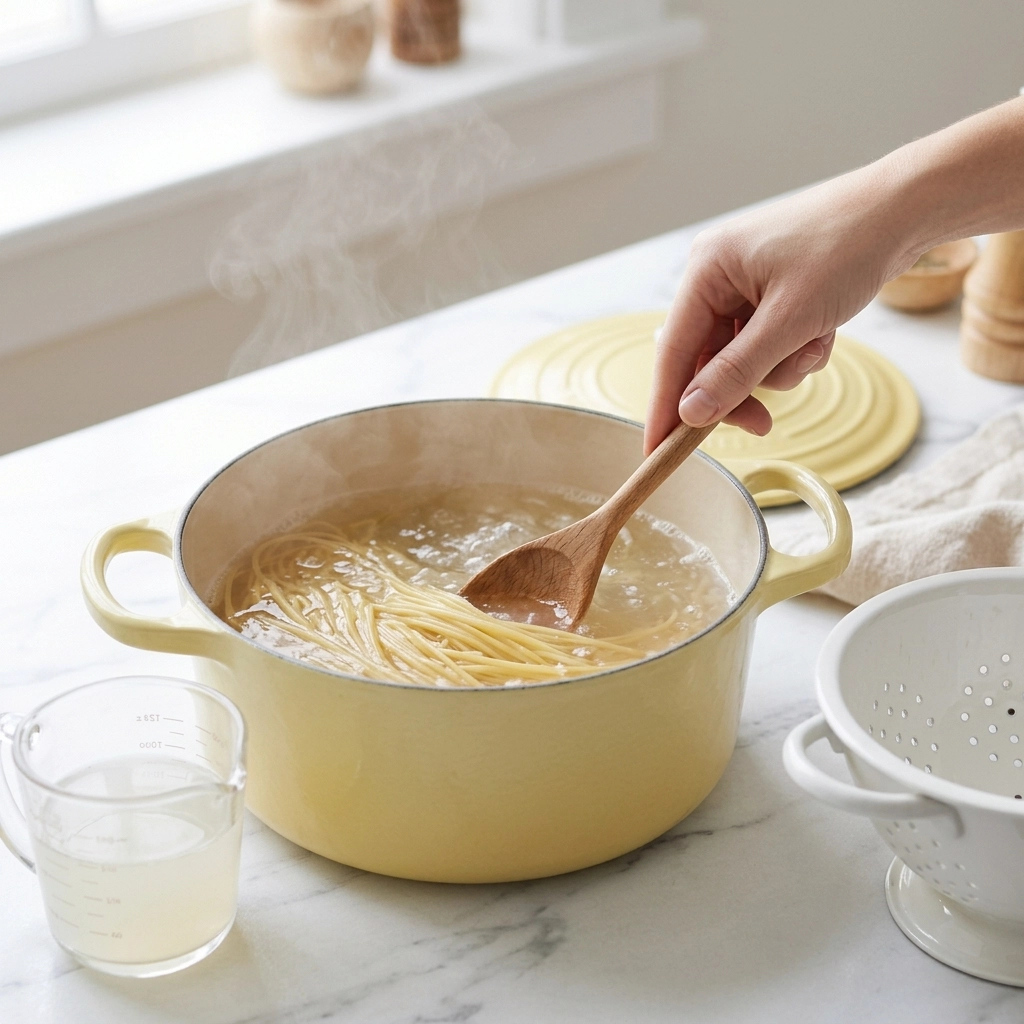
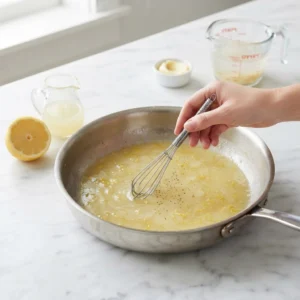
- Build the Sauce: Return the skillet to medium heat and pour in 1/2 cup of the reserved pasta water. Simmer for 1 minute, until the liquid turns slightly cloudy and bubbles lazily. Lower the heat, whisk in the remaining 2 tbsp butter until glossy, then remove the pan from the heat. Stir in the lemon juice, zest, and black pepper.
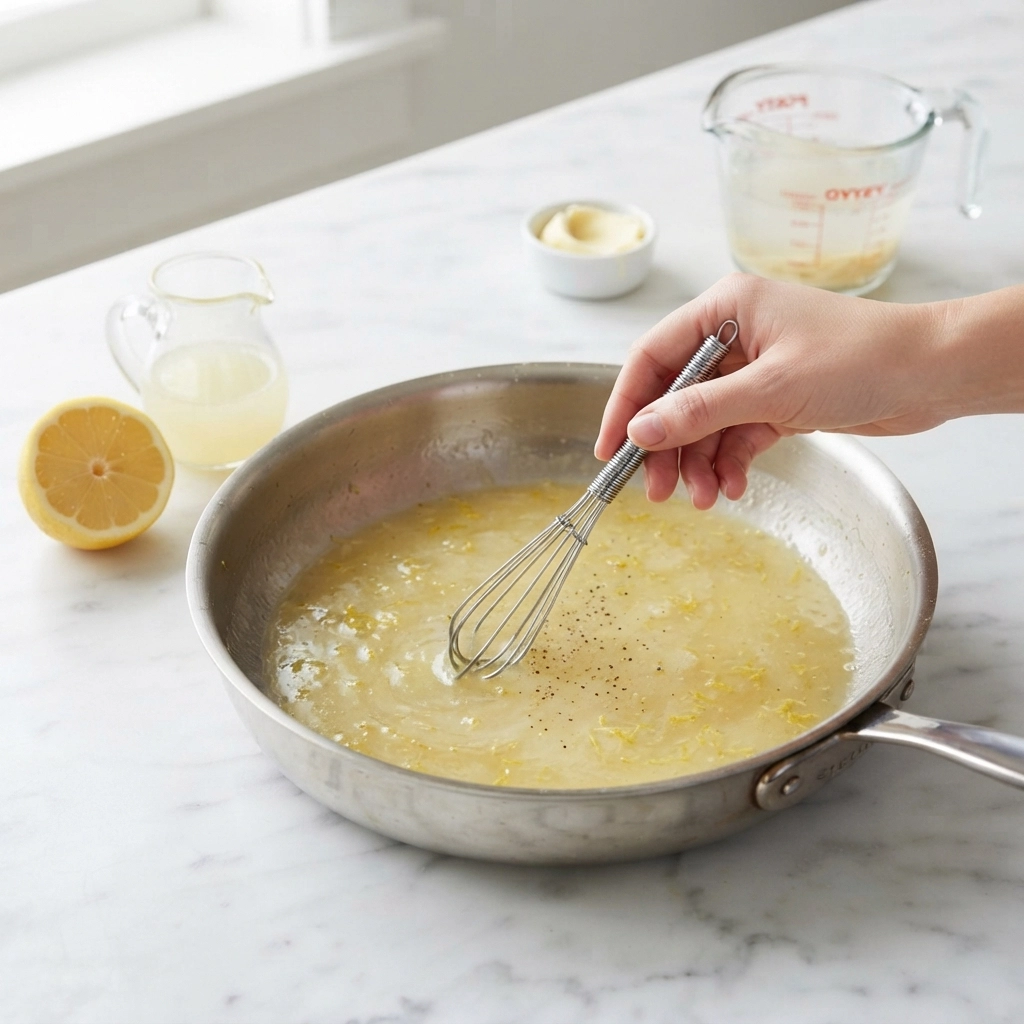
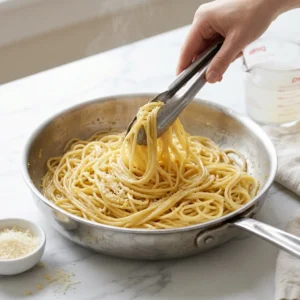
- Toss and Emulsify: Add the drained spaghetti and 3/4 cup Parmesan to the skillet and set it over low heat. Toss with tongs for 1 to 2 minutes, adding more pasta water 2 tbsp at a time. The sauce is ready when it looks glossy and clings to the noodles instead of pooling at the bottom of the pan. Taste, then add 1/2 tsp salt only if needed.
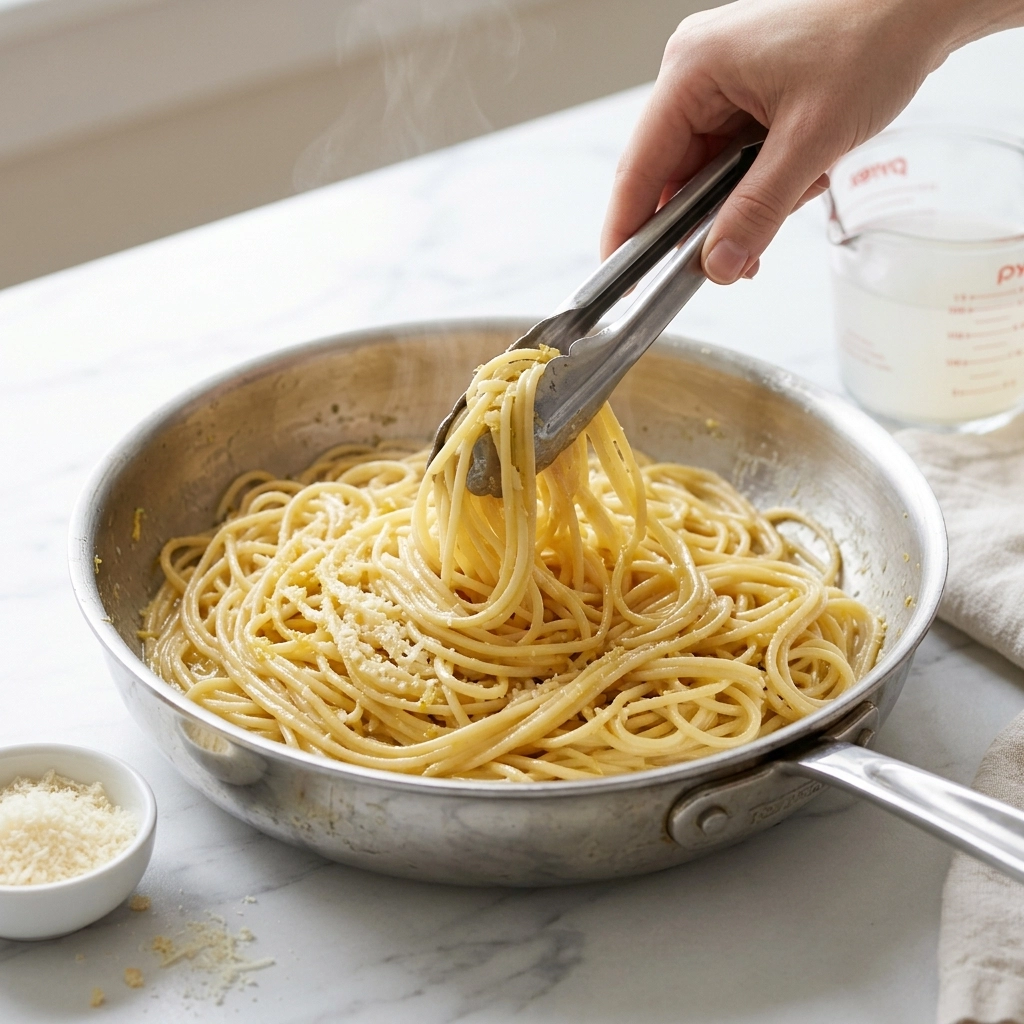
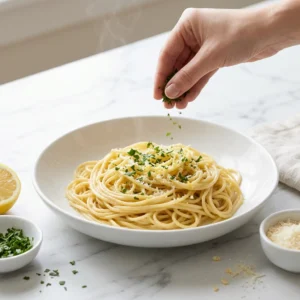
- Finish and Serve: Remove the skillet from the heat and fold in the parsley so it stays bright green. Divide the pasta between wide shallow bowls right away while the sauce is still silky. Top with 2 tbsp extra Parmesan and a little lemon zest. Serve within 5 minutes, since the sauce thickens as it cools.
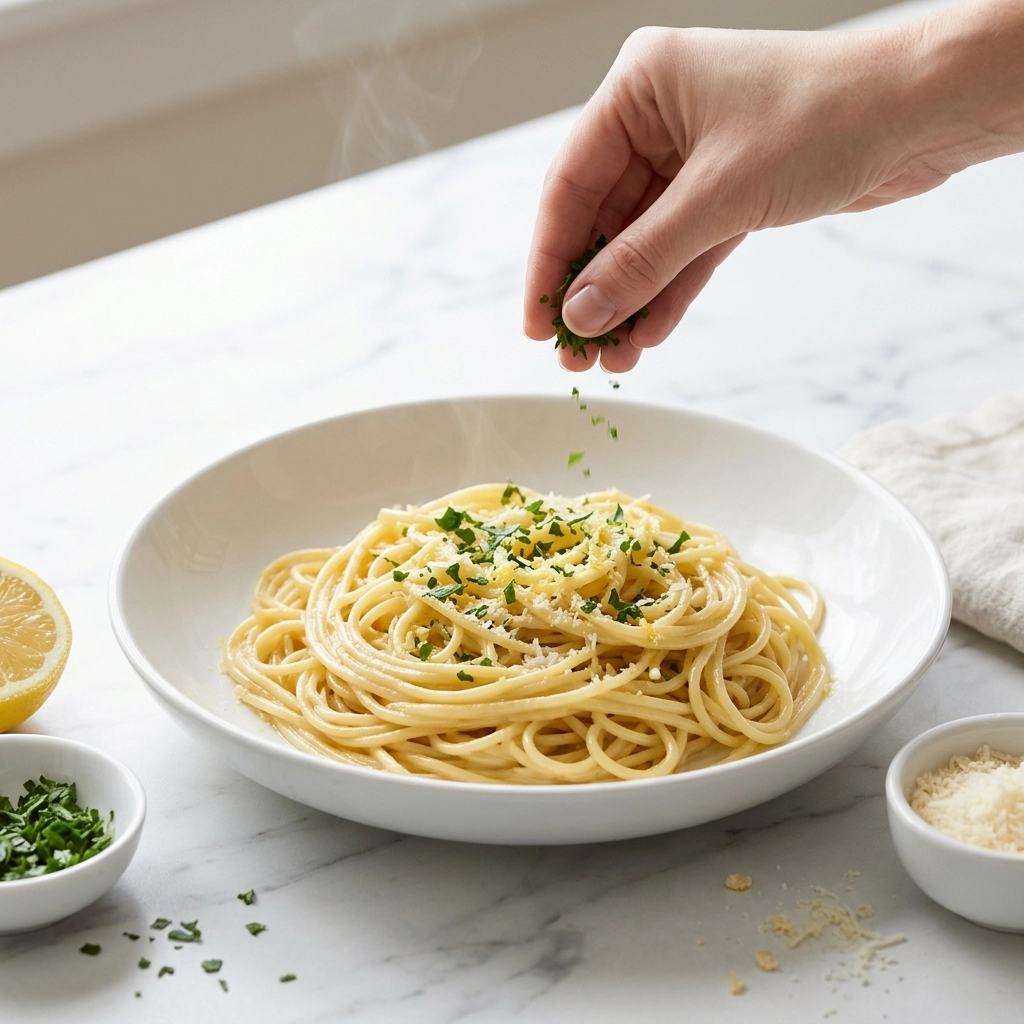
Quick Tip: Taste the sauce before adding any salt. Parmesan and salted pasta water usually bring plenty on their own.
Expert Tips and Tricks
- My own mistake: I once poured the lemon juice into a smoking hot pan, and the butter split into greasy puddles. Always take the skillet off the heat before the juice goes in.
- Make ahead: Slice the garlic, zest the lemons, and grate the Parmesan up to 24 hours early, then keep each in a small covered container in the refrigerator.
- Storage: Leftovers keep in a glass container for up to 3 days, and a splash of water revives the sauce when you reheat it.
- Texture: Always finish the spaghetti in the skillet, never in a bowl. The last minute of tossing is what makes the sauce cling.
- Time saver: Boil the water in an electric kettle and pour it into the pot. This shaves about 5 minutes off the wait.
- Technique: Add pasta water gradually. Starch builds the sauce, and a little at a time gives you control over how loose or thick it turns out.
Common Mistakes and Troubleshooting
- Burning the garlic: It happens when the heat is too high or you walk away. Keep the flame at medium low and stir. If it browns, start again, because bitter garlic cannot be fixed.
- Draining all the pasta water: Without it the sauce turns dry and the noodles stick together. Set a measuring cup next to the colander. If it is too late, use hot tap water with an extra tbsp of butter.
- Cheese clumping: Parmesan seizes when the pan is too hot. Lower the heat before adding it and toss constantly. To fix clumps, remove the pan from the heat and stir in 2 tbsp warm pasta water.
- Overcooking the spaghetti: I once let it boil for 13 minutes while chatting, and the strands turned soft and sucked up all the sauce. Set a timer for 9 minutes. If it happens to you, add extra pasta water and butter to loosen the dish.
- Under salted water: Plain water gives bland noodles that lemon cannot rescue. Salt the pot until it tastes like mild broth. If the finished dish is flat, add a pinch of salt and more zest.
Chef’s Note: Lemon juice is acidic, so the sauce tastes sharper the second it hits the pan. If it is too tart, stir in 1 tbsp butter and a small handful of Parmesan.
Storage Instructions
- Room Temperature: Up to 1 hour in a covered dish.
- Refrigerator: Up to 3 days in an airtight glass container.
- Freezer: Not recommended, since the sauce can split and the noodles turn mushy. If you must, freeze in an airtight container for up to 1 month.
- Reheating: Warm in a skillet over low heat for 3 to 4 minutes with 2 tbsp water, stirring until glossy.
- Make-Ahead Notes: Cook the sauce base through step 4, cool it, and refrigerate in a jar for up to 2 days. Rewarm gently, then toss with freshly cooked spaghetti.
I keep single portions in small glass containers so a quick lunch is always ready. Plain glass keeps the garlic smell from lingering.
Variations and Substitutions
- Spicy: Double the red pepper flakes to 1 tsp, or add 1 sliced fresh red chili with the garlic.
- Mild or Kid Friendly: Skip the red pepper flakes and use the zest of only 1 lemon. Kids often like extra Parmesan on top.
- Vegetarian: This recipe is already meatless. For more protein, fold in 1 cup of cooked white beans or chickpeas in step 5.
- Gluten Free: Use gluten free spaghetti and cook it 1 minute less than the package says.
- Seafood: Add 1 lb of peeled shrimp, cooked for 2 minutes per side with the garlic.
- Greens: Stir in 2 cups of baby spinach at the end and let it wilt for 1 minute.
Good to Know: Whole wheat and gluten free pasta absorb more sauce, so keep an extra 1/2 cup of pasta water on hand.
Serving Suggestions
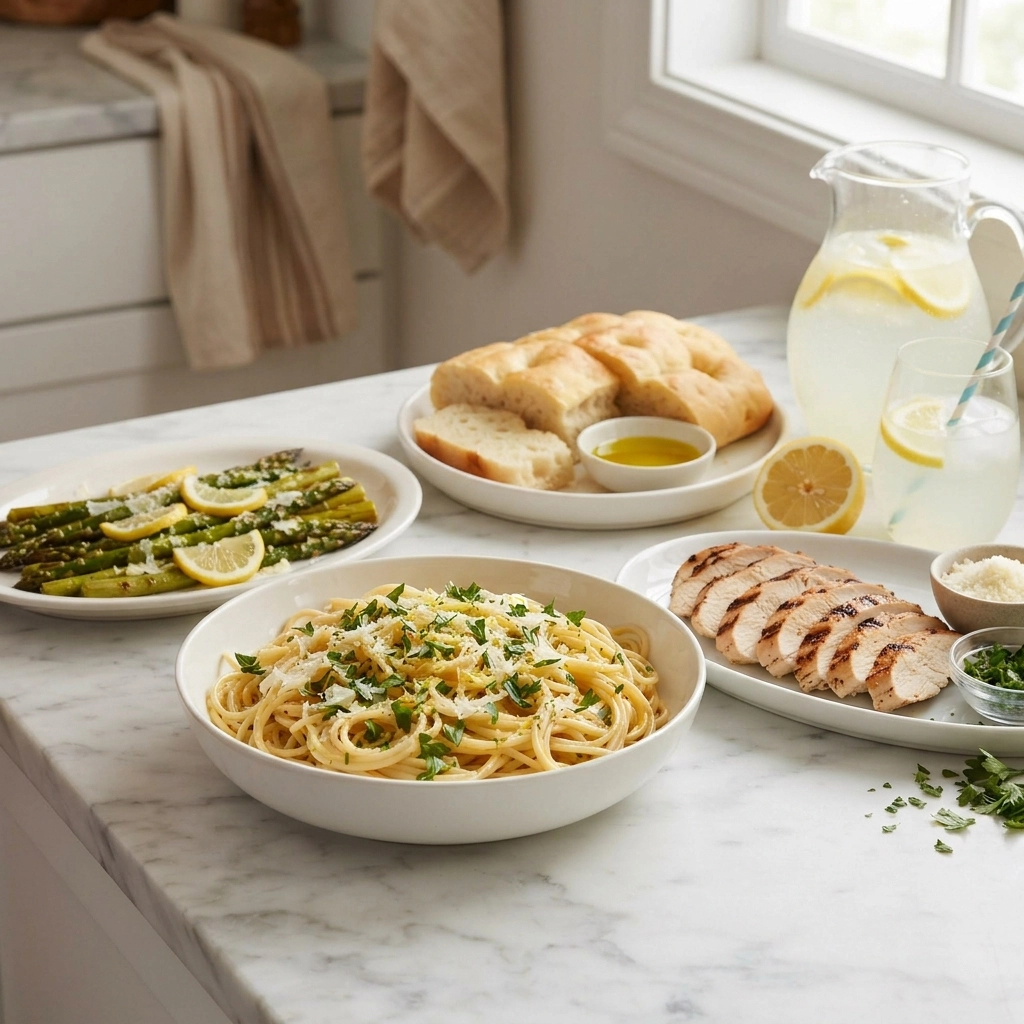
- Side Dish: Roasted asparagus adds a crisp, green contrast to the soft noodles.
- Sauce or Dip: Focaccia bread is perfect for mopping up the lemon butter left in the bowl.
- Garnish: Fresh parsley, extra lemon zest, and a crack of black pepper make it look as good as it tastes.
- Drink: A cold glass of lemonade echoes the citrus in the pasta.
- Meal Combination: Top with sliced grilled chicken breast for a full, filling dinner.
Frequently Asked Questions
How do I keep lemon garlic pasta from drying out at a party?
Keep it loose. Hold the pasta in a covered dish in a 200°F oven for up to 30 minutes, and stir in 1/4 cup hot pasta water just before serving. The starch in that water wakes the sauce back up. For a crowd, I cook the pasta in two batches so the noodles never sit and soak up everything. Lemon garlic pasta tastes best within 20 minutes of tossing.
Why does my lemon garlic pasta taste bitter even when the garlic did not burn?
Check your zest and your juice. Zest that digs into the white pith tastes bitter, and a few lemon seeds squeezed into the pan add harshness too. Use a fine zester, press lightly, and strain the juice. Lemon garlic pasta made with only the yellow layer tastes clean. If it still tastes sharp, whisk in 1 tbsp butter off the heat.
Can I use garlic powder instead of fresh garlic?
Fresh is best, but 1 tsp garlic powder works in a pinch. Add it with the pasta water, not to the hot oil, because powder scorches quickly. Jarred minced garlic works at 2 tbsp, though it tastes milder and slightly tangy. Because the sauce is so simple, I stick with fresh cloves whenever I can. They give the dish its sweet, rounded flavor.
How do I know when the sauce is ready to toss with the spaghetti?
Look for a sauce that coats the back of a spoon and appears slightly cloudy, about 1 minute after the pasta water hits the pan. When you drag a spoon through it, the trail should hold for a second before closing. If it looks thin, simmer 30 seconds more. If it looks tight, add 2 tbsp hot pasta water.
Can I make lemon garlic pasta without cheese?
Yes. Skip the Parmesan and add 1 extra tbsp butter plus 2 tbsp more pasta water so the sauce still turns silky. You lose some saltiness, so add 1/4 tsp more salt and taste. For a dairy free version, swap the butter for olive oil and stir in 2 tbsp nutritional yeast for a cheesy note. I made it this way for a friend with a dairy allergy, and she went back for seconds.
Conclusion
Lemon garlic pasta is the dish I make when the evening feels long and the fridge looks empty. It reminds me that good food does not need a long ingredient list, only a little patience with the garlic and a steady hand with the lemon. When I tested this recipe for the seventh time, my nephew finished his bowl and said, “Can we have this again tomorrow?”
Make it once exactly as written, then start making it your own with shrimp, spinach, or an extra pinch of pepper. If you enjoy easy dinners like this one, follow along on Pinterest to get quick notifications whenever a new recipe goes live.

Lemon Garlic Pasta
Ingredients
Equipment
Method
- Zest 2 lemons, juice them to 1/4 cup, and slice 5 garlic cloves. Bring 16 cups of water with 1 tbsp kosher salt to a full boil over high heat.
- Heat 2 tbsp olive oil and 1 tbsp butter in a large skillet over medium low heat. Cook the garlic and red pepper flakes for 2 minutes until pale gold, then remove from the heat.
- Cook 12 oz spaghetti for 9 minutes until it bends but keeps a firm center. Reserve 1 cup pasta water, then drain without rinsing.
- Simmer 1/2 cup pasta water in the skillet over medium heat for 1 minute until cloudy. Whisk in 2 tbsp butter on low heat, then stir in the lemon juice, zest, and pepper off the heat.
- Toss the spaghetti with the sauce and 3/4 cup Parmesan over low heat for 1 to 2 minutes. Add pasta water 2 tbsp at a time until the sauce turns glossy and clings to the noodles.
- Fold in the parsley, and add 1/2 tsp salt only if needed, off the heat. Serve at once in wide shallow bowls with 2 tbsp extra Parmesan on top.
Notes
- Add the lemon juice off the heat so the butter sauce stays smooth and the flavor stays fresh.
- Stop zesting at the white layer to avoid bitterness.
- Finish the spaghetti in the skillet, not a bowl, for a sauce that clings.
- Storage: Refrigerate in an airtight glass container for up to 3 days. Freezing is not recommended, but if needed freeze up to 1 month. Reheat in a skillet over low heat for 3 to 4 minutes with 2 tbsp water until glossy.