Homemade Tomato Salsa

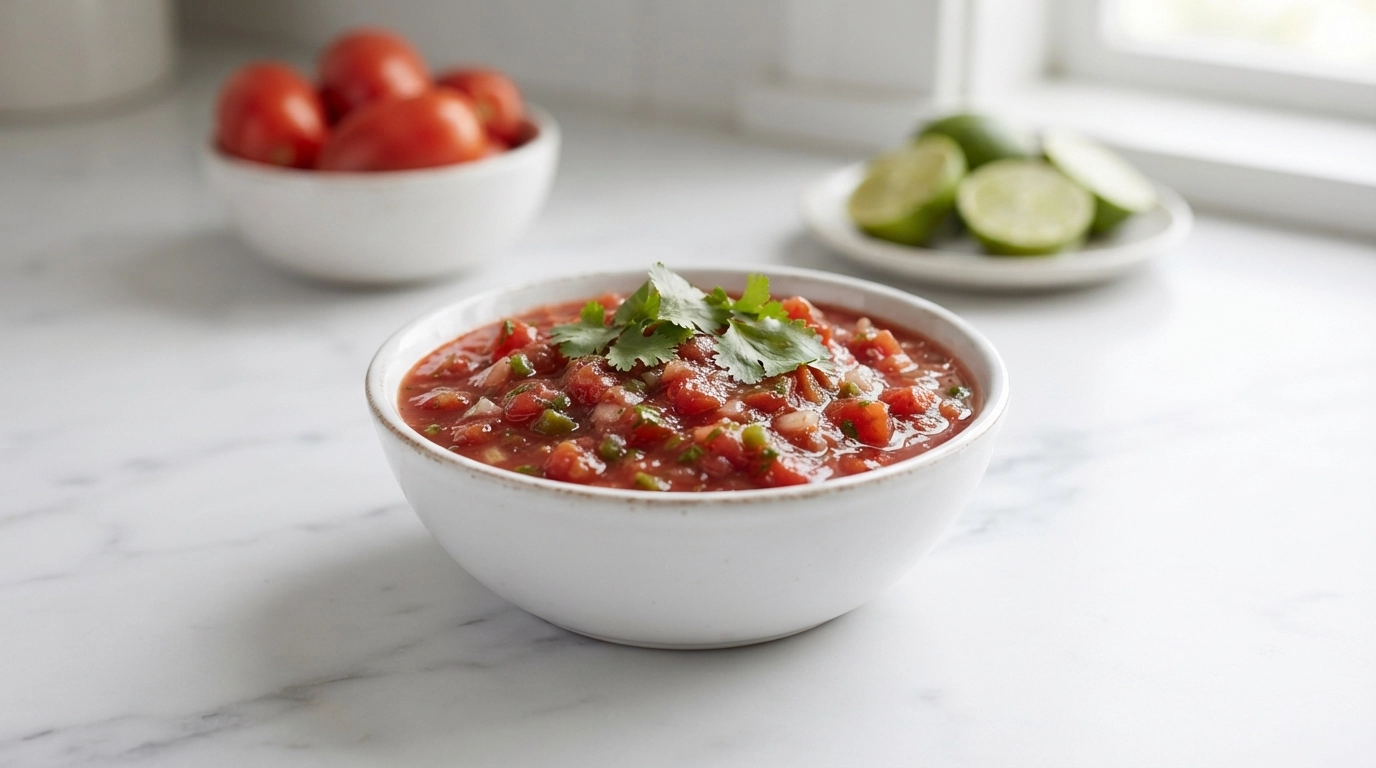
Fresh, bright, and a little smoky from the jalapeño, this tomato salsa tastes like the bowl a good taqueria sets on your table before the tacos arrive. Jarred versions taste sweet and flat, and most homemade ones turn watery within an hour. This recipe fixes both problems with one small step.
I tested this tomato salsa seven times over two weeks. The winner uses Roma tomatoes, a quick drain in a colander, and a short pulse in the food processor. You get a chunky scoop that clings to a chip instead of sliding off, and a 30 minute rest in the fridge does the rest of the work.
My neighbor tasted the fourth batch at a cookout and asked if I had bought it from the market down the road. Her kids finished the bowl before the burgers came off the grill. Now I keep a jar in my fridge every week. It takes ten minutes of work and one machine.
Table of Contents
Why You’ll Love This Tomato Salsa Recipe
Chunky, not watery: Draining the tomatoes first keeps the salsa thick enough to scoop without dripping.
Ready in 40 minutes: Only 10 minutes are hands on, and the fridge handles the rest.
Fresh flavor: Lime juice, cilantro, and a little cumin give a bright taste that jarred salsa cannot match.
Easy on the budget: A pound and a half of Roma tomatoes makes about 2 cups, which costs far less than a store jar.
Great for meal prep: One batch stays fresh for 5 days and tops tacos, eggs, and rice bowls all week.
Simple to adjust: You control the heat by changing how much jalapeño you add.
Recipe Snapshot
Prep Time: 10 minutes
Cook Time: 0 minutes
Chill Time: 30 minutes
Total Time: 40 minutes
Servings: 8 servings (about 2 cups)
Difficulty: Easy
Calories: 20 per serving
Key Ingredient: Roma tomatoes
Best Occasion: Game day, taco night, cookouts, weeknight snacks
Nutrition Information
Calories: 20
Protein: 1 g
Carbohydrates: 4 g
Fat: 0 g
Fiber: 1 g
Sugar: 2 g
Sodium: 150 mg
Serving Size: 1/4 cup
Servings Per Recipe: 8
This salsa is very low in calories and fat, since the base is almost entirely fresh vegetables. Tomatoes bring vitamin C and lycopene, and the cilantro and lime add flavor without any extra calories. A single serving adds a lot of taste to a meal for very little cost to your day.
Nutrition values are approximate and calculated per serving using standard ingredient amounts. Values may vary based on brands used and portion sizes.
Ingredients
For the Salsa
1 1/2 lb Roma tomatoes, cored and quartered
1/2 cup white onion, roughly chopped
1 small jalapeño, seeded and roughly chopped
2 garlic cloves, peeled
1/2 cup packed fresh cilantro, leaves and tender stems
2 tbsp fresh lime juice, from about 1 lime
1/2 tsp salt
1/4 tsp ground cumin
1 pinch sugar
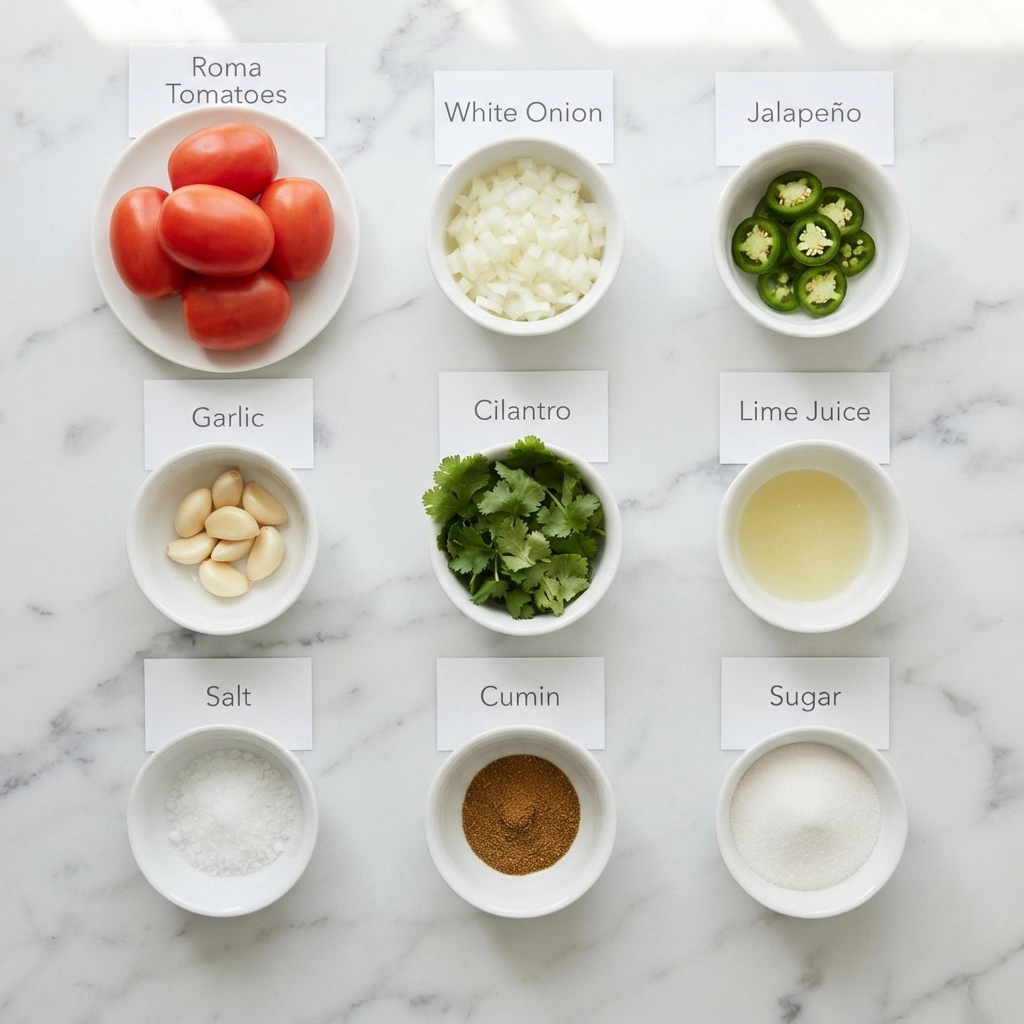
Roma tomatoes: They have thick flesh and fewer seeds than round slicing tomatoes, so the salsa stays thick. Pick ones that are deep red and slightly firm.
White onion: It has a sharper, cleaner bite than yellow onion and matches the style of restaurant salsa.
Jalapeño: The seeds and white ribs hold most of the heat. Leave a few in if you want a bolder salsa.
Substitutions: Use two 14 oz cans of fire roasted whole tomatoes in winter, or swap the lime for lemon juice if needed.
Equipment Needed
Food processor: Chops everything evenly in seconds without turning it to mush
Colander: Drains extra tomato juice so the salsa stays thick
Citrus juicer: Squeezes out all the lime juice and catches the seeds
Silicone spatula: Scrapes the sides so no pieces get left behind
Glass jar with a lid: Keeps the salsa fresh and does not hold onto smells
Preparation
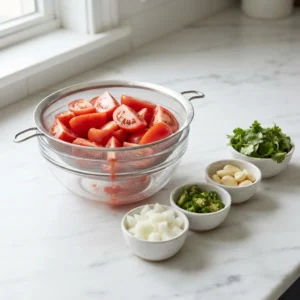
Wash the tomatoes and pat them dry. Cut out the cores with a paring knife and slice each tomato into quarters. Set a colander over a bowl so it is ready for draining.
Roughly chop the onion and jalapeño into pieces about the size of a walnut. A food processor does the fine work, so there is no need to dice by hand. Peel the garlic and rinse the cilantro, then shake it dry.
Squeeze the lime and measure the salt, cumin, and sugar into one small bowl. Chef’s Note: Taste your jalapeño before adding it. Heat varies a lot from pepper to pepper, and a tiny nibble tells you whether to use the whole thing or half.
Step by Step Instructions
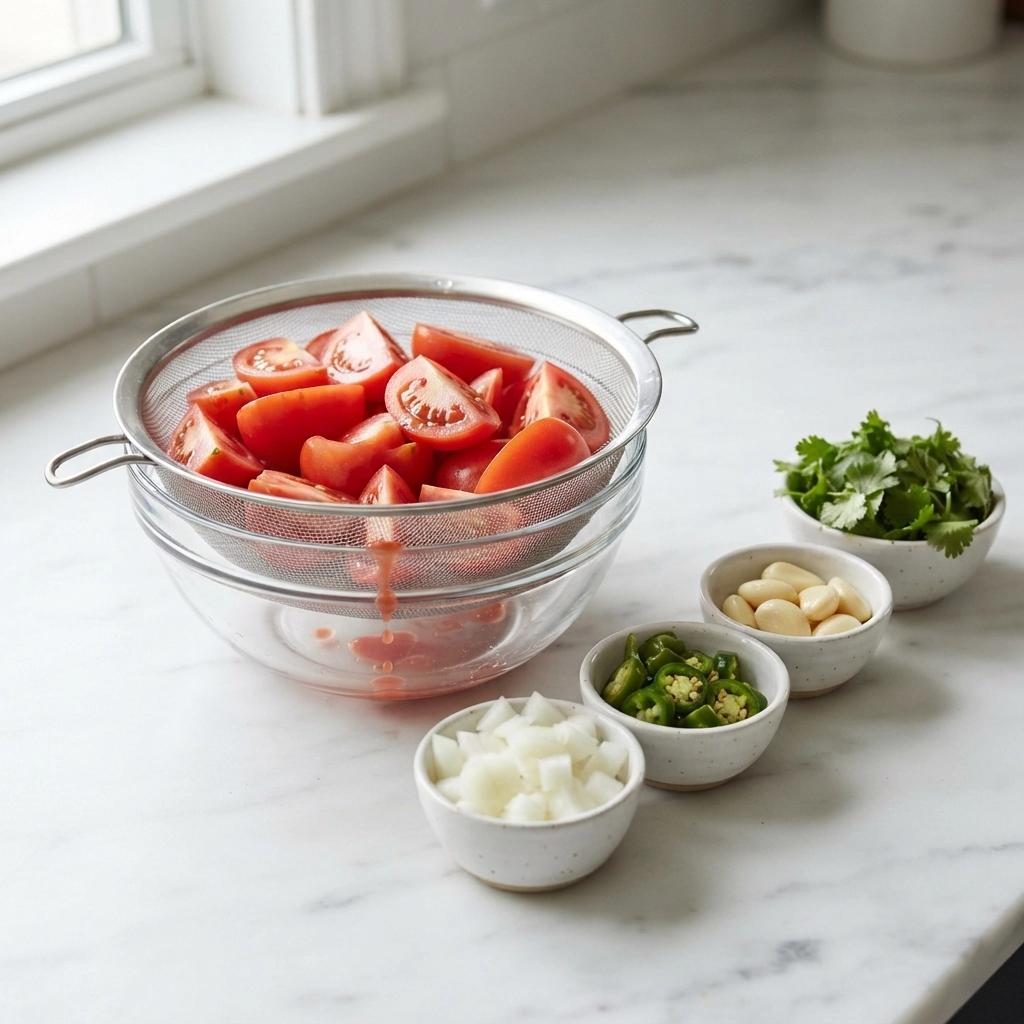
- Prep the Vegetables: Wash 1 1/2 lb Roma tomatoes, core them, and cut each into quarters. Set them in a colander over a bowl for 5 minutes so the extra juice drains away. Meanwhile, roughly chop the onion, seed the jalapeño, peel the garlic, and shake the cilantro dry. The tomatoes are ready when the cut sides look shiny and only a slow drip falls into the bowl.
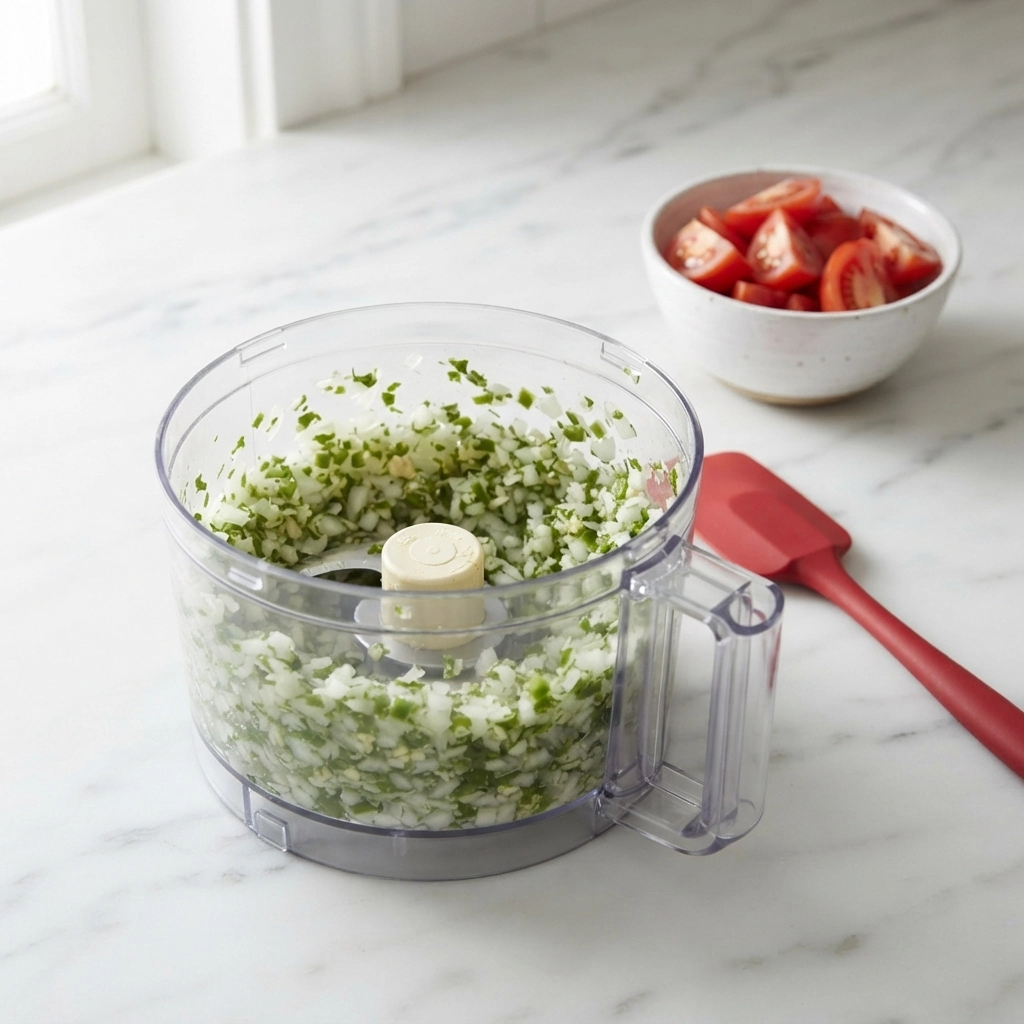
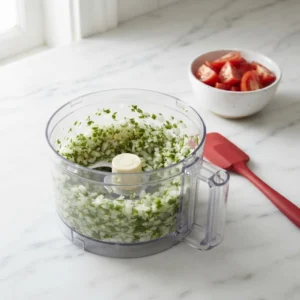
- Pulse the Base: Add the onion, jalapeño, garlic, and cilantro to a food processor. Pulse 4 times, 1 second each, then scrape down the sides with a spatula. Pulse 2 more times until the pieces look finely minced, about the size of a grain of rice. Stop before the mixture turns into a paste.
- Add the Tomatoes: Add the drained tomatoes to the processor. Pulse 5 to 6 times, 1 second each, and check after every pulse. The salsa is ready when you see small, chunky tomato pieces mixed with flecks of green and no puree at the bottom. If it looks soupy, stop at once, because more pulsing only makes it thinner.
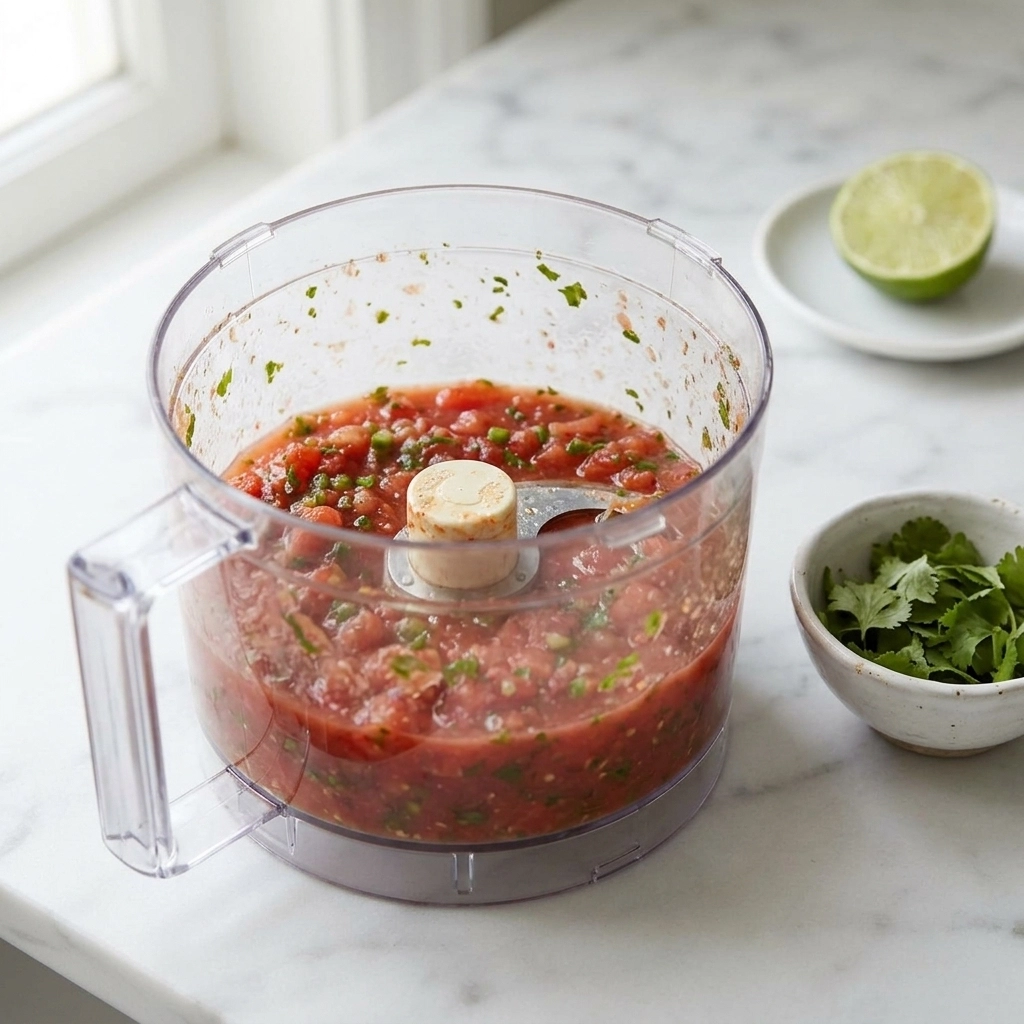
- Season and Taste: Scrape the salsa into a medium bowl and stir in 2 tbsp lime juice, 1/2 tsp salt, 1/4 tsp cumin, and a pinch of sugar. Stir for 15 seconds so the salt dissolves. Dip a tortilla chip and taste it. You should notice bright lime first, then salt, then a gentle heat at the back of your throat.
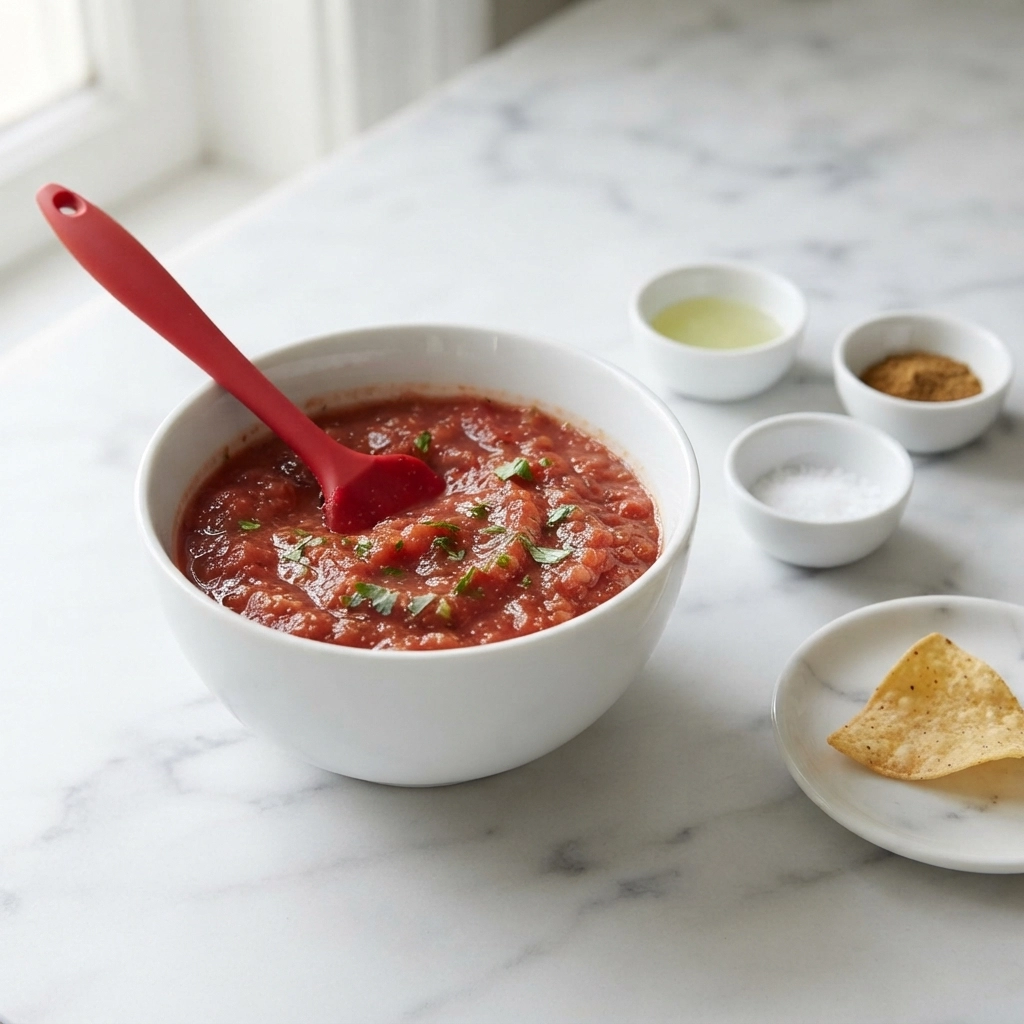
- Chill and Rest: Cover the bowl and refrigerate it at 40°F for 30 minutes. The salt draws out juice, the garlic softens, and the flavors blend into one balanced bite. The salsa is ready when the color deepens to a richer red and a spoon dragged through it leaves a trail that slowly fills in.
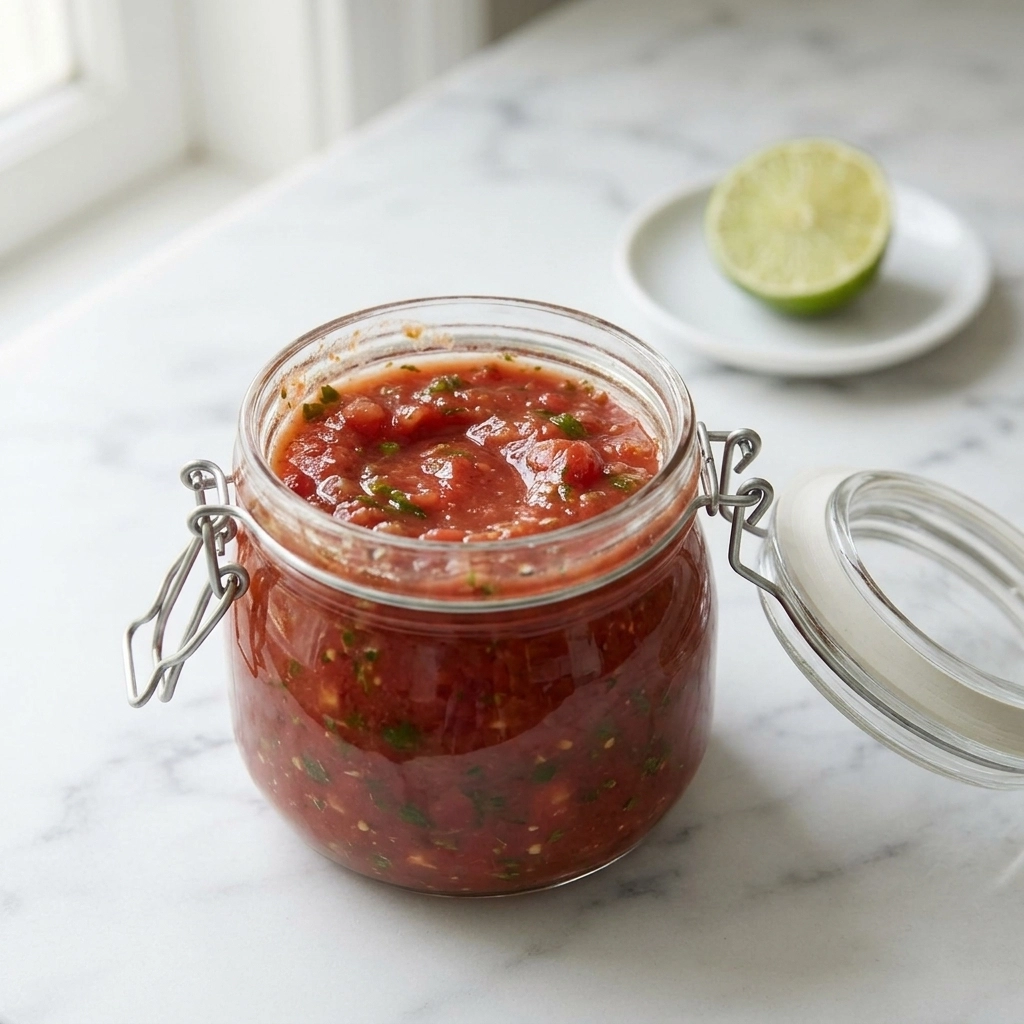
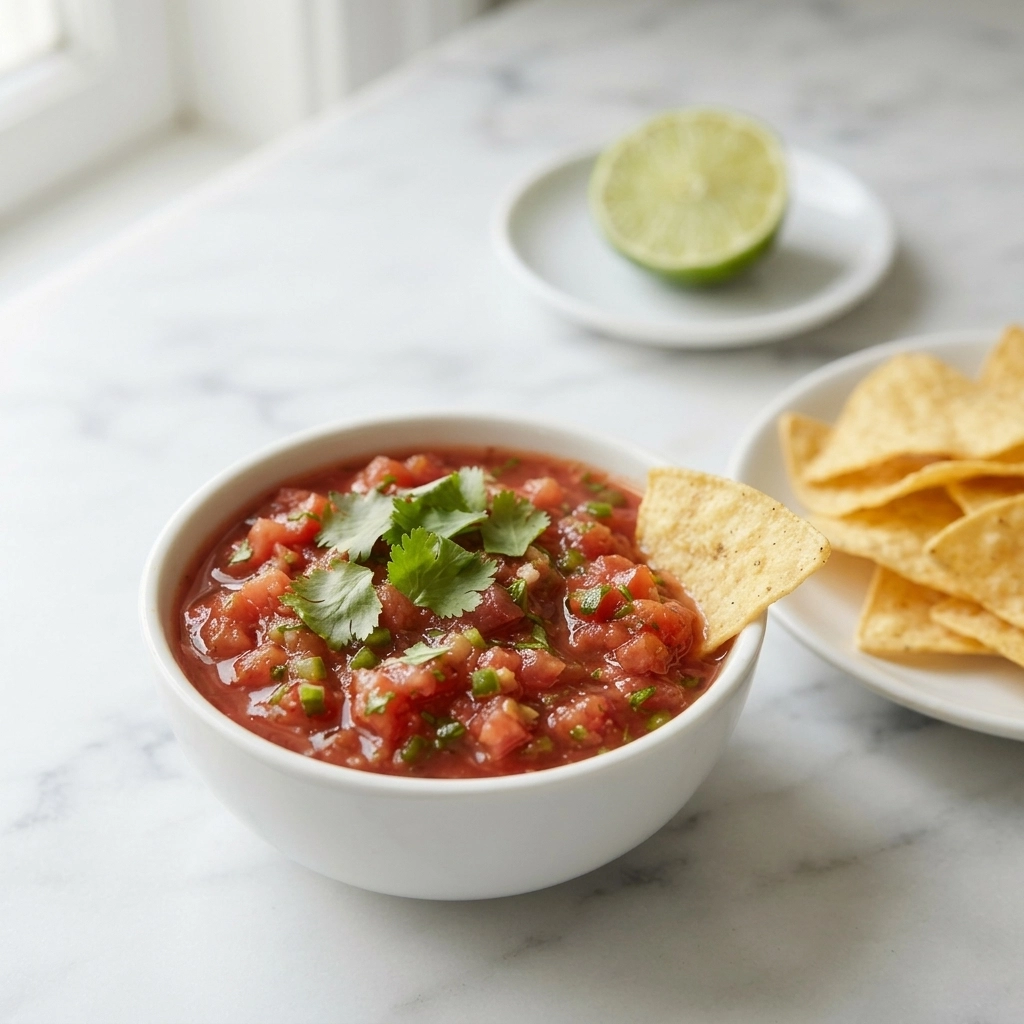
- Stir and Serve: Stir the chilled salsa 5 times to mix any juice back in. Spoon off any extra liquid that pooled on top if you like a thicker scoop. Move the salsa to a serving bowl and scatter a few cilantro leaves over the top. Serve it cold with warm tortilla chips, and look for a chunky, glossy salsa that stays on the chip.
Quick Tip: Do not skip the colander. Five minutes of draining is the difference between a thick, scoopable salsa and a watery one.
Expert Tips and Tricks
Learn from my mistake: On my third test I left every jalapeño seed in, and the salsa was too hot for my kids. Now I seed the pepper and add heat back in small pieces.
Texture tip: Pulse in 1 second bursts and check often. Chunky salsa goes from perfect to soup in about three extra pulses.
Time saver: Chop the onion and jalapeño while the tomatoes drain. Both jobs finish in the same 5 minutes.
Make ahead tip: Mix the salsa up to 24 hours ahead and stir it before serving. The flavor is even better the next day.
Storage tip: Keep the jar in the back of the fridge, not the door. The steady cold helps the salsa stay fresh for a full 5 days.
Onion tip: Rinse the chopped onion under cold water for 10 seconds if you want a milder bite.
Common Mistakes and Troubleshooting
Watery salsa: Round tomatoes and over blending release too much juice. Choose Roma tomatoes, drain them, and pulse in short bursts. To fix a thin batch, pour it through a fine mesh strainer for 2 minutes.
Smooth, pink salsa: Blending too long turns the tomatoes into puree. This happens fast. In my first test I ran the machine for 15 seconds straight and got something closer to gazpacho. Pulse in 1 second bursts, and stir in a diced tomato if it already happened.
Flat flavor: The salsa needs salt or acid. Add 1/4 tsp salt and 1/2 tsp lime juice, then stir and wait 10 minutes before tasting again.
Harsh raw garlic and onion: They taste sharper right after mixing. Let the salsa rest for the full 30 minutes. If it still bites, stir in a pinch of sugar.
Too spicy: The jalapeño was extra hot or the seeds went in. Stir in a diced tomato and 1 tbsp more lime juice to balance the heat.
Chef’s Note: Salt the salsa after the tomatoes drain, not before. Salting early pulls out juice you want to leave behind.
Storage Instructions
Room Temperature: Leave the salsa out for up to 2 hours, or 1 hour if your kitchen is above 90°F.
Refrigerator: Store in an airtight glass jar for up to 5 days at 40°F or below.
Freezer: Freeze in a freezer safe container for up to 2 months. The texture turns soft, so use thawed salsa in soups, sauces, or chili.
Reheating: No reheating is needed. If you freeze it, thaw it overnight in the fridge and stir well.
Make Ahead Notes: Mix up to 24 hours ahead and keep it covered in the fridge.
I label my jar with the date and always use a clean spoon. It keeps the salsa tasting fresh through the whole week.
Variations and Substitutions
Spicy: Add a second jalapeño with the seeds, or 1/2 tsp cayenne pepper. A small serrano pepper gives a sharper heat.
Mild and Kid Friendly: Skip the jalapeño and use 1/4 cup diced red bell pepper. The salsa stays fresh and sweet with no heat.
Vegetarian: This recipe is already vegetarian as written, and it is vegan too.
Gluten Free: This recipe is gluten free as written. Check the label on your tortilla chips before serving.
Other Swaps: Roast the tomatoes and jalapeño under the broiler for 8 minutes for a smoky version. Stir in 1/2 cup diced mango for a sweet and spicy twist.
Serving Suggestions
Side Dish: Warm tortilla chips are the classic scoop, and their salty crunch balances the fresh tomato.
Main Dish: Spoon it over a taco bowl for a juicy, bright topping.
Another Main: Add a scoop to a burrito bowl for freshness against the rice and beans.
Sauce or Dip: Serve creamy guacamole next to the salsa for a cool, rich contrast.
Garnish: Fresh cilantro leaves and a lime wedge add color and a final squeeze of acid.
Drink: Sparkling lemonade or iced tea keeps the meal refreshing.
Meal Combination: Serve it beside birria tacos for a spread with rich meat and bright salsa.
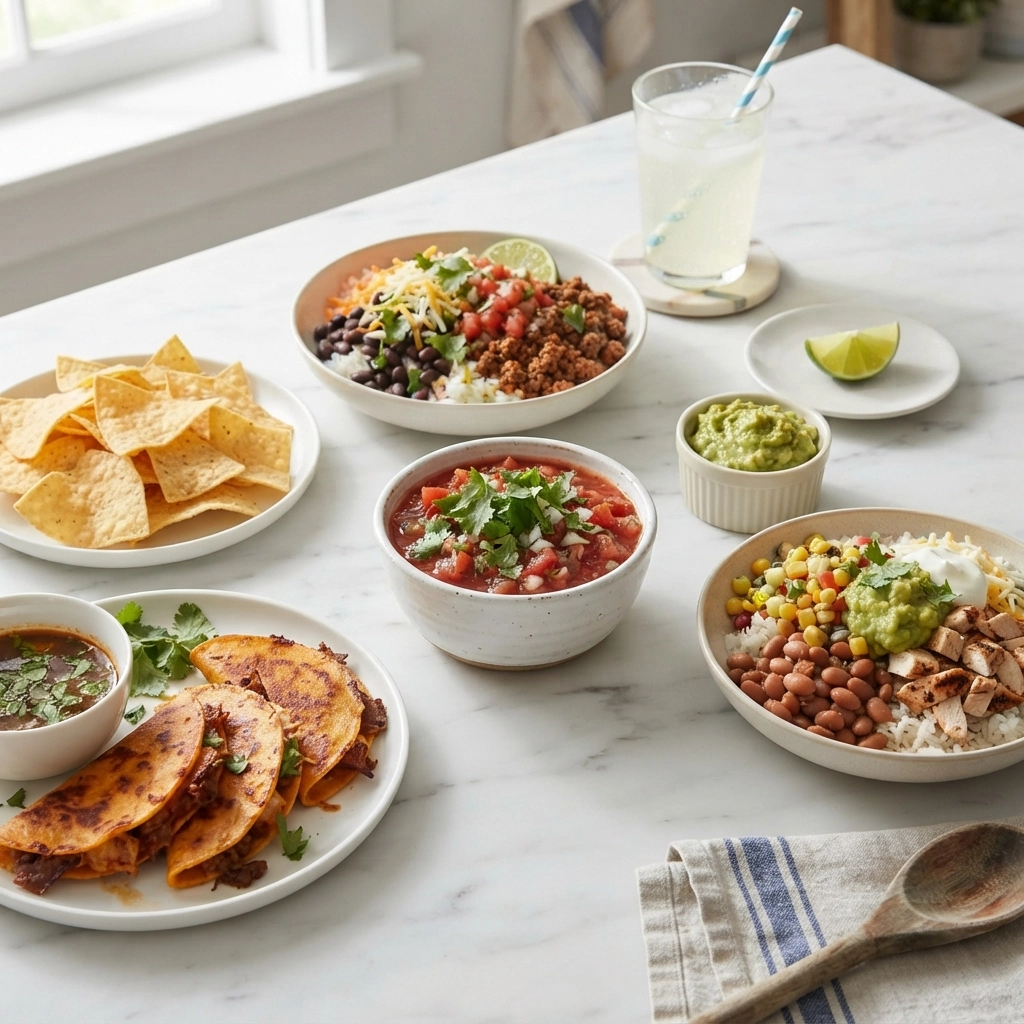
Good to Know: Serve the salsa cold but let the chips stay warm. The contrast makes every bite taste fresher.
Frequently Asked Questions
How long does homemade tomato salsa last in the fridge?
Homemade tomato salsa keeps for 5 days in an airtight glass jar in the fridge at 40°F or below. Fresh tomatoes and lime juice do not last as long as the cooked jarred kind, so I write the date on the lid. Toss it if it smells sour, fizzes, or shows mold. Always use a clean spoon, because double dipping shortens its life quickly.
Why is my salsa watery?
Watery salsa comes from tomato juice and seeds. Roma tomatoes hold less liquid than slicing tomatoes, and draining the quarters in a colander for 5 minutes removes even more. Pulse in short bursts, because over blending breaks the tomatoes down into juice. To fix a thin batch, pour it through a fine mesh strainer for 2 minutes. In my first test I blended for 15 seconds straight and got soup.
Can I use canned tomatoes for tomato salsa?
Yes, canned tomatoes work well, especially in winter when fresh ones taste pale. Use two 14 oz cans of whole peeled tomatoes, drained well, or fire roasted tomatoes for a smoky flavor. Skip the colander step and pulse only 3 to 4 times, since canned tomatoes are already soft. I tested both versions, and the fire roasted one tasted closest to a restaurant style salsa.
How long should salsa rest before serving?
Rest it for at least 30 minutes in the fridge at 40°F. Right after pulsing, the raw onion and garlic taste sharp, and the lime sits apart from the tomato. Time lets the salt pull out juice and blend the flavors. Two hours is even better. The salsa is ready when the color looks deeper red and a spoon trail slowly closes. Serve it within 24 hours for the best texture.
What is the difference between salsa and pico de gallo?
Reddit cooks ask this constantly. Pico de gallo is chopped by hand and not blended, so it is dry and chunky, with distinct pieces of tomato, onion, and cilantro. Salsa is pulsed or blended, so it is wetter and scoops easily with a chip. This tomato salsa sits in the middle, with a chunky texture but enough juice to cling. I make pico for tacos and salsa for chips.
Conclusion
The real secret to great tomato salsa is patience at the end. Once the bowl rests in the fridge, the flavors settle and every chip tastes balanced. After that, you can make it your own with a charred jalapeño, a splash of orange juice, or a handful of corn. I like to make it an hour before guests arrive, so I can forget about it until the chips come out.
My family now expects a fresh jar every Friday, and my dad insists on scraping the bowl clean with the last chip. Last summer I doubled the batch for a cookout, and the bowl was empty in 20 minutes. If you want quick notifications when new recipes go up, follow along with me on Pinterest.
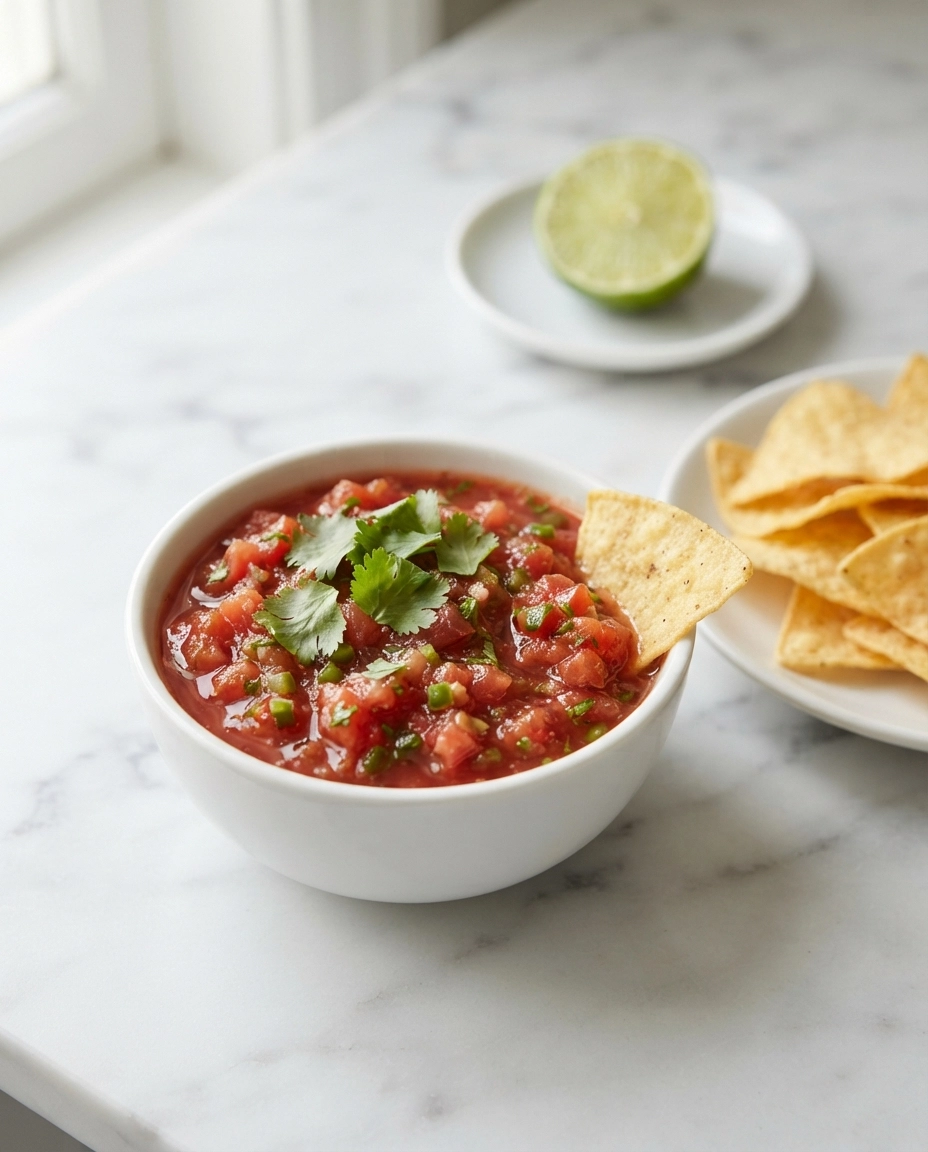

Homemade Tomato Salsa
Ingredients
Equipment
Method
- Quarter the tomatoes and drain them in a colander for 5 minutes until only a slow drip falls. Chop the onion and jalapeño, peel the garlic, and dry the cilantro.
- Pulse the onion, jalapeño, garlic, and cilantro 6 times, 1 second each, until finely minced like grains of rice.
- Add the drained tomatoes and pulse 5 to 6 times, 1 second each. Stop when the salsa looks chunky with no puree at the bottom.
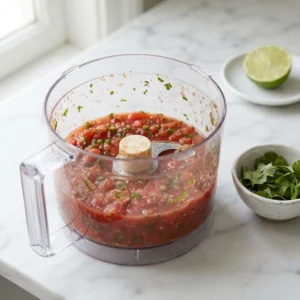
- Stir in 2 tbsp lime juice, 1/2 tsp salt, 1/4 tsp cumin, and a pinch of sugar for 15 seconds. Taste with a chip until it is bright and balanced.
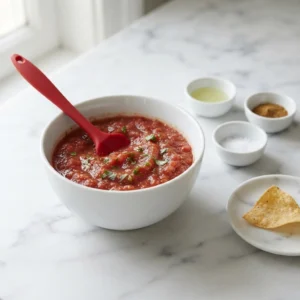
- Cover and refrigerate at 40°F for 30 minutes. It is ready when the color deepens and a spoon trail slowly fills in.
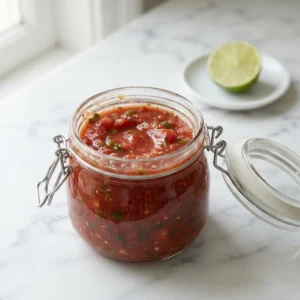
- Stir 5 times and spoon off any pooled liquid. Top with cilantro and serve cold, chunky, and glossy with warm chips.
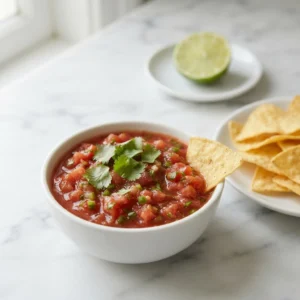
Notes
- Pulse in 1 second bursts, because it turns to soup fast.
- Salt after draining, not before. Let it rest the full 30 minutes so the raw onion and garlic soften.
- Fridge: Store in an airtight glass jar for up to 5 days at 40°F or below.
- Freezer: Freeze for up to 2 months and use thawed salsa in cooked dishes.
- Reheating: No reheating needed. Stir well after thawing overnight in the fridge.